
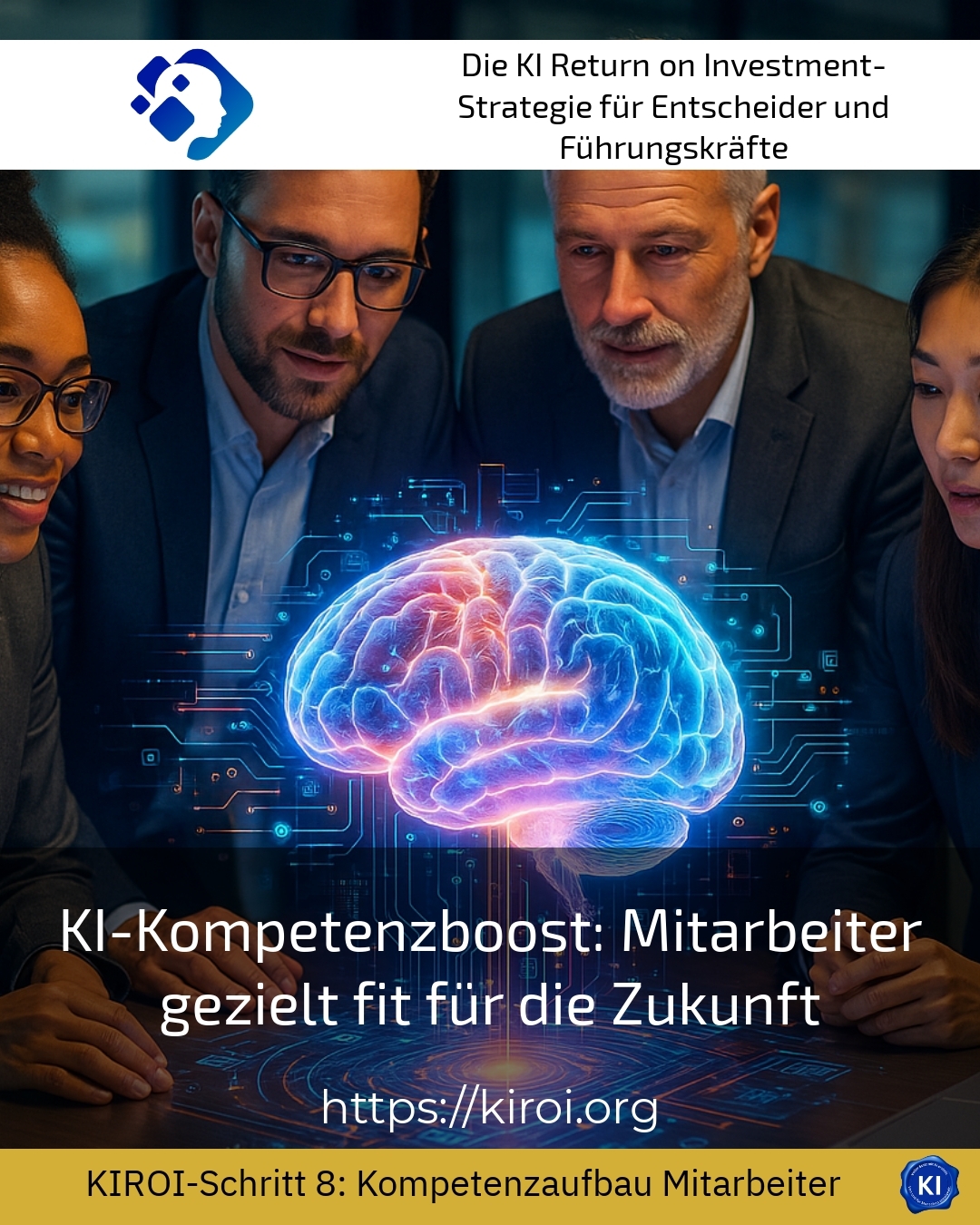
The digital transformation is fundamentally changing almost every workplace. Companies face the challenge of systematically preparing their workforce for new requirements. The AI skills boost: targeted training for employees for the future This is evolving into a strategic core task. Because those who do not empower their teams in time risk falling behind the competition. At the same time, enormous opportunities are opening up for organisations that act proactively. In this article, you will learn how qualification measures can have a sustainable impact.
Why traditional further education is no longer sufficient
The world of work is changing at an unprecedented pace. Traditional seminars and one-off training sessions are no longer sufficient. Employees require continuous learning support and practical assistance. This isn't just about technical knowledge. Rather, teams need to understand how intelligent systems can enhance their daily work. A claims handler in the insurance industry today works with automated accident reports. The HR department uses algorithmic pre-selection for job applications. And sales benefits from predictive analytics for customer behaviour. All these changes demand new skills and a fundamentally different understanding of work processes.
Many companies underestimate the emotional aspect of such changes. Employees often come to me for coaching with fears and insecurities. They wonder if their skills are still needed. They worry about their future career and their standing within the team. transruptions-Coaching supports precisely these transformation processes in a value-based and solution-oriented manner. It creates space for honest conversations about concerns and hopes alike.
The AI competence boost as a holistic approach
An effective qualification approach considers various dimensions simultaneously. First, fundamental concepts must be taught. This is followed by practical application within one's own work context. Finally, support is needed for sustainable integration. In the financial sector, this means, for example, that investment advisors understand how robo-advisory works. They learn to critically assess the recommendations of automated systems. At the same time, they develop new communication skills for advising tech-savvy clients.
The situation in the logistics sector looks similarly complex. Dispatchers are increasingly working with intelligent route planning systems. Warehouse staff are co-operating with autonomous transport systems and robots. Managers have to co-ordinate hybrid teams of humans and machines. Each of these roles requires specific competencies and a tailored training programme.
Best practice with a AIROI customer
A medium-sized engineering company approached us with a specific challenge. The workforce showed considerable resistance to new digital tools in the workplace. Experienced skilled workers in particular felt their expertise was devalued by automated quality control systems and reacted with rejection. As part of the Transruptions coaching, we jointly developed a multi-stage support programme for all affected departments. First, we conducted intensive one-on-one discussions with the most sceptical team members to understand their specific concerns. It became clear that many concerns were based on misunderstandings about the actual functioning of the new systems. Subsequently, we designed workshop formats in which the employees themselves could experience the limitations of the technology. They realised that their experience and expertise would remain indispensable for interpreting machine analyses. After six months, most participants reported a significantly more positive attitude towards the new work tools. Productivity increased noticeably because people and technology now worked together constructively.
Practical implementation strategies for different company sizes
Large corporations generally have their own academies and learning platforms. They can manage extensive programmes with internal resources. The situation is often different for medium-sized businesses. Here, the capacity for independent qualification initiatives is often lacking. That is why many companies work successfully with external partners. For example, a retail company with several branches implemented intelligent inventory management systems. The branch managers needed support in understanding the algorithmic recommendations. Through targeted coaching sessions, they were able to learn to critically evaluate and meaningfully adapt the suggestions.
Exciting fields of application for systematic competence development are also emerging in healthcare. Medical personnel are increasingly working with diagnostic support systems. Nursing staff are using digital documentation aids and assistance systems for patient monitoring. Administrative staff are interacting with automated appointment scheduling and billing systems. Each professional group needs tailor-made learning formats and ongoing support for practical implementation.
Driving sustainable change with the AI competence boost
Sustainable competence development requires more than one-off training measures [1]. Rather, it needs a continuous learning culture within the company. Leaders play a crucial role as role models for their teams in this regard. They must themselves demonstrate and embody openness to new technologies. For example, a manufacturing company established weekly learning tandems between younger and more experienced employees. The younger employees brought technical know-how, while the experienced employees shared process knowledge. This mutual exchange of knowledge proved to be extremely valuable for both sides.
In the field of legal consulting, law firms are increasingly using automated contract analysis tools and research systems. Legal staff must learn to use these tools effectively and critically assess their results. At the same time, customer expectations regarding the speed and transparency of legal services are changing. Strategic consulting and complex negotiation, however, remain the preserve of human experts.
Best practice with a AIROI customer
A medium-sized marketing agency approached us because the integration of generative systems for content creation had caused significant tension within the team. Creative employees felt their artistic identity was threatened and reacted with passive resistance to the new tools. Management recognised that technical training alone would not solve the problem and therefore sought professional support for the change process. As part of the transruption coaching, we first worked on the fundamental attitude towards technological support in creative professions. Together, we explored which tasks could be supported by automated systems and which would still require human creativity. Participants developed a new self-understanding as creative conductors who can orchestrate various tools. They began to see the new possibilities as an extension of their creative spectrum rather than a threat to their professional existence. After completing the coaching programme, employees reported increased job satisfaction and higher creative productivity. The agency was able to expand its service portfolio and attract new customer groups because the team could now confidently combine different working methods.
The role of leaders in skills development
Managers hold a key position in the successful implementation of upskilling initiatives [2]. They must lead by example in their willingness to embrace change and actively support their teams. At the same time, they often require guidance themselves in developing new leadership competencies. This is particularly evident in the banking sector with the introduction of automated credit decision systems. Department heads need to understand how these systems operate and where human expertise remains in demand. They must provide direction to their teams and take concerns seriously.
In the energy sector, similar challenges arise from smart grid technologies and predictive maintenance systems. Technical leaders are increasingly coordinating collaboration between human experts and automated analysis systems. They require new skills in interpreting complex data analyses and communicating with various stakeholders. The retail sector, in turn, is experiencing fundamental changes through personalised customer engagement and automated pricing. Store managers need to learn to combine data-based recommendations with their local market knowledge and implement them effectively.
Measurable success through systematic support
The success of qualification measures can be measured and documented in various ways. Quantitative key figures such as increases in productivity or reductions in errors provide initial indications of progress. Qualitative indicators such as employee satisfaction and willingness to innovate sensibly and meaningfully complement the picture. A pharmaceutical company, for example, was able to significantly increase and accelerate the acceptance of new laboratory assistance systems through accompanying coaching. The onboarding time for new employees noticeably decreased because experienced colleagues passed on their knowledge in a structured way. The error rate in data entry fell significantly because the workforce better understood the logic of the validation systems.
In the field of management consulting, analysts are increasingly using automated data preparation and visualisation tools for their work. This allows them to concentrate more on strategic interpretations and client interaction. At the same time, expectations regarding the speed and depth of analyses are continuously rising. Consultants must learn to redefine and balance the equilibrium between efficiency and quality.
My AIROI Analysis
The systematic enablement of employees for new technological requirements is becoming a core strategic task for companies of all industries and sizes. It repeatedly becomes apparent that technical training alone is not sufficient to bring about and embed sustainable change. Instead, holistic support is needed, which equally considers and addresses emotional, cognitive, and practical aspects. The most successful transformation projects combine well-founded expertise with empathetic change management and continuous support.
From my experience with numerous organisations, I can report that the biggest success factor is the involvement of those affected from the outset. When employees understand the purpose of changes and can help shape them, their willingness to participate actively increases considerably. Leaders play a crucial role in this as role models and enablers for their teams. They must themselves demonstrate a willingness to learn and be able to create safe spaces for experimentation and mistakes.
The AI skills boost: targeted training for employees for the future requires long-term commitment and continuous adaptation of learning formats to changing requirements. Companies that invest in the development of their workforce now will create important competitive advantages for the coming years. Transruption coaching can provide valuable impetus and professionally support the change process. Investing in employee skills often pays off through increased innovation and improved employee retention.
Further links from the text above:
[1] McKinsey – Reskilling in the Age of AI
[2] Harvard Business Review – Leadership and Change Management
For more information and if you have any questions, please contact Contact us or read more blog posts on the topic Artificial intelligence here.







 Deutsch
  English (UK)