
Semi-supervised learning is a term from the fields of artificial intelligence, big data and smart data, as well as digital transformation. This method comes into play whenever computers are trained with data, for example, to recognise images or automatically understand texts.
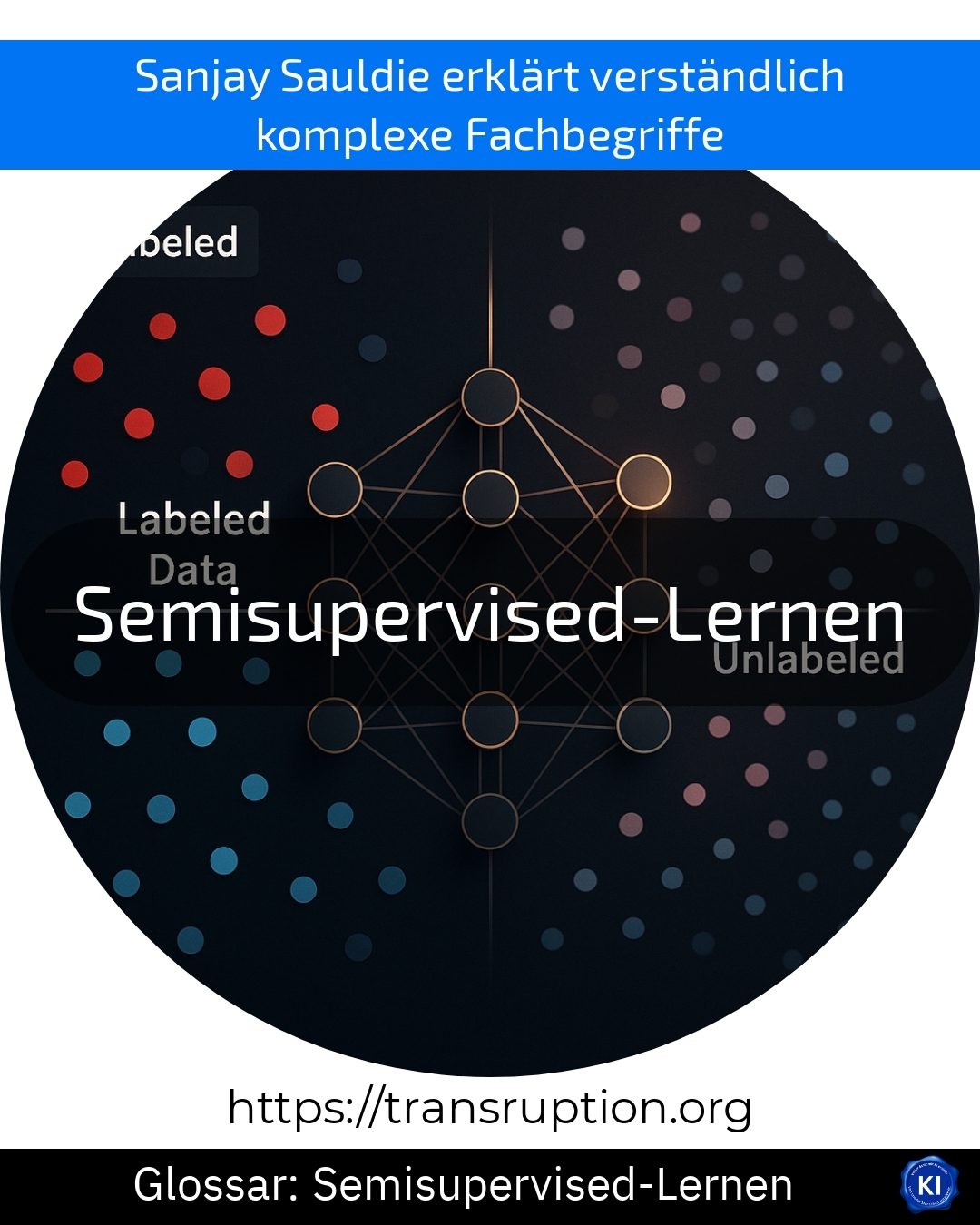
The special thing about semi-supervised learning is that the computer can access not only „guided“ data, meaning data with clear answers, but also a lot of data without answers. In other words, a small part of the data is labelled (with correct results), but the large remainder is not. The advantage: This allows Artificial Intelligence to learn even when there isn't an answer for every image or piece of information.
Imagine you want to teach a computer to recognise cats in photos. You have 100 photos where you know whether a cat is depicted or not – and thousands more where you don't know. Semi-supervised learning ensures that the computer can work with both types of data. This saves time and effort, as the time-consuming „labelling“ of data is only partially necessary.
In a nutshell, semi-supervised learning often makes artificial intelligence more efficient and cheaper, especially when there is a lot of unlabelled data available.











 Deutsch
  English (UK)