
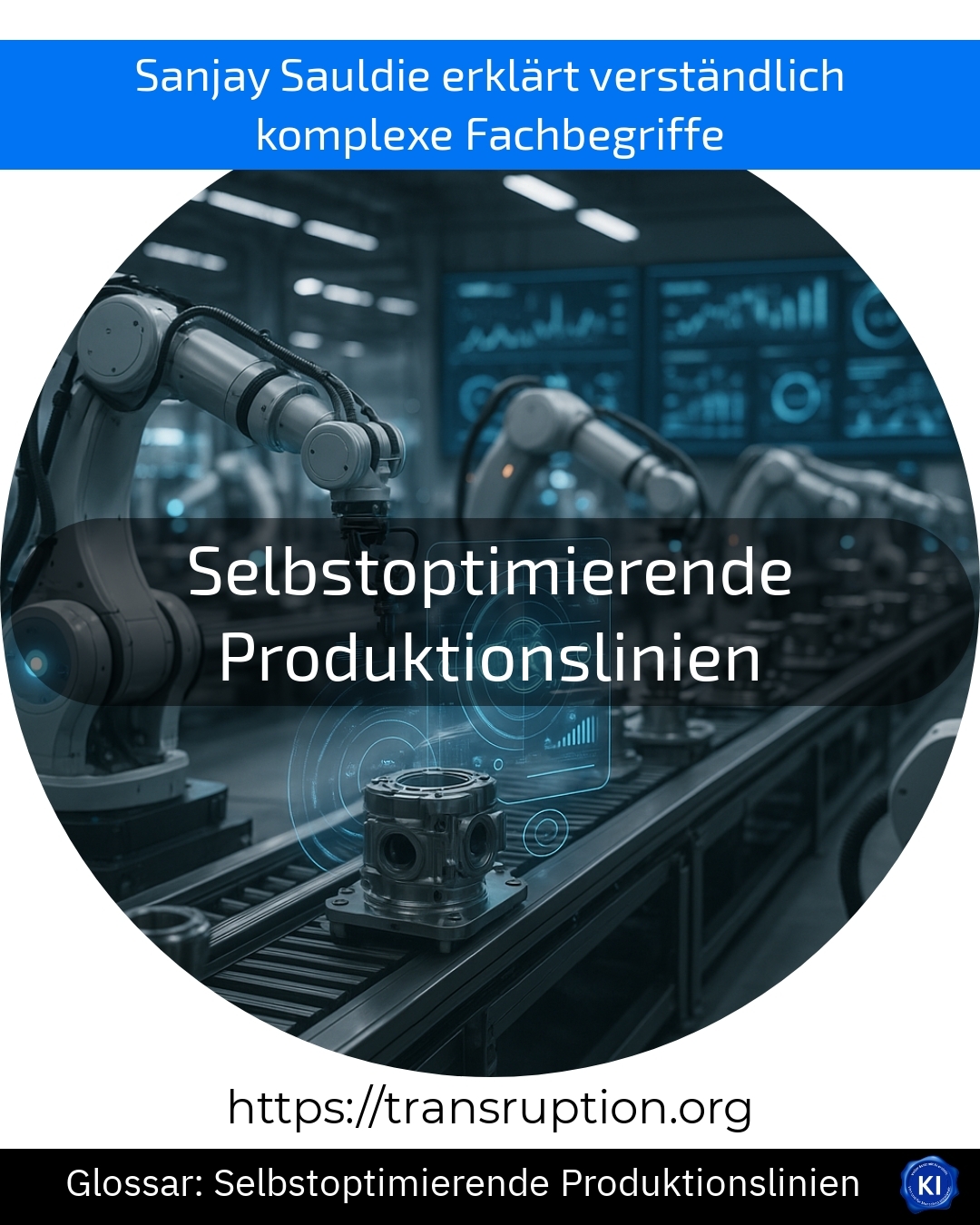
The term 'self-optimising production lines' is primarily found in the fields of automation, industry and Industry 4.0, as well as artificial intelligence. This relates to modern manufacturing lines in factories that can independently adapt and improve using intelligent systems.
This means that machines and systems are networked and exchange data in real time. They can detect faults, correct errors independently, or adapt their workflow if, for example, demand changes. The goal is to have fewer failures, ensure consistently high product quality, and save resources such as energy or raw materials.
A vivid example: In a car factory, sensors and intelligent controls monitor the condition of the assembly line. If they notice that a robot arm is no longer working precisely, they not only report it but also adjust it immediately or fetch a replacement. At the same time, the system adjusts the speed so as not to disrupt the production flow. This ensures everything runs as smoothly as possible – entirely without constant human intervention.
Self-optimising production lines make factories more efficient, flexible and future-proof. They are a central component of so-called „smart factories“.











 Deutsch
  English (UK)