
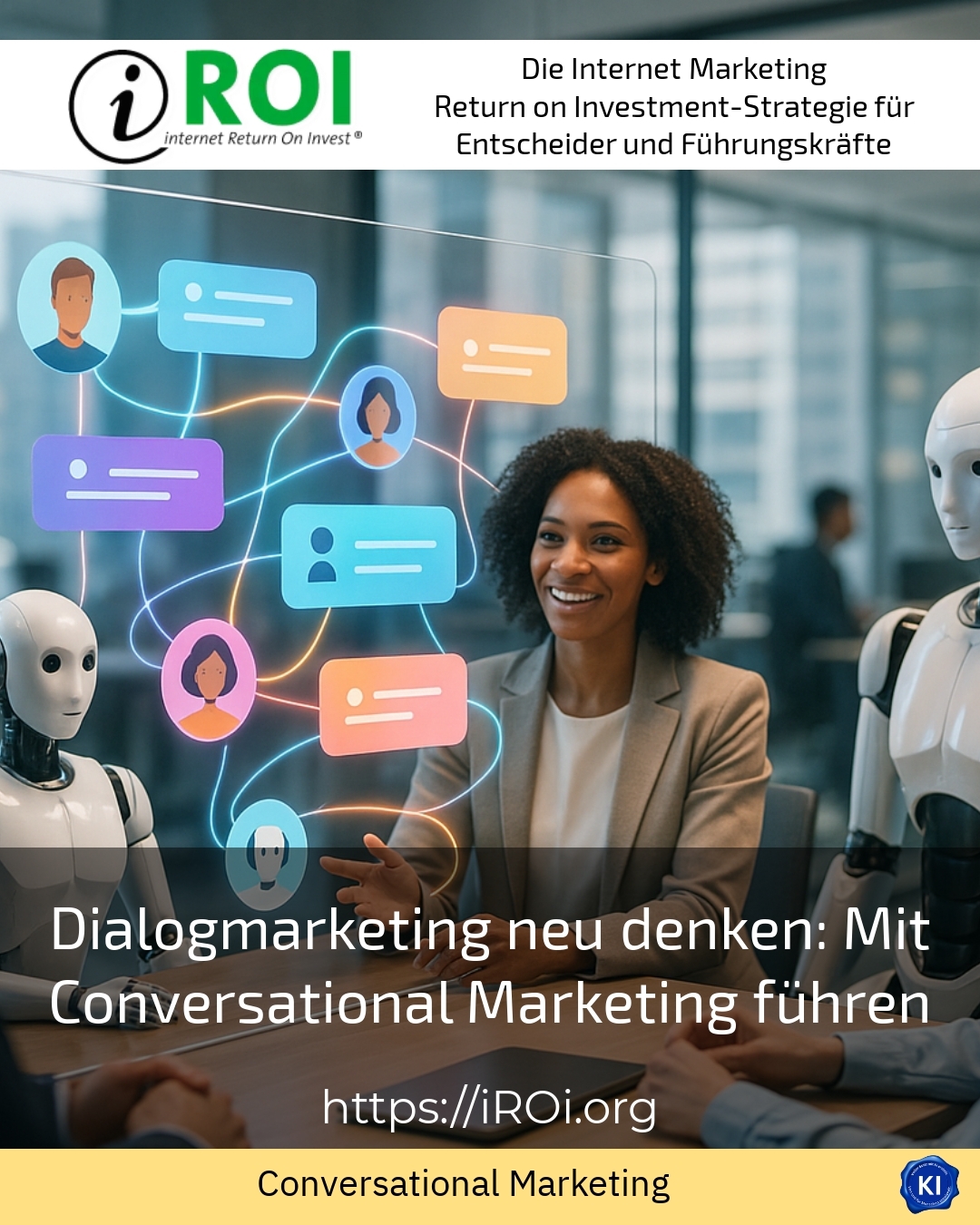
Rethinking dialogue marketing: Leading with Conversational Marketing
In today's world, the way companies communicate with their customers is changing fundamentally. Many companies are looking for new ways to modernise and personalise their dialogue marketing strategies, with Conversational Marketing increasingly coming into focus. This approach not only offers the opportunity to address customers directly and individually, but also supports the building of long-term relationships and the more successful realisation of projects.
How Conversational Marketing is Changing Dialogue Marketing
Conversational marketing means rethinking dialogue in marketing. Instead of rigid, one-sided forms of communication, it focuses on real-time conversations that are oriented towards the needs and desires of the customer base. Conversations happen where customers are right now – whether it's in live chat, via messenger services, or even via voice assistants. This makes the interaction feel more natural and can be continued flexibly if the customer wishes.
This is an important step, particularly in dialogue marketing. Traditional lead generation via forms or mass emails is being supplemented and, in some cases, replaced by real conversations that provide more information and cater more precisely to individual needs. This creates a framework of trust that not only provides impetus but also offers support in implementing complex dialogue marketing projects.
Customer focus through flexible channels
The focus is always on the customers and their communication preferences. Companies can react flexibly here and, for example, integrate chatbots on websites that answer simple questions and support appointments or purchasing processes. Messenger channels such as WhatsApp or Facebook Messenger are also central platforms that enable quick and personal dialogue. In this way, dialogue marketing is rethought and managed in a well-connected digital world.
Personalised email campaigns, incorporating interactive elements such as surveys or tailored recommendations, effectively complement this approach. This ensures dialogue marketing is perceived not merely as an information dissemination tool, but as a dynamic exchange that fosters customer loyalty and often supports customer feedback in projects.
Practical examples of dialog marketing
BEST PRACTICE at company XYZ (name changed due to NDA contract) A healthcare company developed a chatbot which provides 24/7 support to potential customers and automatically books appointments for consultation calls. The result was a significant increase in booked appointments and an improvement in the quality of customer enquiries. The flexible communication made it easier to address individual needs and establish dialog marketing as an integral part of the sales experience.
BEST PRACTICE at ABC (name changed due to NDA contract) In the hotel industry, a business has been using a multilingual chatbot for several years. This chatbot not only supports bookings but also recommends additional services and excursions. Guests frequently report that they were able to clarify relevant questions even before their stay. This increases satisfaction and boosts revenue through additional sales. This demonstrates how practical dialogue marketing can be combined with conversational marketing.
BEST PRACTICE at DEF (name changed due to NDA contract) A trading company extensively uses messenger marketing to send personalised offers and respond promptly to customer inquiries. Customers appreciate the fast and personal support, which is reflected in higher product loyalty and increased sales. Projects related to dialogue marketing are often more closely supported and implemented more sustainably through this form of communication.
What is important for the implementation?
Reimagining dialogue marketing with Conversational Marketing requires a clear focus on customer dialogue. Companies frequently report that the shift to dialogue-oriented communication requires support – whether in conception, selecting the right channels, or integrating into existing systems. It is also important that conversations do not take place in isolated units, but that customers can seamlessly continue their interactions without having to repeat themselves.
The role of coaching and support remains crucial here. Transruption coaching is often used to methodically support projects related to dialogue marketing and provide impetus for further development. This coaching helps to adapt communication strategies and realign internal company processes. In this way, it contributes to making Conversational Marketing truly effective and ensuring it has a lasting impact.
Impulses for a dialogue-oriented future
Customers today want personalised engagement and quick solutions. Companies that rethink dialogue marketing and actively integrate conversational marketing create a foundation for greater transparency, trust, and efficiency. At the same time, this often leads to creative solutions that go beyond the originally planned communication goals. Developments show that this approach is not only technically effective, but above all human-centric – and is therefore playing an increasingly important role in everyday work and customer service.
My analysis
Rethinking dialogue marketing primarily means giving customers the space to engage in dialogue as they wish – flexible in terms of time, cross-channel, and personal. The shift to Conversational Marketing is a step that focuses on more interaction and genuine conversations. Projects surrounding dialogue marketing particularly benefit from this approach when they are supported by targeted guidance. Companies often report improved customer loyalty, higher conversion rates, and valuable closeness to their clientele through this approach.
Further links from the text above:
[1] What Is Conversational Marketing? Your Ultimate Guide
[2] Conversational Marketing – Everything You Need to Know – moinAI
[5] The Complete Guide to Conversational Marketing (2025) – Botpress
For more information and if you have any questions, please contact Contact us or read more blog posts on the topic TRANSRUPTION here.











 Deutsch
  English (UK)