
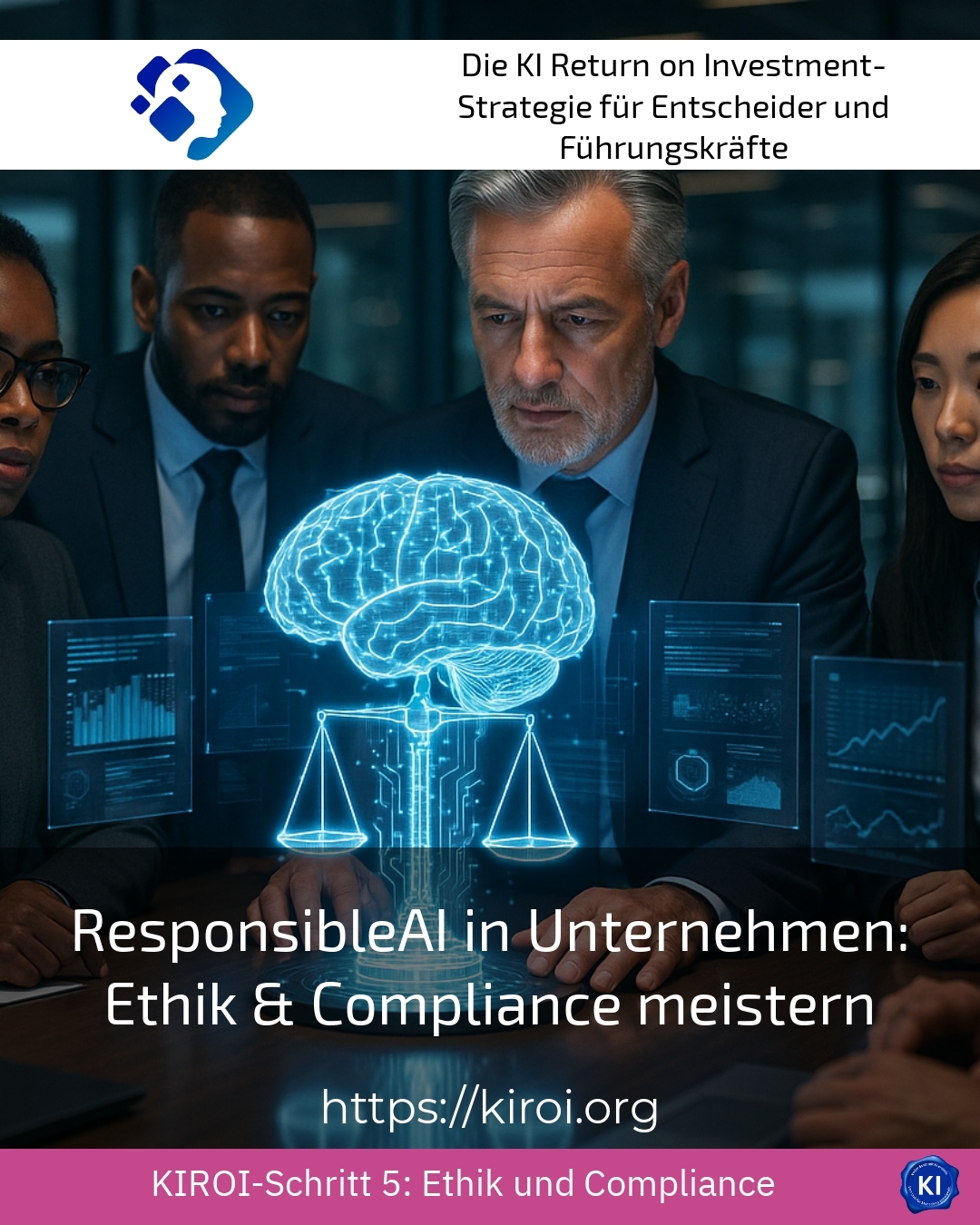
Imagine an algorithmic system making decisions about credit applications, staff selection, or medical diagnoses, yet no one can explain precisely why that particular decision was made. This is precisely where the fundamental challenge that companies must overcome today begins. Responsible AI in Companies: Mastering Ethics & Compliance becomes the central task for leaders in all industries. The question is no longer whether intelligent systems will be deployed. Instead, it is about how organisations can implement these technologies responsibly.
Understanding new responsibilities in the digital age
Modern companies are facing an unprecedented transformation of their business processes. Algorithmic decision-making systems are now permeating almost every area of business. In the financial sector, these systems analyse credit risks and detect fraudulent activities in real time [1]. Insurance companies use similar technologies for claims assessment and premium calculation. At the same time, this is giving rise to new ethical questions. This is because every automated decision can directly affect people in their real lives.
The healthcare sector is a particularly striking example of the opportunities and risks that can arise. Diagnostic systems support doctors in recognising disease patterns. They analyse X-ray images and identify abnormalities with impressive accuracy. But what happens if a system delivers an incorrect assessment? Who bears responsibility for potentially serious consequences?
In human resources, algorithmic systems filter applications and create candidate profiles. They analyse CVs, assess qualifications, and pre-select candidates. In doing so, unconscious biases in the training data can lead to discriminatory results. For example, a system could systematically disadvantage certain applicant groups. This issue requires continuous review and adaptation of the models used.
Responsible AI in Business: Mastering Ethics & Compliance through Structured Governance
An effective governance structure forms the foundation for the responsible deployment of intelligent systems. Companies require clear guidelines, defined responsibilities, and transparent processes. This begins already in the development phase of new applications. Ethical principles must be integrated into the system design from the outset. This creates a culture of responsibility that permeates all levels of hierarchy.
The automotive sector exemplifies how complex such governance structures can be. Autonomous vehicles make decisions about driving manoeuvres in fractions of a second. In doing so, they must consider and prioritise countless variables. The programming of this decision logic raises fundamental ethical questions. Manufacturers are therefore working closely with ethics committees and regulatory authorities [2].
In retail, businesses use predictive analytics for inventory management and customer behaviour. These systems forecast demand and optimise supply chains. Simultaneously, they collect extensive data on consumption habits. Protecting this sensitive information requires robust data protection concepts. Compliance teams must ensure all regulatory requirements are met.
Best practice with a AIROI customer
A medium-sized company in the manufacturing industry faced the challenge of automating its quality control. The existing manual processes were time-consuming and prone to errors. As part of a transruption coaching project, we supported the implementation of an image recognition system. First, we jointly analysed the ethical implications of the planned automation. What impact would the system have on the existing workforce? How would decisions be documented and made traceable? These questions formed the starting point for a structured implementation process. The team developed clear guidelines for handling borderline cases. Furthermore, we established a multi-stage review process for critical decisions. Employees received intensive training and were involved in the process. Creating transparency about how the system works was particularly important. Today, humans and machines work hand in hand in this company. The quality rate demonstrably increased, while no jobs were lost. Instead, employees took on higher-value tasks in process monitoring.
Transparency as a cornerstone of ethical conduct
Transparency builds trust and allows for critical engagement with technological decisions. Companies should disclose when and how algorithmic systems are used. Customers and employees have a legitimate interest in this information. The so-called explainability of algorithms is therefore gaining increasing importance [3].
In the banking sector, regulation already demands comprehensible credit decisions. Customers must be able to understand why their application was rejected. A mere reference to an algorithm is no longer sufficient. Instead, banks are developing explanation models that present complex decisions in an understandable way. This development will spread to other industries.
Telecommunications companies are using intelligent systems for network optimisation and customer support. Chatbots answer queries and resolve technical issues. It should always be clear whether a human or a machine is responding. Many customers prefer human contact in certain situations. This preference deserves respect and consideration.
Practical steps for implementing responsible systems
The implementation begins with a comprehensive inventory of all algorithmic systems in use. Which processes are already automated? Which decisions do these systems make? How were they trained and validated? These questions form the basis for further measures. Only those who know their starting position can make targeted improvements.
The energy sector demonstrates how technological innovation and ethical responsibility can work together. Smart grids optimise energy distribution and reduce waste. Predictive maintenance systems detect potential failures before they occur. At the same time, these systems collect data on consumption patterns in private households. The responsible handling of this information requires clear rules.
In the logistics sector, algorithmic systems optimise route planning and warehouse management. They significantly reduce delivery times and lower costs. However, they also influence working conditions for drivers and warehouse staff. The intensification of work processes can lead to strain. Responsible deployment also takes these human factors into account.
Responsible AI in Business: Mastering Ethics & Compliance through Continuous Monitoring
One-off tests are not sufficient for sustained responsible deployment. Algorithmic systems change through continuous learning. New data can lead to altered decision patterns. Therefore, companies need mechanisms for ongoing monitoring. Regular audits identify potential problems early on.
The pharmaceutical industry is subject to particularly stringent requirements for documentation and traceability. When systems support drug development or diagnosis, the highest standards apply. Every decision must be documented without gaps. Authorities demand detailed evidence of validation and quality assurance. These requirements set benchmarks for other industries [4].
In the realm of media and entertainment, recommendation systems personalise content for users. They analyse preferences and suggest suitable offerings. However, filter bubbles can arise from this, limiting perspectives. Responsible providers are working on algorithms that also promote diversity. This way, technological efficiency is combined with social responsibility.
Best practice with a AIROI customer
A recruitment services company approached us with a complex query. Their existing candidate and job offer matching system exhibited undesirable patterns, with certain applicant groups being systematically proposed less frequently for attractive positions. As part of our transruption-coaching support, we first conducted a detailed analysis of the training data. During this, we identified historical biases that the system had adopted. In close collaboration with the internal team, we developed an action plan. This included cleaning the training data and introducing fairness metrics. Furthermore, we established a regular monitoring system. This system continuously checks the distribution of results across different applicant groups. Additionally, we trained staff on how to use the new transparency reports. Management now receives monthly reports on relevant key performance indicators. After six months, the evaluation showed significant improvements in the quality of results. Simultaneously, satisfaction among applicants and corporate clients measurably increased.
The role of corporate culture in implementation
Technical solutions alone do not guarantee a responsible approach to intelligent systems. The corporate culture in which these technologies are used is crucial. Leaders shape their teams' attitudes through their behaviour. Those who take ethical concerns seriously foster an open culture of discussion. This creates space for critical reflection and continuous improvement.
In the education sector, institutions are experimenting with adaptive learning systems. These systems adjust content to individual learning progress, collecting extensive data on pupils and students. Protecting this sensitive information is of paramount importance, while simultaneously upholding fundamental pedagogical principles.
Public administration is increasingly using algorithmic systems for decision-making, ranging from the allocation of social benefits to tax administration. Citizens have legitimate expectations of transparency and fairness in state decisions, meaning authorities are under particular scrutiny during implementation [5].
Involve employees as active agents of change
Successful implementations involve staff early in the process. Their expertise and experience are indispensable for practical solutions. Training provides necessary knowledge about how the systems work and their limitations. At the same time, feedback channels create opportunities for continuous improvement. This builds acceptance and reduces resistance.
In retail, companies are increasingly focusing on personalised customer engagement. Systems analyse purchase histories and predict preferences. Sales assistants receive recommendations for suitable offers. This support can improve the quality of advice. However, it also fundamentally changes the role of employees.
Industrial companies are implementing predictive maintenance systems for production facilities. These systems recognise wear patterns and optimise maintenance intervals. Technicians receive precise instructions for necessary actions. Their job profile is shifting from reactive to proactive work. This change requires adaptation and further training.
My AIROI Analysis
The confrontation with Responsible AI in Companies: Mastering Ethics & Compliance clearly shows that technological progress and ethical responsibility do not have to be opposites. On the contrary, they complement each other and together create sustainable business success. From my consulting practice, I know that many managers initially underestimate this challenge. They focus on technical implementation and neglect organisational aspects. However, this is precisely where the key to success lies.
The examples from various industries highlight the diversity of application areas and questions. Each organisation must find its own way. Universal solutions do not exist, as each context brings specific requirements. That's why, at transruptions-Coaching, we support companies individually in this transformation process. We provide impetus, assist with strategy development, and guide practical implementation.
The insight that ethical principles do not represent a restriction seems particularly important to me. Rather, they are both a mark of quality and a competitive advantage. Customers, employees, and business partners appreciate responsible action. Regulatory requirements will continue to increase, and proactive action will provide an advantage. Companies that invest in robust governance structures today are ensuring their future viability. The journey has only just begun, and the scope for shaping it is immense. I invite you to embark on this path together with us.
Further links from the text above:
[1] BaFin – Artificial Intelligence in the Financial Sector
[2] European Commission – Trustworthy Artificial Intelligence
[3] AlgorithmWatch – Transparency of algorithmic decision-making processes
[4] Federal Institute for Drugs and Medical Devices
[5] Federal Ministry for Economic Affairs and Climate Protection – Artificial Intelligence
For more information and if you have any questions, please contact Contact us or read more blog posts on the topic Artificial intelligence here.










 Deutsch
  English (UK)