
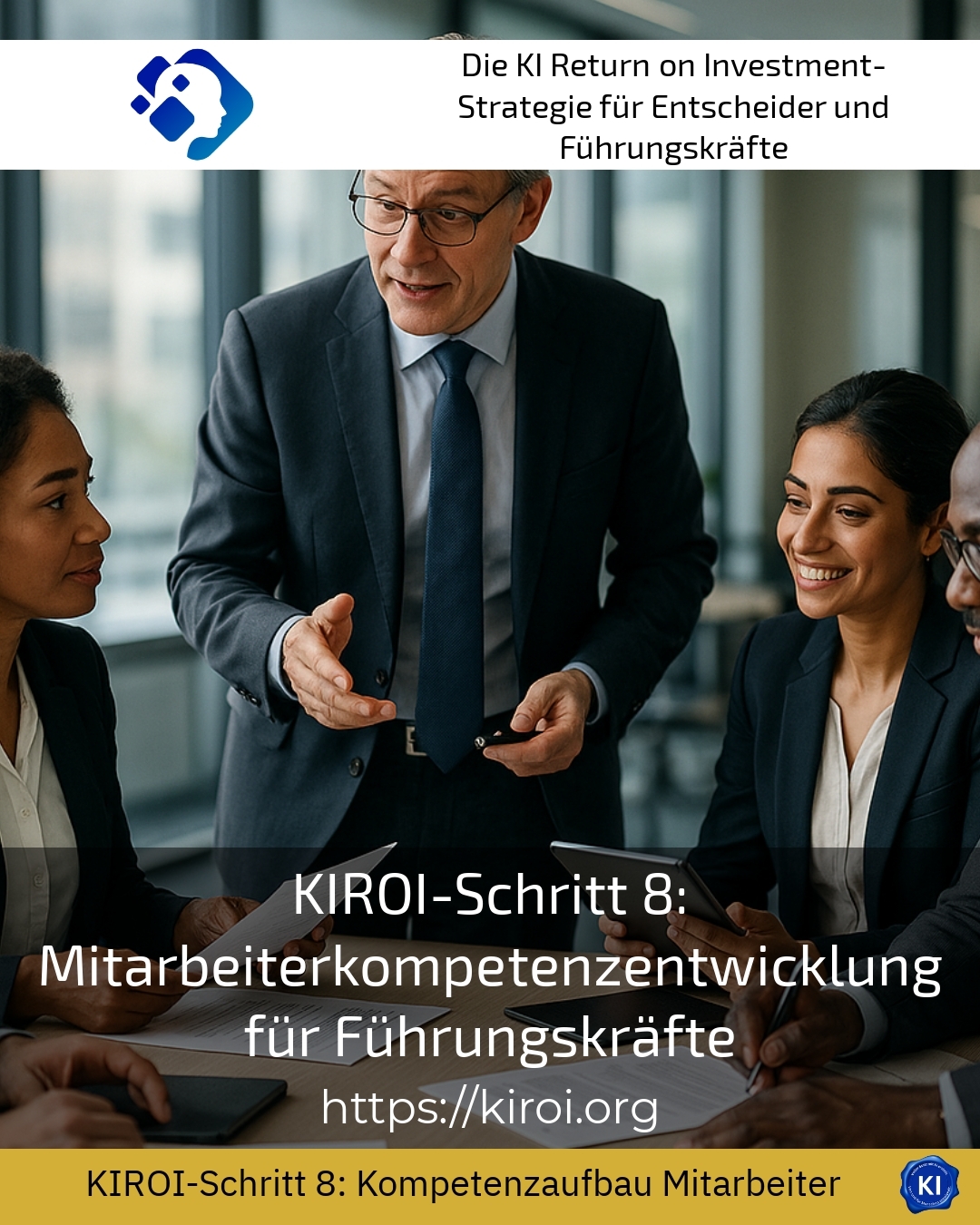
Employee competency development is a core component in preparing leaders for the challenges of modern business environments. It supports the nurturing of individual potential and strengthens the competitiveness of organisations. Especially in the context of dynamic markets, competency development is indispensable for effectively leading teams, managing complex projects, and driving innovation.
Fundamentals of Employee Competency Development for Leaders
Targeted employee skills development begins with a careful analysis of needs. Managers must understand which skills are missing within the team and the company to achieve strategic goals. A skills model is often used here, which defines target requirements and enables a target-to-actual comparison. This allows managers to identify where development is needed and how they can provide targeted impetus.
In practice, companies rely on various methods: coaching, mentoring, training, workshops, and project-based learning formats such as job rotation or on-the-job training are proven instruments. Siemens, for example, uses intensive workshops to develop strategic leadership skills, while Bosch focuses on mentoring programmes to personally support junior leaders[2][8].
Practical approaches to competency development in leadership
Coaching as individual support is particularly effective in addressing the specific strengths and challenges of managers. Executive coaching, as applied for example at an IT service provider, helps to improve decision-making processes and strengthen team communication[2][7].
Mentoring, however, promotes long-term knowledge transfer. For example, a multinational corporation is establishing a reverse mentoring programme, in which younger managers pass on digital skills to experienced colleagues. This supports adaptation to digital transformation processes and new forms of work[2][6].
Furthermore, companies often conduct workshops on topics such as conflict management, time and self-management, or employee satisfaction. In the manufacturing sector, for instance, such training helps to optimise interaction with diverse stakeholders and to sustainably strengthen team dynamics.
BEST PRACTICE with one customer (name hidden due to NDA contract)
As part of transruptive coaching, leadership skills in project management and employee leadership were specifically developed at a medium-sized mechanical engineering company. Through individual coaching sessions and accompanying workshops, the managers were able to significantly improve their communication skills. This not only strengthened the team climate but also led to greater efficiency in complex manufacturing processes.
Diversity of methods for sustainable competence development
Employee skills development is particularly effective when it connects multiple levels. Learning by doing, for instance through job rotation or project work, complements individual coaching and seminar offerings. A service company, for example, increases the flexibility of its managers in this way, by having them take on changing areas of responsibility and thereby broaden their scope of action[3][8].
Digital learning formats, such as blended learning or virtual workshops, are also gaining in importance. One software manufacturer is using these formats to impart both technical and social skills to managers in international teams simultaneously. This promotes cross-location collaboration and accelerates learning processes[3][8].
Feedback tools, such as 360-degree feedback, are equally relevant. Here, managers receive feedback from employees, colleagues, and superiors. This supports a realistic self-assessment and identifies specific areas for development. For example, a financial service provider used a 360-degree assessment to specifically optimise conflict management at the management level[6].
Tips for the successful implementation of employee competency development
To effectively support the development of employee competence, it is recommended to consider the following points:
- Clear goal definition: Define concrete development goals, aligned with company strategy and individual potential.
- Individual Support: Utilise personalised coaching or mentoring formats to specifically address leadership challenges.
- Ensure practical relevance: Combine theoretical training with practical learning phases, such as project work or job rotation.
- Regular Feedback: Implement feedback loops, for example through 360-degree analyses, to make development transparent.
- Continuous support: Support leaders with systematic measures to ensure sustainable competence development.
So, an international consulting firm reports that combining these elements sustainably improved leadership capabilities and significantly increased employee engagement.
My analysis
Employee competence development is a dynamic process that supports leaders in fulfilling their roles effectively and with a future orientation. By combining individual support, such as coaching and mentoring, with practical learning methods, competencies can be systematically enhanced. Companies that consistently pursue this approach benefit from motivated leadership teams that can react flexibly to changing demands. A clear objective and regular reflection on progress are essential for effectively managing the development process.
Further links from the text above:
Competence Development: Definition + Successful Examples
Leadership Development: Methods and Concepts
Successful Competence Development: 9 Tips and 3 Levels
Leadership Coaching – Promoting Employee Development
Successful Competence Development in 5 Steps
Leadership Development: 6 Key Methods and Measures
Popular methods for developing the skills of company employees
11 Methods of Staff Development & Benefits
For more information and if you have any questions, please contact Contact us or read more blog posts on the topic Artificial intelligence here.








 Deutsch
  English (UK)