
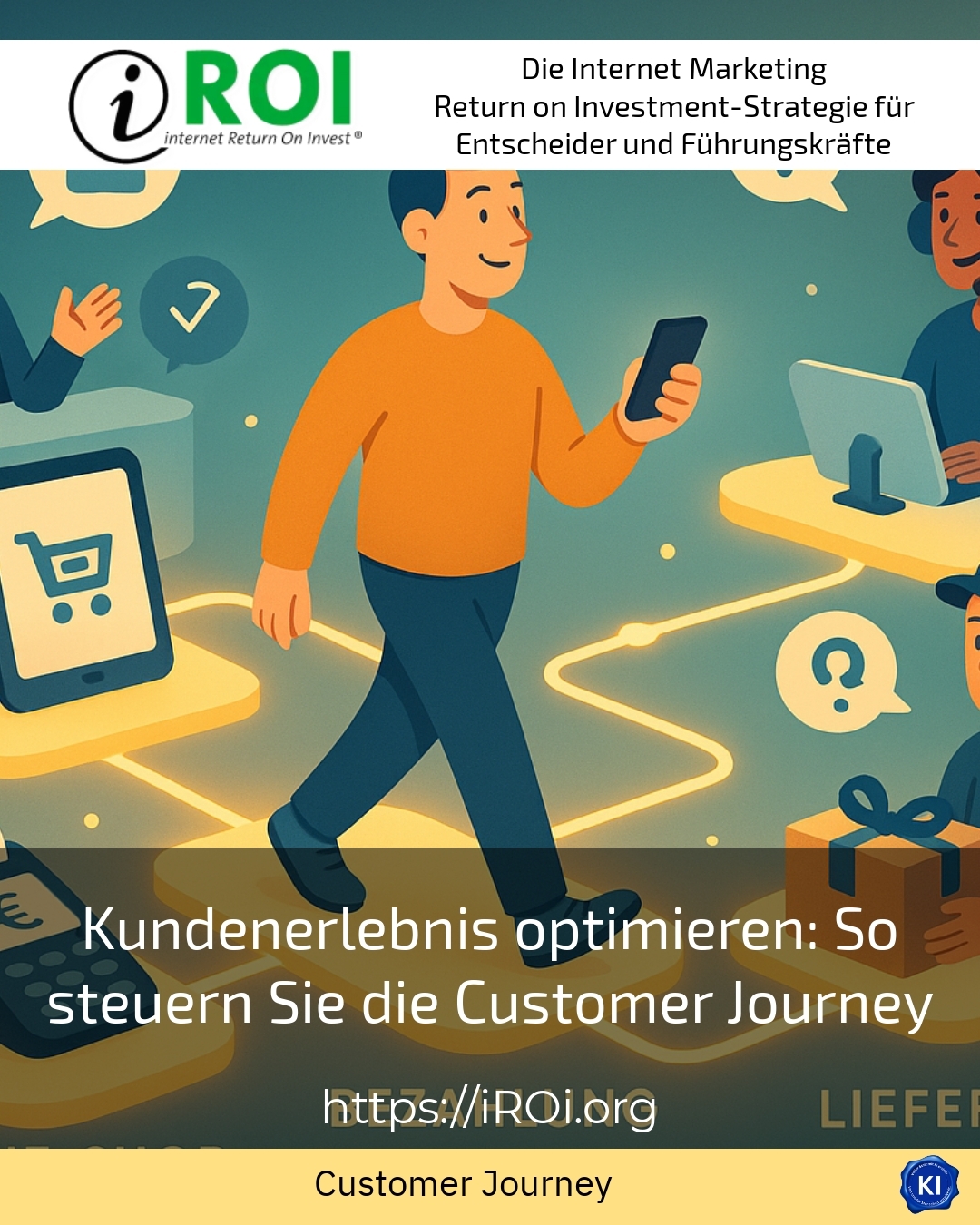
Optimising the Customer Experience: Understanding the Management of the Customer Journey
Optimising the customer experience is a crucial factor for long-term success in today's competitive landscape. Companies that actively manage the customer journey create experiences that satisfy and retain customers. This is precisely where accompanying support comes in, providing impetus for the design and adaptation of the customer journey without making absolute promises of effectiveness.
Optimising the Customer Journey for the Customer Experience
Optimising the customer experience means understanding and shaping every phase of the customer journey. This includes all steps from the initial contact to the post-purchase phase. It is important to consider the actual needs and desires of the customers. Only then can targeted measures be developed that offer genuine added value and strengthen trust. Regular updating of journey maps is essential, as customer preferences are constantly changing and must be reflected in order to remain competitive.
In practice, the use of CRM systems and cross-team collaboration between marketing, sales, and customer service enables a holistic view of the customer journey. This allows for the systematic improvement and personalisation of the customer experience based on individual customer needs.
Best Practice: Continuous adaptation is key
BEST PRACTICE at company XYZ (name changed due to NDA contract) The company implemented dynamic, real-time data-based customer journey mapping. This enabled them to identify weaknesses early on and incorporate them into optimisation through direct customer feedback. The accompanying coaching provided impetus for internal workshops that promoted interdisciplinary collaboration, thereby sustainably improving the customer experience.
Data analysis and customer segmentation to optimise support for the customer experience
The customer experience can also be optimised by targeted customer segmentation. Companies that thoroughly analyse their customer data can develop individual communication strategies. This involves tailoring messages and offers to the specific needs and preferences of each customer group. This makes customers feel better understood and valued, which often leads to higher satisfaction and stronger loyalty.
Automated systems help to efficiently deliver personalised content while continuously monitoring the effectiveness of measures. Regular updates to segments ensure that fit and relevance are maintained over time.
Best Practice: Segmentation for Sustainable Growth
BEST PRACTICE at company XYZ (name changed due to NDA contract) This company implemented a structured customer segmentation based on in-depth data analysis. Through targeted adjustment of communication channels and personalised recommendations, the company was able to noticeably increase customer loyalty and reduce churn. The accompanying coaching supported the selection of suitable automation tools and the development of sustainable segmentation strategies.
Feedback and Voice of Customer programmes as important building blocks
A central element for optimising the customer experience is the collection and analysis of customer feedback. Voice of Customer programmes offer a structured method for this. The voice of the customer is systematically captured, evaluated, and translated into actionable insights.
Such programmes help to clearly identify needs, spot potential problem areas earlier, and foster innovative ideas for product or service improvements. They enable data to be used in a way that positively influences the customer journey at critical points. Personalised and specifically formulated surveys are particularly helpful in keeping response rates high and insights actionable.
Best Practice: Using Feedback as a Motivator
BEST PRACTICE at company XYZ (name changed due to NDA contract) Implementing a Voice of Customer programme led to closer collaboration between Customer Service and Marketing to specifically address customer feedback. Proactive measures could therefore be implemented more quickly, which often resulted in positive responses. Coaching supported the team in translating the findings into concrete improvements in the customer journey.
Technology and personalisation support the optimisation of the customer experience
Technology plays a crucial role in optimising the customer experience. Modern, AI-powered analytical tools provide deep insights into customer behaviour and preferences. This allows communication measures to be precisely targeted and individually adapted. This creates a seamless and personalised experience that sustainably strengthens customer loyalty.
At the same time, digital tools promote team coordination and monitoring of all customer touchpoints. Training can equip employees with the necessary skills to effectively use new tools. This transforms the entire company into a learning system that continuously works on improving the customer experience.
Best Practice: Combination of Technology and Human Support
BEST PRACTICE at company XYZ (name changed due to NDA contract) By combining data-driven technology with accompanying coaching that provided impetus and tools for employees, a company was able to significantly improve its personalisation. Customer reviews showed increased satisfaction, particularly at digital customer touchpoints. The collaboration between technology and human expertise was decisive in this regard.
My analysis
Optimising the customer experience is a multifaceted process that requires a combination of data, technology, and human insight. Companies often report that accurate knowledge of the customer journey, targeted customer segmentation, and active engagement with feedback lead to positive changes. Accompanying support helps to implement these aspects in a practical way and promote both short-term improvements and sustainable development. It is particularly important not to make blanket promises, but to provide concrete impulses and support projects related to the customer journey.
Further links from the text above:
[1] Customer Journey: Optimising the Customer Experience
[2] Customer Segmentation Case Studies: Success Stories
[3] How to optimise the customer experience journey for success
[4] VoC programmes: improving the customer experience
[5] Customer loyalty through better customer experience
For more information and if you have any questions, please contact Contact us or read more blog posts on the topic TRANSRUPTION here.








 Deutsch
  English (UK)