
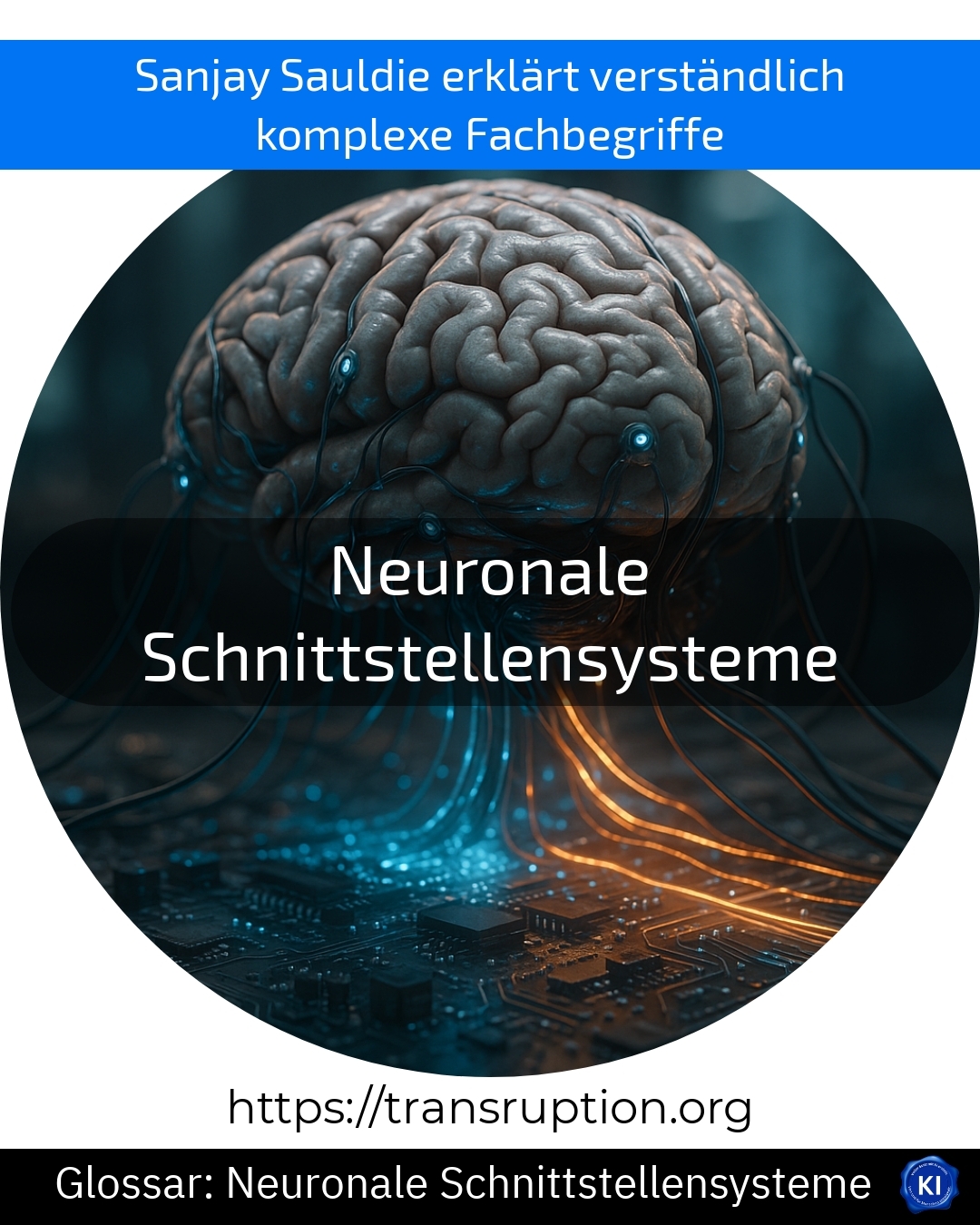
Neural interface systems are particularly relevant in the fields of artificial intelligence, the Internet of Things, and Industry and Factory 4.0. The term describes technologies that establish a direct connection between the human nervous system and computers or machines. The aim is to recognise and transmit signals from the brain or nerves, thereby controlling devices or exchanging information.
A well-known real-world example: people who have lost their mobility due to an accident can control robotic arms or prosthetics with a computer using a neural interface system – solely through thoughts or nerve signals. The system „translates“ the natural electrical impulses from the body into something understandable for the technology.
These interface systems are increasingly being integrated into the digital world. They help to operate machines more intuitively and effectively or to evaluate data directly. The connection of humans and technology creates new possibilities for rehabilitation, improved collaboration with robots, or a completely new way of controlling devices.
Neuronal interface systems are therefore considered an important building block for innovative applications and advances in existing industries.











 Deutsch
  English (UK)