
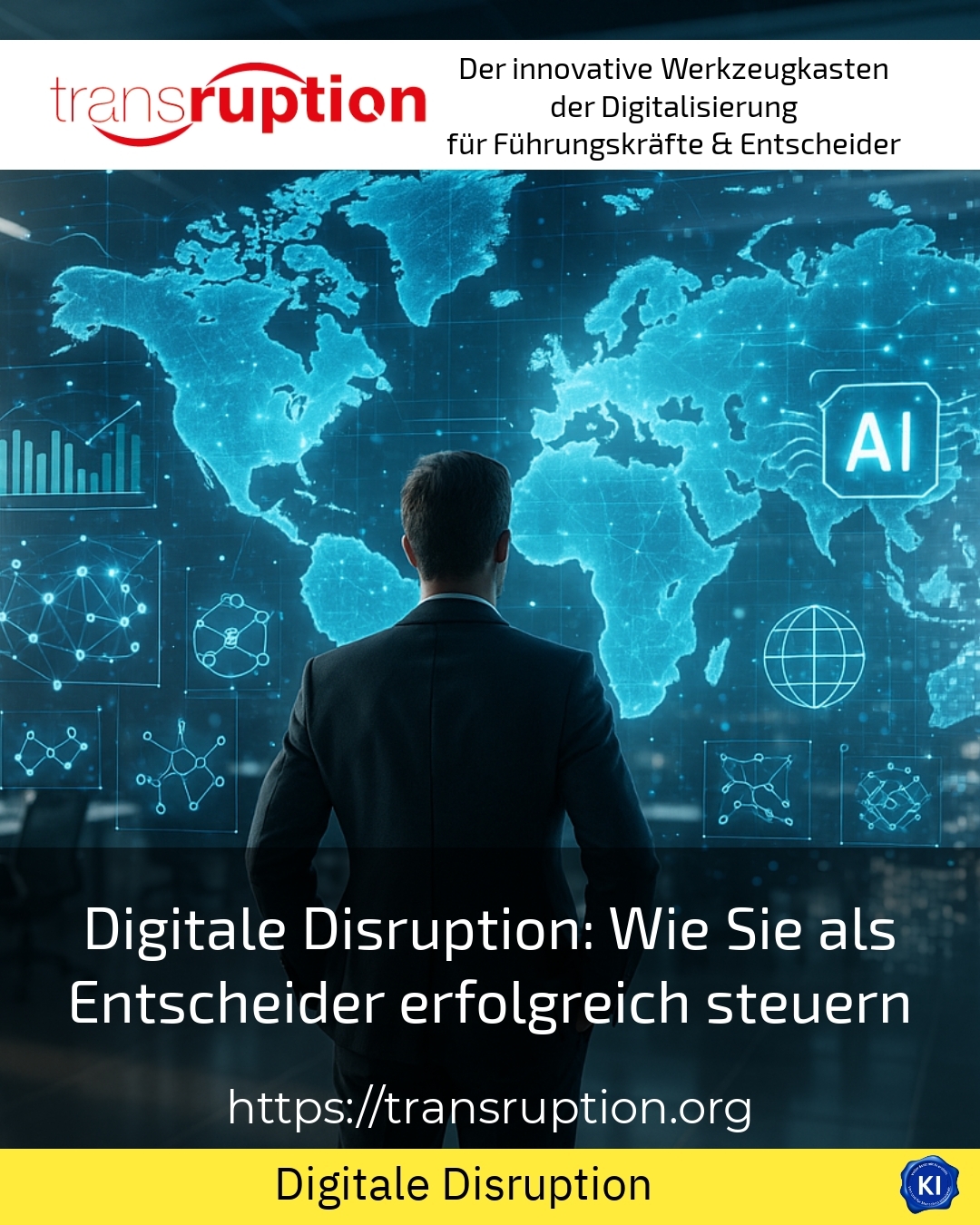
Digital disruption is a key driver of change across almost every industry today. It refers to radical shifts triggered by new technologies, innovative business models, or changing customer needs that put established providers under pressure [1][3]. As a decision-maker, you face the challenge of not only understanding this process but also actively shaping it. This article shows you how to actively manage digital disruption, what's important, and how coaching can support you.
Understanding and shaping digital disruption
Digital disruption occurs when new digital solutions fundamentally change or even recreate existing markets[1][3]. It is often start-ups or players from outside the industry who shake up the market with fresh ideas[7]. Classic examples include platforms like Uber, Airbnb, or Netflix, which have revolutionised entire industries with digital business models[2][9]. The challenge for established companies lies in recognising trends early, questioning existing processes, and bravely forging new paths.
Examples from different industries
In the mobility industry, Uber has shown how a digital platform can displace traditional taxi companies by directly connecting drivers and passengers[2][9][10]. Airbnb has revolutionised the hotel industry by allowing guests to book private accommodation instead of hotel rooms[2][9]. Netflix has turned the entertainment industry on its head by streaming films and series on demand – many video rental stores subsequently disappeared from the market[4][9][13].
The digital disruption has also been felt in the retail sector: Amazon, with its online marketplace, has put pressure on traditional brick-and-mortar stores, shaping customer expectations for convenience, speed, and choice [2][5][9]. In the music industry, Spotify has made physical sound carriers almost obsolete, as users prefer to stream rather than buy [8][9][13]. Even financial service providers are feeling the change, as digital payment systems like PayPal or cryptocurrencies are transforming banking [5].
Technologies such as Artificial Intelligence, the Internet of Things, and Blockchain are accelerating these developments and creating new markets, but also new risks for established companies [9][11]. Digital disruption therefore affects not only individual industries but is an overarching megatrend across sectors.
Navigating Digital Disruption Successfully: Strategies and Impulses
Many companies approach me with uncertainty and scepticism, sensing that their market is changing but lacking a suitable response. Clients often report that they face internal resistance and struggle to implement innovations quickly. However, digital disruption cannot be ignored; it demands proactive action.
Successful decision-makers rely on three things: they recognise trends early on, question existing structures, and experiment with new models. This requires courage, a clear vision, and the willingness to make mistakes. Coaching can support you in developing the right strategies, involving your team, and shaping change.
Action recommendations for decision-makers
Continuously observe the market, as new players often come from outside and surprise established companies. Regularly check whether your existing products and services still meet customer expectations. Digital disruption requires you to constantly reflect on and adapt your business model.
Invest in agile methods and digital skills because markets are changing faster today than they did before. Create spaces for innovation by establishing cross-functional teams and allowing for experimentation. The cultural change is just as important as technological investment.
Focus on partnerships and ecosystems, because hardly any company can overcome all challenges alone. Platforms, collaborations with start-ups, and open innovation processes help to implement new ideas quickly.
BEST PRACTICE at the customer (name hidden due to NDA contract) A medium-sized mechanical engineering company recognised that digital networking and data-based services could create new value. New business models were developed, a Digital Lab was established, and initial IoT solutions were piloted through an innovation workshop. The company now positions itself as a provider of Smart Services, enabling it to reach new customer groups.
BEST PRACTICE at the customer (name hidden due to NDA contract) A bank responded to the rising demand for digital payment methods by building its own payment platform. To achieve this, a start-up was acquired, internal processes were streamlined, and agile working methods were established. Today, the offering is the market leader in a niche segment and is achieving above-average growth rates.
BEST PRACTICE at the customer (name hidden due to NDA contract) A retailer recognised that brick-and-mortar stores alone are no longer sustainable. An omnichannel concept was designed as a joint strategy, meaningfully combining online and offline offerings. Customer journey management was digitised, logistics were optimised, and customer loyalty was strengthened.
The Role of Coaching in Digital Disruption
Transruptions-Coaching offers individual support to decision-makers navigating transformation processes. It helps you master uncertainties, make strategic decisions, and set innovative impulses. Clients often report gaining new perspectives, overcoming blockages, and implementing changes with purpose, thanks to the external viewpoint.
Together, we'll analyse how the market is changing, which technologies are relevant, and what potential lies dormant within your company. We'll develop pragmatic steps, test new ideas, and actively shape the cultural shift. This way, you'll become a driver of digital disruption, rather than just an observer.
My analysis
Digital disruption is not a temporary trend, but a permanent driver of change in the economy. It challenges companies to evolve continuously, to experiment with new business models, and to consistently focus on customer needs. Those who actively shape this transformation will not only secure their continued existence but also unlock new growth opportunities.
Experience shows that successful leaders are open to new things, allow for change, and strategically foster innovation. Transruption Coaching supports you in maintaining an overview, making the right decisions, and future-proofing your company.
Digital disruption is not destiny, but a management task – and that is precisely where your greatest lever for sustainable success lies.
Further links from the text above:
Digital Disruption – Definition and Fundamentals[1]
Disruptive Business Models and Examples
Digital Disruption – Changing Markets and Models[3]
Disruptive Innovation: 3 Examples of Innovations[4]
Digital Disruption in Online Marketing
Digital Disruption: Opportunities & Strategies[10]
Digital Disruption: Categories and Characteristics[11]
Digital Disruption: Examples and Effects [13]
Digital Disruption and Megatrends: 15 Examples
For more information and if you have any questions, please contact Contact us or read more blog posts on the topic TRANSRUPTION here.









 Deutsch
  English (UK)