
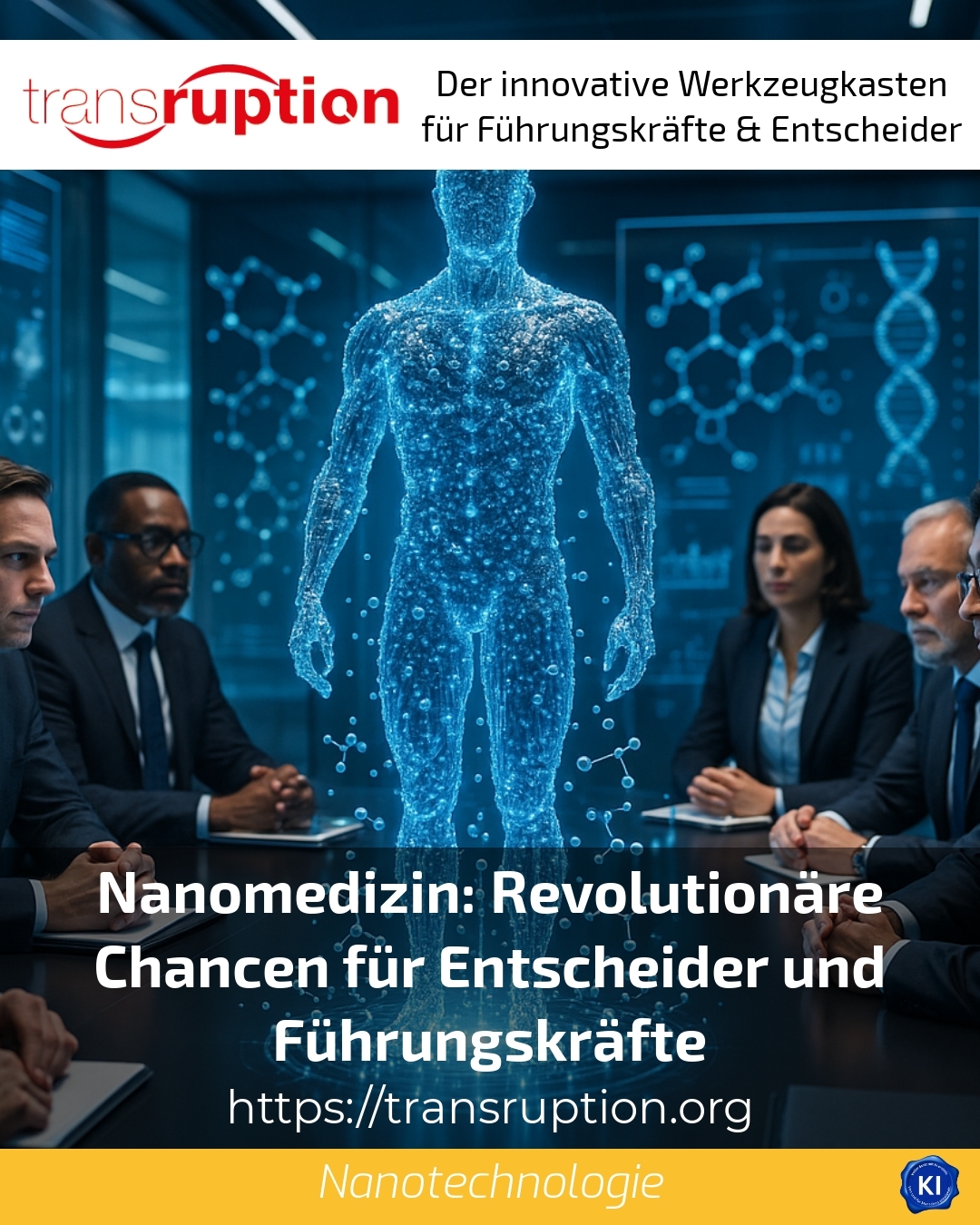
Nanomedicine opens new perspectives for health management
Nanomedicine is changing the way medical treatments can be planned and implemented today. For decision-makers and managers, this creates an innovative field full of opportunities and challenges that requires strategic foresight and interdisciplinary thinking.
Nanotechnology research is increasingly providing precise tools that not only tailor therapies better to individual patients but also enable diagnoses at a molecular level. Such advances support leaders in successfully guiding sustainable and future-oriented health projects. Clients often report how valuable ongoing guidance is when integrating nanomedicine into existing processes.
Challenges and opportunities in project support with nanomedicine
Nanomedicine offers a wide range of applications, for example in targeted drug delivery or regenerative medicine. One of the major opportunities lies in the development of autonomous nanoparticles that precisely deliver drugs to the diseased site. This can minimise side effects and increase therapeutic efficiency. Decision-makers must understand these potentials and integrate them into their strategic planning in order to manage projects successfully.
Equally important are the possibilities offered by Artificial Intelligence (AI), which makes the distribution and effect of nanoparticles in the body more predictable. This leads to increasingly personalised therapies and contributes to greater patient safety. Transruption coaching supports executives in grasping such complex technologies methodically and guiding them through implementations.
Examples of practical applications in nanomedicine
BEST PRACTICE at company XYZ (name changed due to NDA contract)
In a recent project, a novel system for targeted drug delivery to tumour cells was developed. Nanoparticles, equipped with special ligands, precisely recognise cancer cells and release the drug directly into their interior. This significantly reduced unwanted side effects over time and noticeably improved patient satisfaction. The project management benefited from systematic support, which made the process transparent and controllable.
BEST PRACTICE at ABC (name changed due to NDA contract)
An interdisciplinary team successfully used AI models to predict the spread of nanoparticles in diseased tissue. These models helped to make therapy staff planning more efficient and promoted communication between research and clinical practice. Managers reported that the interface work in particular played a central role in the project’s success.
BEST PRACTICE at DEF (name changed due to NDA contract)
In the field of regenerative medicine, an innovative nanomaterial has been developed that accelerates cell regeneration. Leaders were able to manage the integration of this material into clinical processes using external impulses and accompanying coaching. This led to a successful knowledge transfer and accelerated product approval.
Nanomedicine as a Strategic Factor for Leaders
At the leadership level, the deployment of nanomedicine demands careful innovation management. Decision-makers need not only to understand the opportunities presented by these technologies from a technical perspective but also to implement them organisationally. This includes a clear project structure, the involvement of interdisciplinary teams, and an openness to new approaches to solutions.
Transruption coaching can support the constructive management of the change process and provide crucial impetus. Many leaders find coaching to be a helpful companion for organising complex interrelationships and translating them into targeted practical application. This allows projects involving nanomedicine to be managed more effectively, acceptance to be increased, and innovation potential to be exploited.
Besides technological development, it is equally important to consider ethical and regulatory aspects early on. Leaders often report how valuable strategic guidance is for navigating these issues, minimising risks and achieving sustainable success.
My analysis
Nanomedicine opens up diverse opportunities for healthcare and is a strategically relevant topic for leaders. Its precise effect at the molecular level and the integration of AI offer new avenues in treatment and diagnostics. For decision-makers, it is essential to consider not only the technical aspects but also the management of change processes.
Transruption coaching can offer valuable support in this regard, helping to guide projects in the nanomedicine sector safely and providing impetus for successful implementation. This enables innovative technologies to be effectively integrated into established structures and developed responsibly.
Further links from the text above:
[1] Applications in Medical Nanotechnology 2025
[2] Carl Zeiss Foundation funds joint nanomedicine project
[4] Nanotechnology: Progress for Medicine and Therapy
[5] Nanotechnology in Medicine: Applications & Benefits
For more information and if you have any questions, please contact Contact us or read more blog posts on the topic TRANSRUPTION here.










 Deutsch
  English (UK)