
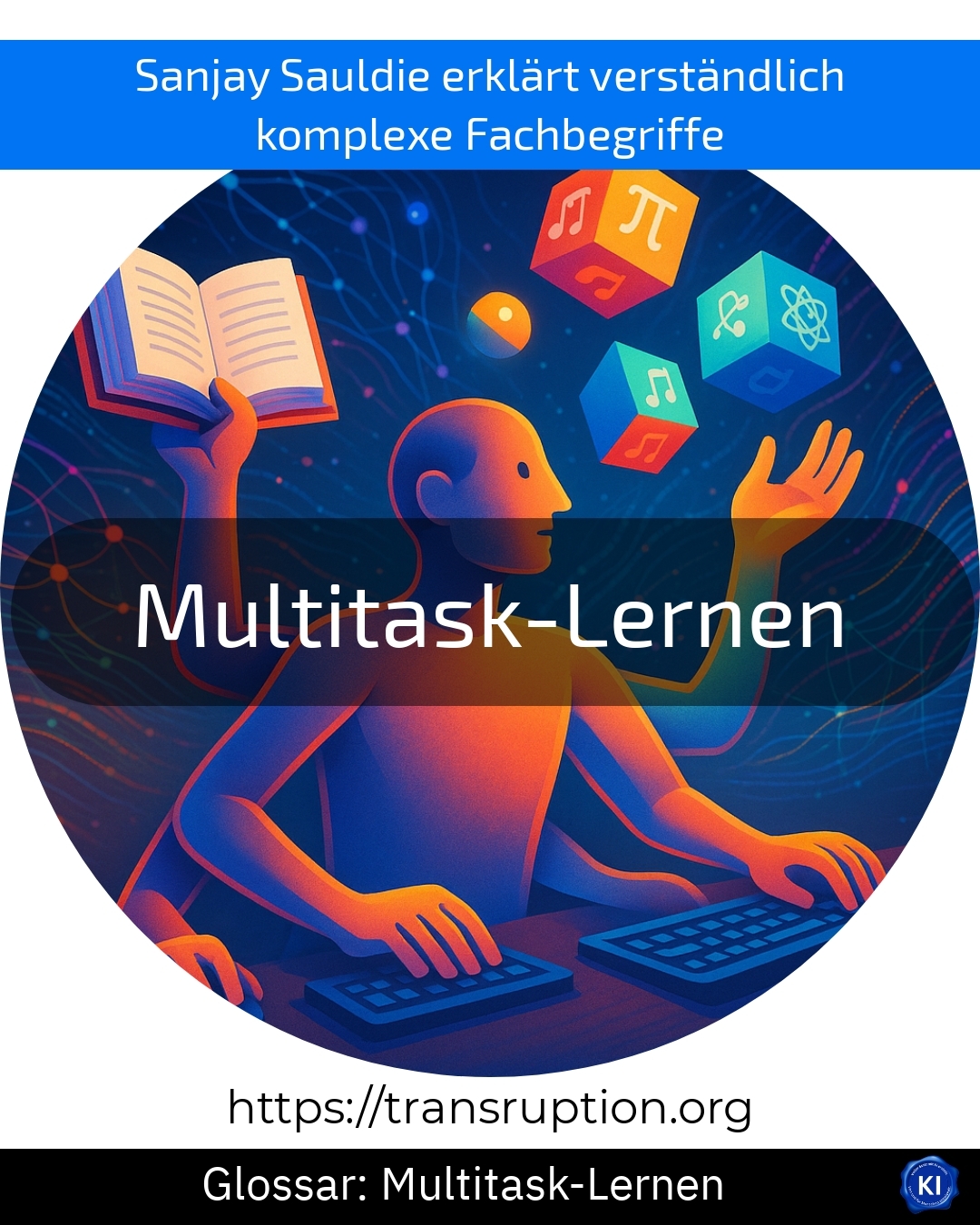
The term multitasking learning is primarily found in the fields of Artificial Intelligence, Big Data and Smart Data, and automation. Here, multitasking learning denotes a method whereby a computer program simultaneously learns and solves several tasks, rather than processing just a single task.
Imagine an artificial intelligence tasked with automatically sorting emails. Instead of just teaching it to distinguish spam from normal messages, with multitask learning, it can simultaneously learn to categorise emails by topic and recognise personal messages from previous contacts. This allows the system to better leverage overlaps and patterns between the tasks. As a result, it becomes more efficient and accurate more quickly, using less data.
Multitask learning proves particularly beneficial when data for individual tasks is scarce or when tasks are related. Within companies, this method can help accelerate processes, reduce costs, and develop more intelligent automation solutions. Ultimately, users benefit from systems that operate more diversely and reliably – a clear advantage in today's digitised world.











 Deutsch
  English (UK)