
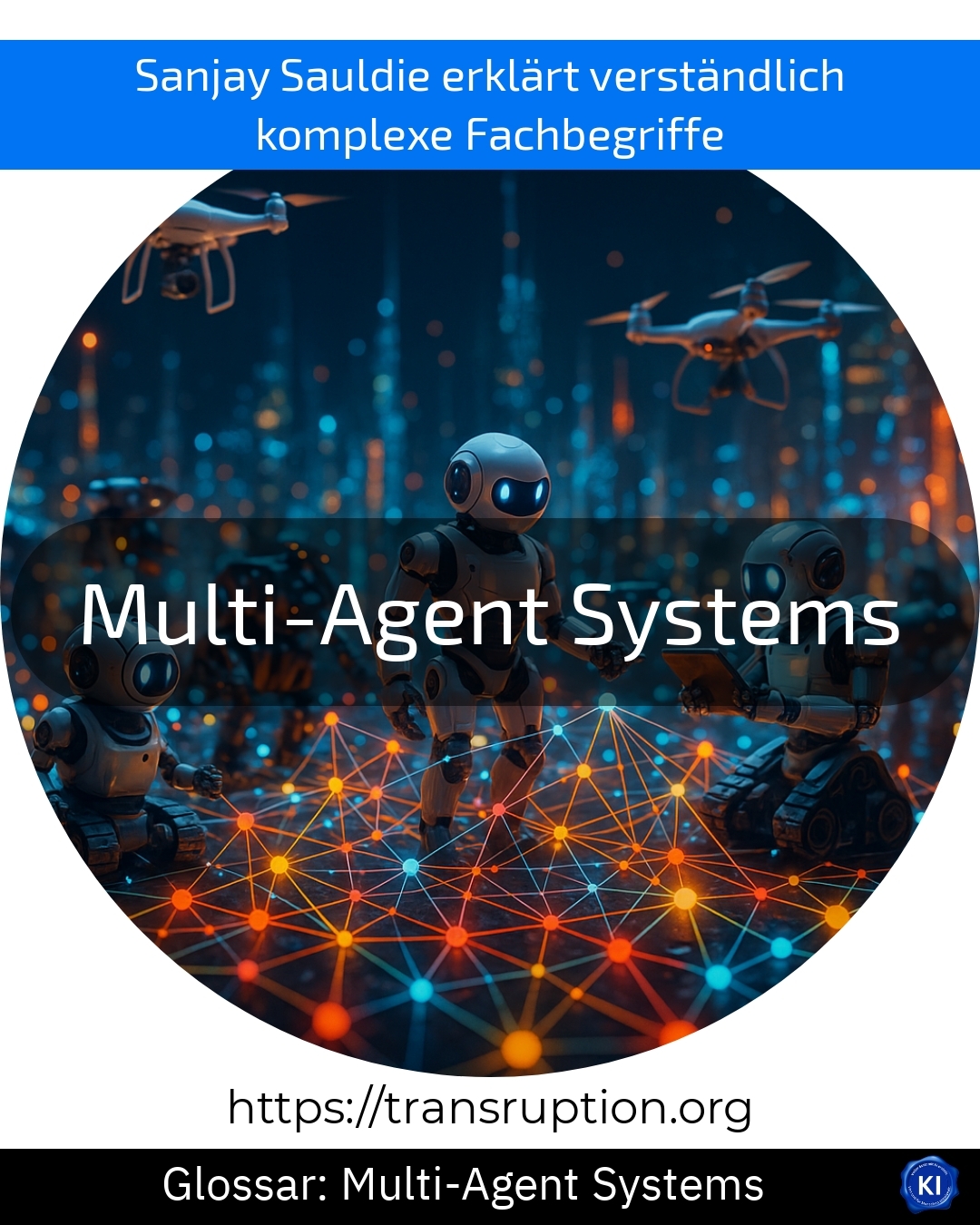
Multi-agent systems are primarily at home in the fields of artificial intelligence, automation, and industry and Industry 4.0. The term describes systems in which multiple „agents“, which are independent programmes or robots, work together to solve complex tasks. Each agent can act independently, gather information, and make decisions.
Imagine a modern factory: lots of robots working together to manufacture products. Each robot is responsible for a specific task, but they communicate with one another and adapt their activities if, for example, a bottleneck occurs or a component is missing. In this way, they manage to work more efficiently than if each robot worked alone and rigidly according to a plan.
Multi-agent systems therefore make processes more flexible, faster, and intelligent. They are crucial for the automation of processes – whether in factories, in logistics networks, or even in the smart home, where different devices such as thermostats, blinds, and lights react in a coordinated manner. These systems often make operations safer, more energy-efficient, and more economical.
In short: Multi-agent systems enable many intelligent entities to collaborate in order for complex processes to function better.











 Deutsch
  English (UK)