
The term multi-scale representations originates from the fields of Artificial Intelligence, Big Data and Smart Data, as well as Industry and Industry 4.0. It describes a method for representing and analysing complex data or structures at different levels or „scales“.
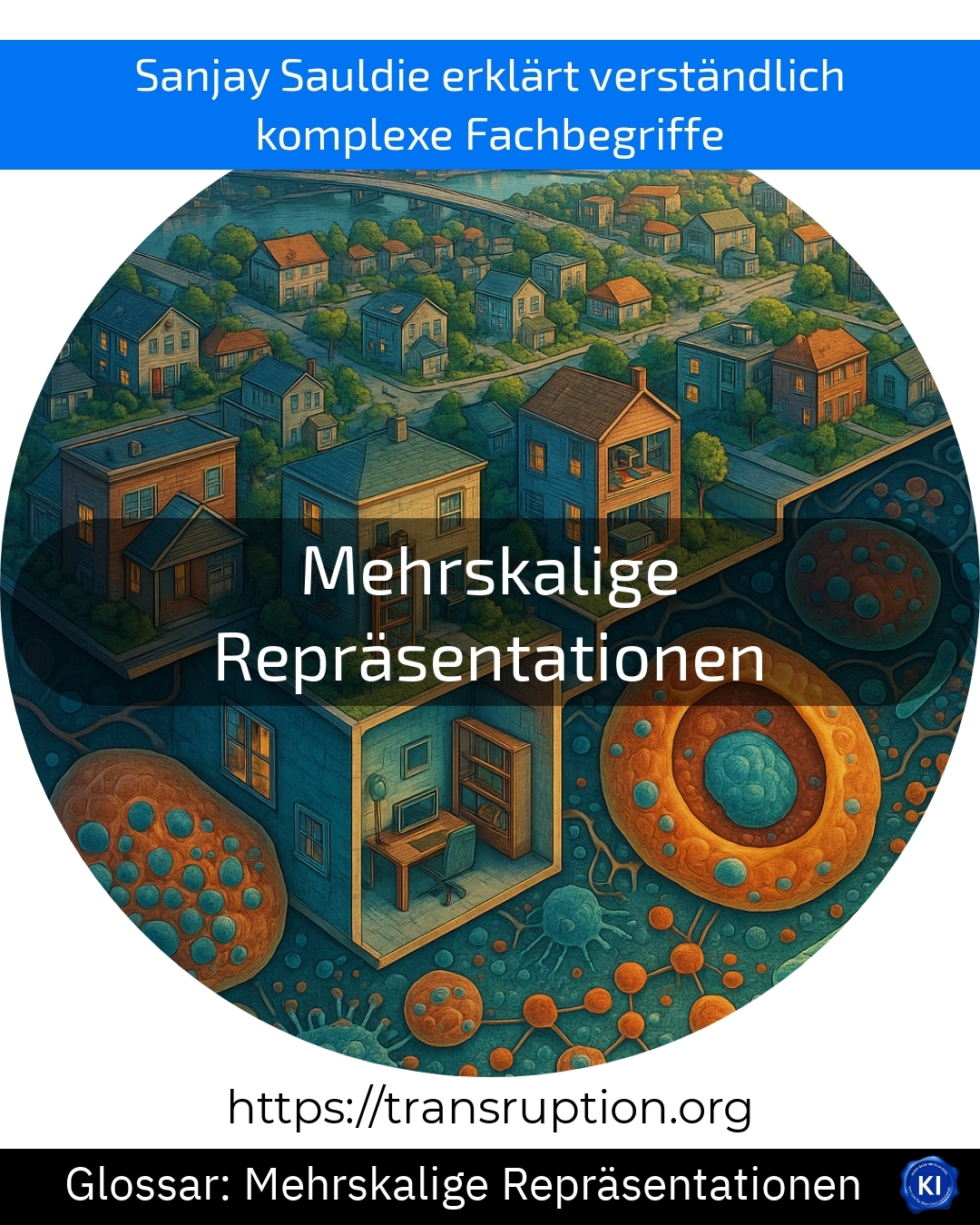
Imagine you are looking at a city map. At a high level, you only see districts. At a finer level, you can recognise individual streets, and if you look even closer, you can even see buildings. Multi-scale representations work in a similar way: they help computers or people view large datasets from different perspectives, thereby recognising patterns or relationships more effectively.
In artificial intelligence, multi-scale representations are used, for example, to efficiently analyse photos or images. A robot in a factory can use these to recognise whether a workpiece is roughly correctly shaped and, if necessary, examine details more closely.
This allows for multispectral representations, leading to better decision-making, as they make information available in either a broad or detailed view depending on the need. This makes this method particularly valuable for modern, data-driven technologies.











 Deutsch
  English (UK)