
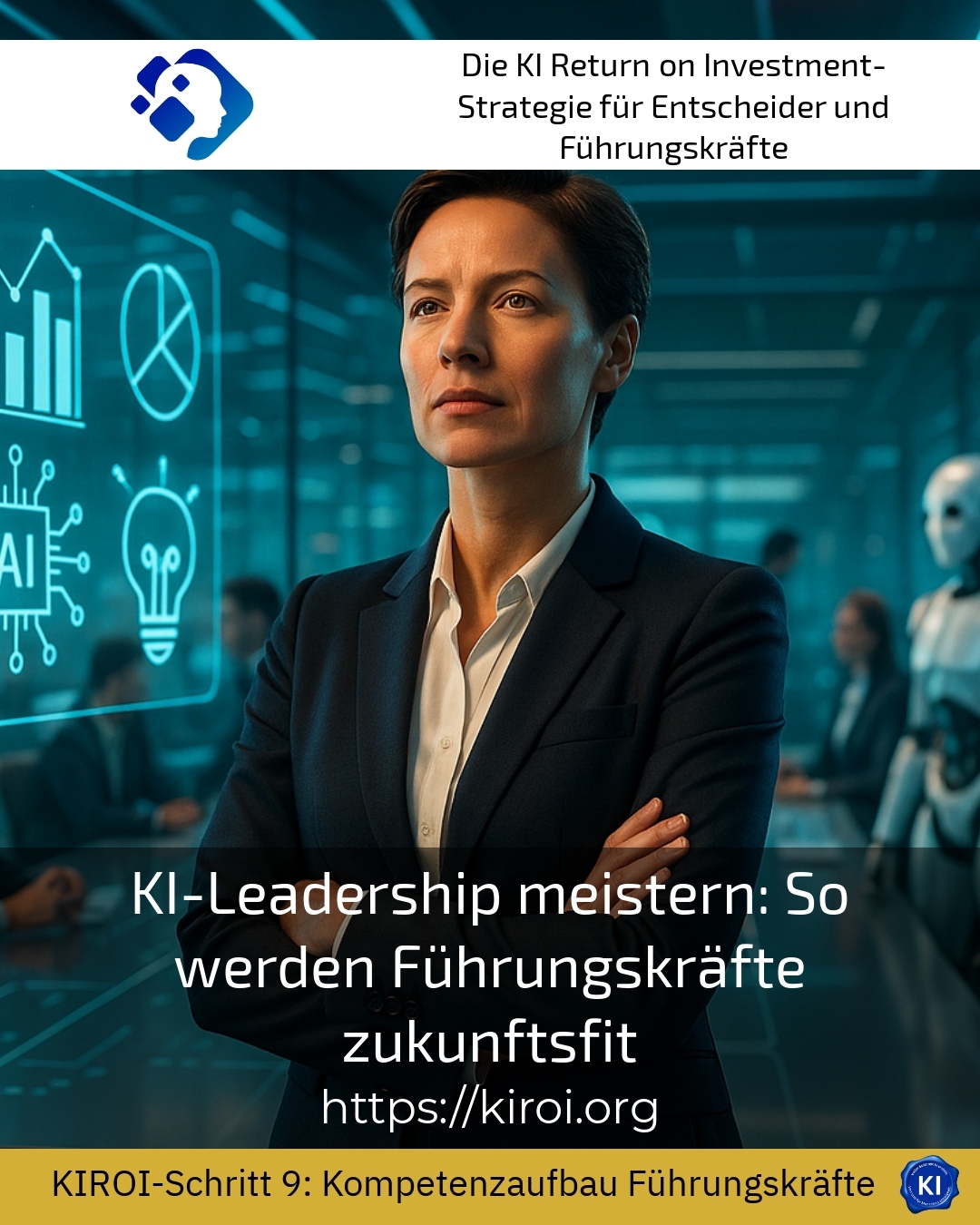
The world of work is changing rapidly, presenting decision-makers with entirely new challenges. Those leading teams today must grapple with intelligent systems. The topic Mastering AI Leadership This is currently a concern for leaders in almost all sectors of the economy. But how can the shift from classic management to a future-oriented leadership culture be achieved? This question is on the minds of many responsible individuals who feel that tried-and-tested methods are no longer sufficient. The good news is: with the right support and well-thought-out strategies, even established structures can make the leap into a new era.
The new role of leaders in the age of intelligent systems
For a long time, leadership primarily meant making decisions and guiding employees. This classic notion is currently undergoing a fundamental change. Teams are increasingly collaborating with algorithmic tools, which take over repetitive tasks and provide real-time analyses. This significantly shifts the focus for leaders. They now need to understand how humans and machines can best cooperate. At the same time, the human component remains indispensable. Empathy, strategic thinking, and ethical reflection cannot be delegated.
In many organisations, leaders report similar challenges. They feel overwhelmed by the pace of technological change. Often, they lack a basic understanding of the new possibilities. Some even fear their own position could become redundant. Such concerns are understandable, but unfounded. Because now more than ever, people are needed who can provide direction and build trust. The ability to navigate teams through uncertain times is becoming enormously important.
For example, a medium-sized mechanical engineering company introduced predictive maintenance systems. The management level had to learn to correctly interpret data-based recommendations. A logistics company implemented automated route planning for its fleet. Dispatchers needed new skills in dealing with the system's suggestions. A similar situation arose at an insurance company when introducing automated claims processing. Everywhere it became clear: technology alone does not solve problems without competent leadership.
Mastering AI Leadership through Continuous Competence Development
The path to a future-proof leader leads via lifelong learning. This is not about becoming a tech expert yourself. Rather, leaders need a sound understanding of the opportunities and limitations of intelligent systems. They should know what questions to ask. They should understand when human judgment is required. This competence does not develop overnight. It requires conscious engagement and practical experience.
Transruptions-Coaching supports leaders precisely in this development. The approach combines fundamental technological knowledge with reflection on one's own leadership role. This results in individual strategies for everyday work. Many clients report that this guidance gives them confidence. They gain clarity on which steps are sensible next. The impulses from the coaching process often have an impact far beyond the actual topic.
Best practice with a KIROI customer
A long-established family business in the manufacturing sector faced a significant transformation. The managing director recognised that intelligent analysis tools could revolutionise quality control. At the same time, she sensed massive resistance from middle management. Many department heads felt threatened by the technology and blocked changes. As part of the transruption coaching, the leadership team first developed a shared understanding. Individual managers reflected on their personal fears and reservations. This led to concrete measures to involve all stakeholders. The company established an internal learning circle for managers. There, those responsible regularly exchanged experiences. Within a few months, the company culture noticeably changed. Initial scepticism gave way to constructive curiosity. Today, the company uses intelligent systems at several critical points. The managers understand their role as shapers of this change. They have learned to combine technological possibilities with human judgment. This development would hardly have been possible without systematic support.
Practical steps to mastering AI leadership
The transformation process ideally begins with an honest assessment. Where does the organisation currently stand in relation to intelligent technologies? What competencies are already in place, and where are the gaps? This analysis forms the basis for all further steps. Without a clear picture of the starting situation, there is a lack of direction for the path ahead.
For example, a major retailer systematically analysed all customer touchpoints, identifying numerous opportunities for intelligent support. A law firm examined its document analysis processes and recognised enormous potential for automated preliminary work in contract reviews. A hospital evaluated its diagnostic processes from the perspective of data-based decision support. Everywhere, it became clear: the first step is always to take a close look.
Following analysis comes prioritisation. Not everything can be implemented at once. Leaders must decide which projects promise the greatest benefit. Factors such as team acceptance and available resources also play a role. A step-by-step approach reduces overwhelm and allows for learning from experience. Small successes create motivation for bigger changes.
Cultural change as the foundation for technological transformation
Technology alone does not transform organisations. It is always people who drive or block change. Therefore, every successful transformation begins with the company culture. Leaders significantly shape this culture through their own behaviour. If they demonstrate openness to new things, teams follow suit. Conversely, if they themselves appear uncertain, this attitude is contagious.
A regional bank introduced new analytical tools for credit assessments. The board initially invested significant time in their own further training. Only then did they communicate the changes to the staff. This sequence proved crucial for success. A pharmaceutical company proceeded similarly when introducing research assistant systems. The laboratory management familiarised themselves with the possibilities. Subsequently, they were able to credibly promote their use. A media house first trained the editorial board in using research tools. These managers then became ambassadors for change within their teams.
Cultural change requires patience and perseverance. Old habits cannot be shed overnight. It requires recurring impulses and consistent role-modelling. Transruption coaching supports leaders in developing this perseverance. The guidance also helps with setbacks and frustrations. Such moments are part of any change process.
Constructively using resistance in mastering AI leadership
Resistance to change is natural and even valuable. It indicates where people have concerns or are lacking information. Smart leaders do not suppress resistance but listen carefully. Often, important clues for implementation are hidden behind objections. Employees usually know the practical processes better than management.
An engineering firm experienced significant skepticism towards automated calculation tools. The experienced professionals feared for their expertise and status. Management took time for in-depth discussions with all stakeholders. It then became clear: the fears were partly justified. The original introduction concept did not sufficiently account for human control. Through dialogue, an improved approach with a clear division of roles emerged. The professionals retained their decision-making authority in complex cases. The system only took over standardised calculations as preliminary work.
Best practice with a KIROI customer
An internationally active management consultancy wanted to implement intelligent systems for project acquisition. Initially, the partners reacted cautiously to the management's proposal. They feared the standardisation of their individual client relationships. In transruptions coaching, the leadership systematically addressed these concerns. This revealed a communication problem between the technical department and the partner level. The technicians had not clearly explained the possibilities. The partners did not understand that the system was only intended to provide support. After several moderated workshops, a common understanding emerged. The partners realised that better data analysis would free up more time for personal client care. The system was to automate research and preparation. Strategic consulting remained entirely in human hands. This clarity almost entirely removed the resistance. The implementation then proceeded much more smoothly than in comparable projects. The experience highlights the importance of early and transparent communication for transformation projects. Without external guidance, this insight would probably only have emerged after costly failures.
Ethical Dimensions of Technology-Enabled Leadership
With new possibilities come new responsibilities. Intelligent systems make decisions based on data and algorithms. These are not neutral, but reflect the assumptions of their developers. Managers must be aware of this problem. They bear responsibility for the impact of technology-supported decisions.
A recruitment agency introduced automated pre-selection of applications. It quickly became apparent that certain groups of candidates were systematically disadvantaged. The algorithm had adopted patterns from historical data. These contained unconscious biases of previous decision-makers. Management had to fundamentally revise the system. Similar problems occurred at a financial services provider. Its credit scoring system disadvantaged certain districts. An insurance company struggled with non-transparent risk assessments. Everywhere, managers were challenged to develop ethical guidelines.
Addressing these questions is now part of core leadership business. It's no longer enough to focus solely on efficiency and profit. Social responsibility and long-term reputation are also at stake. Leaders need spaces to reflect on such dilemmas. Transruption coaching offers precisely this opportunity for in-depth consideration.
My KIROI Analysis
The transformation towards technology-supported leadership is not linear in most organisations. Rather, I observe typical patterns of progress and setbacks. The attitude of the top leadership is crucial for long-term success. If they authentically stand behind the change, the organisation will follow. Lip service without genuine conviction is quickly seen through by employees.
Companies that tackle technological and cultural transformation simultaneously are particularly successful. They invest not only in systems but also in people. The development of leadership skills receives at least as much attention as technical implementation. These organisations understand that sustainable change takes time. They favour evolution over revolution and avoid overwhelming their workforce.
Managers often underestimate their own need for development. They focus on training their employees, forgetting that they themselves have the greatest leverage. Their attitude, questions, and decisions shape the entire transformation process. That is why I recommend always starting at the management level with change projects. Only those who have understood and internalised it themselves can credibly take others with them. Support from experienced coaches significantly accelerates this process [1]. External perspectives help to recognise blind spots and develop new courses of action [2].
Further links from the text above:
[1] KIROI Blog: Impulses for future-oriented leadership
[2] Contact for individual advice and coaching
For more information and if you have any questions, please contact Contact us or read more blog posts on the topic Artificial intelligence here.











 Deutsch
  English (UK)