
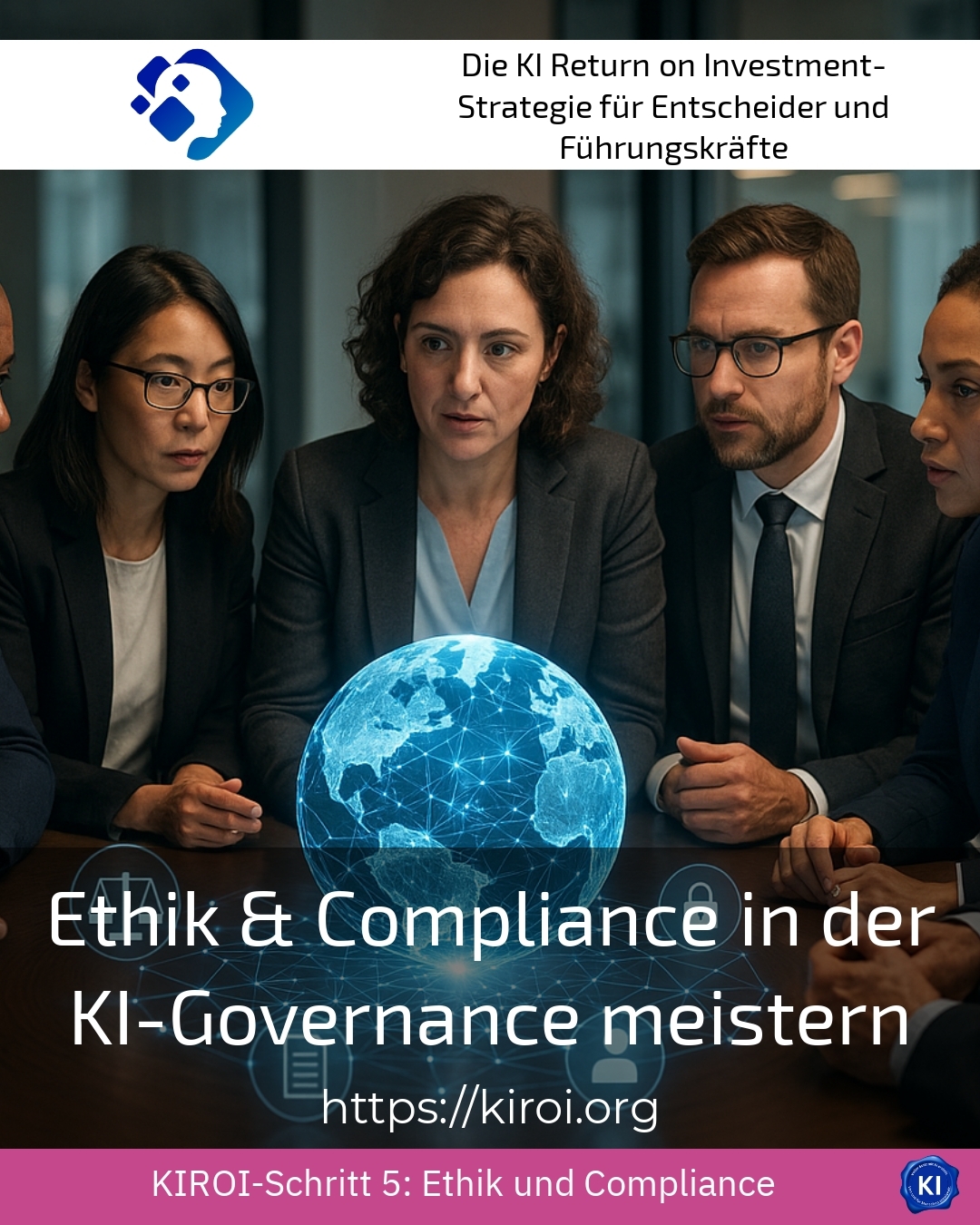
Imagine your algorithmic systems make thousands of decisions daily that directly affect people's lives. But who is actually responsible when something goes wrong? This question is currently preoccupying leaders worldwide and bringing the topic Mastering Ethics & Compliance in AI Governance in the focus of strategic considerations. Because technological development is advancing rapidly, a growing area of tension is emerging between innovation and responsibility. Companies are faced with the challenge not only of complying with legal requirements but also of setting moral standards. Clients often report uncertainties in the practical implementation of these requirements. This is precisely where well-founded guidance comes in, providing impetus and establishing sustainable structures.
Understanding the fundamentals of responsible technology governance
Before organisations can implement effective frameworks, they must first grasp the fundamental principles that underpin responsible technology governance. Transparency forms the first foundational element, as it ensures that decision-making processes remain comprehensible and all stakeholders understand how outcomes are achieved. Furthermore, fairness plays a central role, as algorithmic systems must not systematically disadvantage or discriminate against certain groups. Another important principle is accountability, which determines who takes responsibility for incorrect decisions and which correction mechanisms are implemented.
In the financial sector, for instance, it's evident how critical these fundamentals are. Credit decisions based on automated assessments can have existential consequences for applicants. Insurance companies use predictive models for risk assessment and must ensure that no inadmissible characteristics are included in the calculation. These issues are also becoming increasingly important in healthcare, as diagnostic support systems are increasingly influencing clinical decisions. This creates a complex web of technical, legal, and ethical requirements.
Why traditional compliance approaches are no longer sufficient
Current methods for regulatory compliance are reaching their limits with self-learning systems. Traditional compliance was based on clearly defined rules and predictable processes. However, machine learning methods are continuously evolving and can exhibit unexpected behaviours. Therefore, companies need adaptive governance structures that can keep pace with this dynamism.
A car manufacturer recently implemented an assistance system that analyses driving behaviour and provides personalised recommendations. Following its market launch, it emerged that the system systematically evaluated certain driving styles differently. A telecommunications provider, when reviewing its customer service bot, recognised that it delivered less accurate responses for certain dialects. A logistics company had to adjust its route optimisation because it disadvantaged socioeconomically weaker neighbourhoods. These examples highlight the necessity of continuous monitoring and adjustment.
Mastering Ethics & Compliance in AI Governance through Structured Frameworks
To systematically address the challenges described, organisations need structured frameworks that cover and link various dimensions. Such a framework typically begins with a comprehensive risk analysis that identifies and assesses potential impacts on affected groups of people. This is followed by the definition of audit criteria and thresholds that can be used to regularly evaluate systems. Furthermore, the establishment of escalation processes is also part of this, so that identified problems can be responded to quickly and appropriately.
Best practice with a AIROI customer A medium-sized company in the field of personnel services approached us because they were increasingly using automated pre-selection systems and had concerns about possible discrimination. Together, we first analysed the existing algorithms and identified several critical points where implicit biases could occur. In the next step, we developed a multi-stage testing procedure that considers various fairness metrics and includes regular audits. Transruptions coaching assisted the project team in achieving company-wide awareness and sustainably anchoring the necessary processes. After six months, the company was able to demonstrate that its selection processes were functioning significantly more equitably and that applicant satisfaction had measurably increased. Particularly valuable was the realisation that technical solutions alone are not sufficient, but rather a cultural transformation throughout the entire company is required. The managers reported that they now have a significantly better understanding of the connections between technical decisions and their societal implications.
The role of stakeholder engagement in shaping governance
Effective governance frameworks do not arise in a vacuum, but require the active involvement of all relevant stakeholders. Technical experts contribute the necessary expertise on system architectures and algorithmic functionalities. Legal professionals ensure that regulatory requirements are fully considered [1]. Ethicists and philosophers provide input on moral questions that go beyond mere regulatory compliance. And representatives of the affected user groups can bring valuable perspectives that might otherwise be overlooked.
For example, an energy provider has established an advisory board to monitor and critically question the development of smart meter analyses. A retail chain regularly involves consumer organisations in the evaluation of its personalised pricing. An education provider works with parent associations when it comes to the use of adaptive learning systems. This involvement builds trust and significantly improves the quality of decisions made.
Practical Implementation Strategies for Various Industries
Theoretical foundations must be translated into practical measures that cater to the specific requirements of different sectors. In the banking sector, for example, this requires close integration with existing risk management systems and regulatory requirements [2]. In the manufacturing industry, issues of occupational safety and data protection in the monitoring of production processes are often paramount. In the retail sector, the focus is frequently on the responsible handling of customer data and the avoidance of manipulative practices.
An international pharmaceutical company has introduced a three-stage approval process for all applications that process patient data. A mobility service provider conducts so-called ethics reviews before each market launch of new functions, in which interdisciplinary teams assess potential risks. A media company has developed clear guidelines for the use of recommendation algorithms, which are intended to counteract filter bubbles and radicalisation. These examples show what industry-specific solutions can look like.
Mastering Ethics & Compliance in AI Governance with Continuous Monitoring
One-off checks are not enough to ensure responsible systems in the long term. Instead, organisations require continuous monitoring mechanisms that detect deviations early and enable countermeasures. Increasingly, automated tools are used for this, which capture specific metrics in real time and raise an alarm when defined thresholds are exceeded. At the same time, human expertise remains indispensable because not all relevant aspects can be quantified.
Best practice with a AIROI customer An established consumer goods company approached us with the challenge that its price optimisation algorithms were facing increasing scrutiny from consumer associations. Initial analysis revealed that while there were no legal infringements, ethically questionable practices could indeed be identified. transruptions coaching supported the team in developing a comprehensive dashboard that continuously monitors and visualises various fairness indicators. Together, we established a governance committee that meets monthly to evaluate the collected data and decide on adjustments as needed. The integration of customer feedback data into the monitoring system was particularly effective, allowing subjective perceptions to be considered alongside objective metrics. Following implementation, the company was able to demonstrate that its pricing had become more transparent and understandable, which had a positive impact on brand perception. The executive level emphasised how valuable the external support was in identifying blind spots and establishing a culture of accountability.
Cultural change as the foundation of sustainable governance
Technical measures and formal processes can only achieve their full effect if they are supported by an appropriate corporate culture. This first requires a clear commitment from leadership, expressed through the provision of concrete resources and personal engagement. Furthermore, all employees must understand the importance of responsible technology use for the company and its stakeholders. Training programmes and awareness initiatives play an important role in this, but they must be supplemented by appropriate incentive systems.
For example, an insurance group has integrated ethical criteria into its performance reviews and rewards employees who proactively report potential issues. A technology company regularly holds hackathons where teams attempt to identify vulnerabilities in existing systems [3]. A retail company has set up an anonymous reporting channel through which concerns about algorithmic decisions can be raised. These measures help to establish a culture of vigilance and responsibility.
The importance of external support in transformation projects
Many organisations find that their internal resources and expertise are insufficient to tackle complex challenges independently. External consulting can offer valuable support here by bringing in cross-industry experience and ensuring an independent perspective. Transruption coaching clearly positions itself as guidance for projects concerning the responsible integration of new technologies into existing structures. The aim is not to present ready-made solutions, but to develop tailor-made approaches in collaboration with clients.
Clients often come with concerns about not meeting regulatory requirements or experiencing reputational damage. Others seek support in developing guidelines that go beyond minimum legal standards and enable genuine differentiation. Still others need guidance in communicating with sceptical stakeholders, be they employees, customers, or the public. In all these cases, transruption coaching offers impetus and structured approaches based on proven methods.
Mastering Ethics & Compliance in AI Governance within the Regulatory Environment
The legal framework is continually evolving, presenting companies with the challenge of always staying up-to-date. European regulations set international standards and also influence legislation in other regions. In addition to binding regulations, voluntary standards and industry initiatives are also gaining importance, serving as a guide and creating trust. The art lies in viewing compliance not as a tiresome duty, but as an opportunity for differentiation and trust-building.
A financial services provider is using stringent requirements as a selling point to customers who value responsible technology use. An industrial company oriented itself early towards upcoming standards and now has a competitive advantage over rivals who are only reacting later. A healthcare provider actively advertises its strict internal governance structures, thereby attracting qualified professionals who wish to work in an ethically oriented environment.
My AIROI Analysis
The systematic examination of responsible technology governance shows that companies are facing a multi-faceted transformation that goes far beyond merely technical adjustments. My analysis of current developments and experience from numerous consulting projects leads to several key insights that are crucial for successful implementation. Firstly, it becomes clear that a purely reactive approach, which merely responds to regulatory requirements, cannot be successful in the long term. Instead, organisations should act proactively and integrate ethical considerations into their development processes from the outset. Furthermore, it is evident that isolated measures by individual departments are insufficient; a holistic approach is required that involves and connects all relevant areas. The importance of leadership cannot be overestimated, because cultural changes only succeed if they are actively supported and modelled from the top. At the same time, the operational levels must not be forgotten, as this is where concrete decisions are made and implemented. Another critical success factor is the readiness for continuous adaptation, as both technological possibilities and societal expectations are constantly evolving. Companies that address these issues early and seriously will not only minimise risks but also unlock new opportunities and position themselves as trustworthy actors. Investing in structured governance frameworks pays off in the long term, both in terms of business economics and societal acceptance of technological innovations.
Further links from the text above:
[1] European Commission: Artificial Intelligence and Digital Strategy
[2] BaFin: Artificial Intelligence in Financial Supervision
[3] Bitkom: Artificial Intelligence in the Economy
For more information and if you have any questions, please contact Contact us or read more blog posts on the topic Artificial intelligence here.








 Deutsch
  English (UK)