
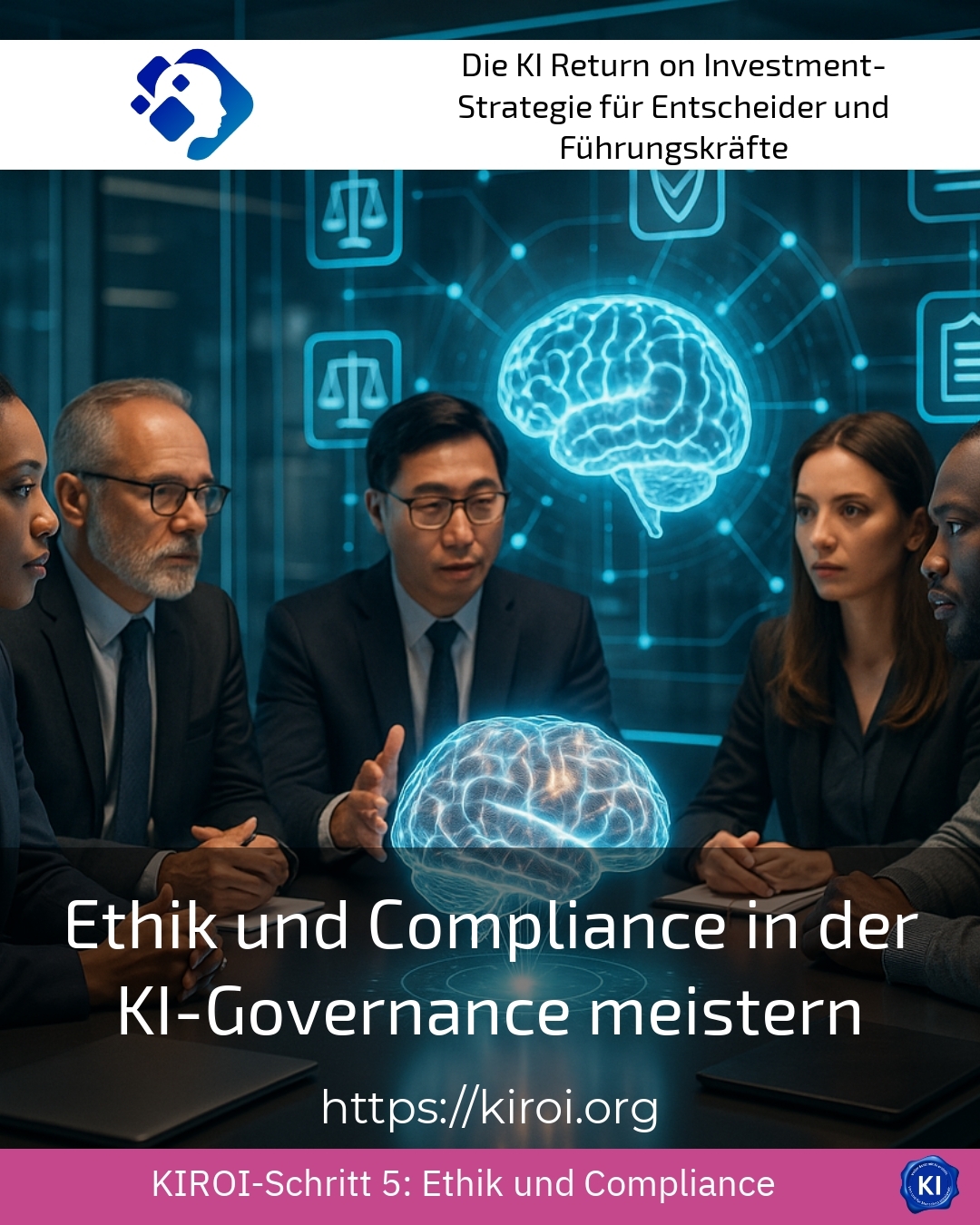
Imagine an autonomous system making a decision that impacts the lives of thousands of people. Who bears the responsibility? This question is occupying leaders, developers, and societies worldwide. The subject Mastering Ethics and Compliance in AI Governance is rapidly gaining importance. Companies face the challenge of using innovative technologies responsibly. At the same time, they must meet regulatory requirements and build societal trust. This article shows you how transruption coaching can support you with these complex projects.
The fundamental importance of responsible governance of intelligent systems
Intelligent systems are now permeating almost every area of life. They analyse medical data and support diagnosis. They manage financial portfolios and assess credit risks. They filter applications and influence HR decisions. Each of these application areas raises profound ethical questions. How do we ensure that algorithmic decisions remain fair and understandable? This challenge requires a structured approach.
In healthcare, clinics use predictive models for risk assessment. An algorithm evaluates which patients require more intensive care. However, historical biases in training data can lead to systematic disadvantage. Clients often report uncertainties regarding the implementation of such systems. Another example can be seen in radiology. Image recognition systems assist in tumour detection. However, the question of ultimate responsibility remains complex. In pharmaceutical research, intelligent systems also accelerate drug development. The ethical evaluation of animal testing alternatives through simulations is gaining relevance.
Mastering Ethics and Compliance in AI Governance in the Financial Sector
Banks and insurance companies are using algorithmic systems in sensitive areas. Creditworthiness checks are increasingly based on machine learning models. These systems process thousands of data points in fractions of a second. At the same time, risks are arising from non-transparent decision paths. Regulatory authorities are calling for comprehensible explanations for rejected applications. The tension between efficiency and transparency requires careful consideration.
In the insurance sector, algorithms calculate individual premiums, incorporating behavioural and health data. The line between legitimate risk assessment and discrimination is blurring. High-frequency trading systems make decisions in microseconds. The question of market manipulation through algorithmic behaviour concerns regulators. Anti-money laundering also relies on intelligent pattern recognition. The balance between over-regulation and protective function remains challenging.
Best practice with a AIROI customer
A medium-sized financial services company faced the challenge of modernising its credit assessment system. The existing model exhibited systematic biases against certain demographic groups. As part of a transruption coaching engagement, the team first comprehensively analysed the training data. During this process, the participants identified historical imbalances in the dataset. Together, they developed a multi-stage validation process for algorithmic decisions. An interdisciplinary committee comprising technicians, legal experts, and ethics specialists now reviews critical cases. The company also implemented a transparent complaint management system for affected customers. All model decisions are now documented comprehensively and comprehensibly. Regular audits by external examiners ensure compliance with ethical standards. Customer satisfaction increased measurably, and regulatory queries could be answered more quickly. This example demonstrates how structured guidance can provide impetus for complex transformation projects.
Regulatory Frameworks and Their Practical Implementation
European legislation sets global standards for the regulation of intelligent systems. The AI Act categorises applications according to their risk potential [1]. High-risk systems are subject to strict requirements for transparency and human oversight. Companies must fulfil comprehensive documentation obligations. Practical implementation requires significant organisational adjustments. Transruptions-Coaching supports organisations through this transformation.
In human resources, special protective regulations apply to algorithmic decision-making systems. Applicant management systems must ensure non-discriminatory processing. The GDPR protects data subjects from fully automated decisions with significant impact. A right to human review must be guaranteed. In the public sector too, requirements are becoming stricter. Authorities use predictive systems for fraud detection. Upholding the principles of the rule of law requires particular care.
Systematically meeting industry-specific compliance requirements
Every industry presents specific regulatory challenges. In the energy sector, smart grids manage electricity distribution. The security of supply must not be jeopardised by algorithmic errors. Critical infrastructures are subject to special protection requirements. In transport, autonomous driving systems are rapidly developing. Approval processes must keep pace with technical advancements. Liability issues in accidents involving automated vehicles remain unresolved.
The telecommunications industry is using intelligent systems for network optimisation. At the same time, questions are arising about net neutrality with algorithmic prioritisation. In retail, recommendation systems are personalising the shopping experience. The line between helpful personalisation and manipulative influence is blurring. Intelligent control systems are also becoming more important in manufacturing. Human-machine collaboration requires new safety concepts.
Mastering Ethics and Compliance in AI Governance through Structured Processes
Successful governance requires more than just technical solutions. Organisations must develop an ethical corporate culture. Leaders bear responsibility for setting an example. Employees need training on ethical issues. A clear code of conduct provides guidance in borderline cases. The establishment of an ethics council can provide impetus.
In the media sector, algorithmic systems curate news content. Regulators are concerned about misinformation and filter bubbles [2]. Social networks employ intelligent moderation systems. The balance between freedom of expression and protection against hate speech requires nuanced approaches. New challenges are also emerging in education. Adaptive learning systems tailor content individually. The assessment of student performance by algorithms raises questions of fairness.
Best practice with a AIROI customer
An international trading company wanted to expand its customer service system with intelligent chatbots. The challenge lay in cultural sensitivity across various markets. Transruption Coaching supported the project team over several months. Initially, the participants conducted a comprehensive stakeholder analysis. Customers from different cultural backgrounds were involved in focus groups. The team identified potential misunderstandings and discriminatory language patterns. Together, they developed country-specific guidelines for automated communication. A multi-stage escalation system ensures human intervention on sensitive topics. Regular feedback loops with customer service staff continuously improve the system. Implementation was carried out step-by-step with close monitoring of success. The company was able to increase its service quality while upholding ethical standards. This project demonstrates how cultural complexity can be managed through structured support.
Technical and organisational measures for risk minimisation
The technical implementation of ethical principles requires specialised knowledge. Explainability methods make algorithmic decisions understandable. Bias audits identify systematic distortions in training data. Robustness tests check the stability of models under various conditions. These technical measures must be embedded into organisational processes. Collaboration between technology, law, and management is gaining importance.
In the logistics industry, intelligent systems optimise supply chains. The question of fair working conditions under algorithmic control arises. Warehouse workers receive orders from automated dispatch systems. Human autonomy must not be completely sacrificed for efficiency. In the real estate sector, valuation algorithms assist with price discovery. Historical segregation patterns can be perpetuated in the data. Precision systems are also becoming more common in agriculture. The ethical dimension of animal husbandry optimisation deserves attention.
Future prospects and strategic recommendations
Technological development continues to accelerate. Generative systems are creating new challenges for copyright and authenticity. Distinguishing between human- and machine-generated content is becoming more difficult [3]. Organisations must act proactively to avoid being caught out by regulatory developments. Proactive governance creates competitive advantages through trust-building.
In the legal sector, intelligent systems assist with document analysis. The question of lawyer-client privilege arises with algorithmic advice. In the entertainment industry, recommendation systems personalise media content. The psychological effects of algorithmic curation on users warrant attention. In sports, too, data-driven decision systems are gaining importance. Fairness in algorithm-assisted talent scouting requires critical reflection.
My AIROI Analysis
The observation clearly shows that responsible technology governance is not an optional add-on. Rather, it forms the foundation for sustainable business success in the digital age. Organisations that invest early in robust governance structures position themselves advantageously for upcoming regulatory tightening. The complexity of the challenges requires interdisciplinary collaboration and external expertise.
The discrepancy between technical capabilities and organisational maturity is particularly striking. Many companies have powerful systems in place without having established adequate control mechanisms. Integrating ethical considerations into development processes from the outset avoids costly rework. A continuous improvement process ensures adaptability to new findings.
The AIROI framework offers a structured approach to Mastering Ethics and Compliance in AI Governance. The systematic identification of risks and opportunities enables well-informed decisions. The involvement of all relevant stakeholders promotes acceptance and successful implementation. Transruption coaching supports organisations through this transformation process with proven methods. Documented successes with clients demonstrate the potential of structured support. Responsible innovation and economic success are not mutually exclusive. They are increasingly interdependent in a world that demands both technological excellence and ethical integrity.
Further links from the text above:
[1] EU AI Act – European Commission
[2] Council of Europe – Artificial Intelligence
[3] ISO/IEC 42001 – AI Management Systems
For more information and if you have any questions, please contact Contact us or read more blog posts on the topic Artificial intelligence here.










 Deutsch
  English (UK)