
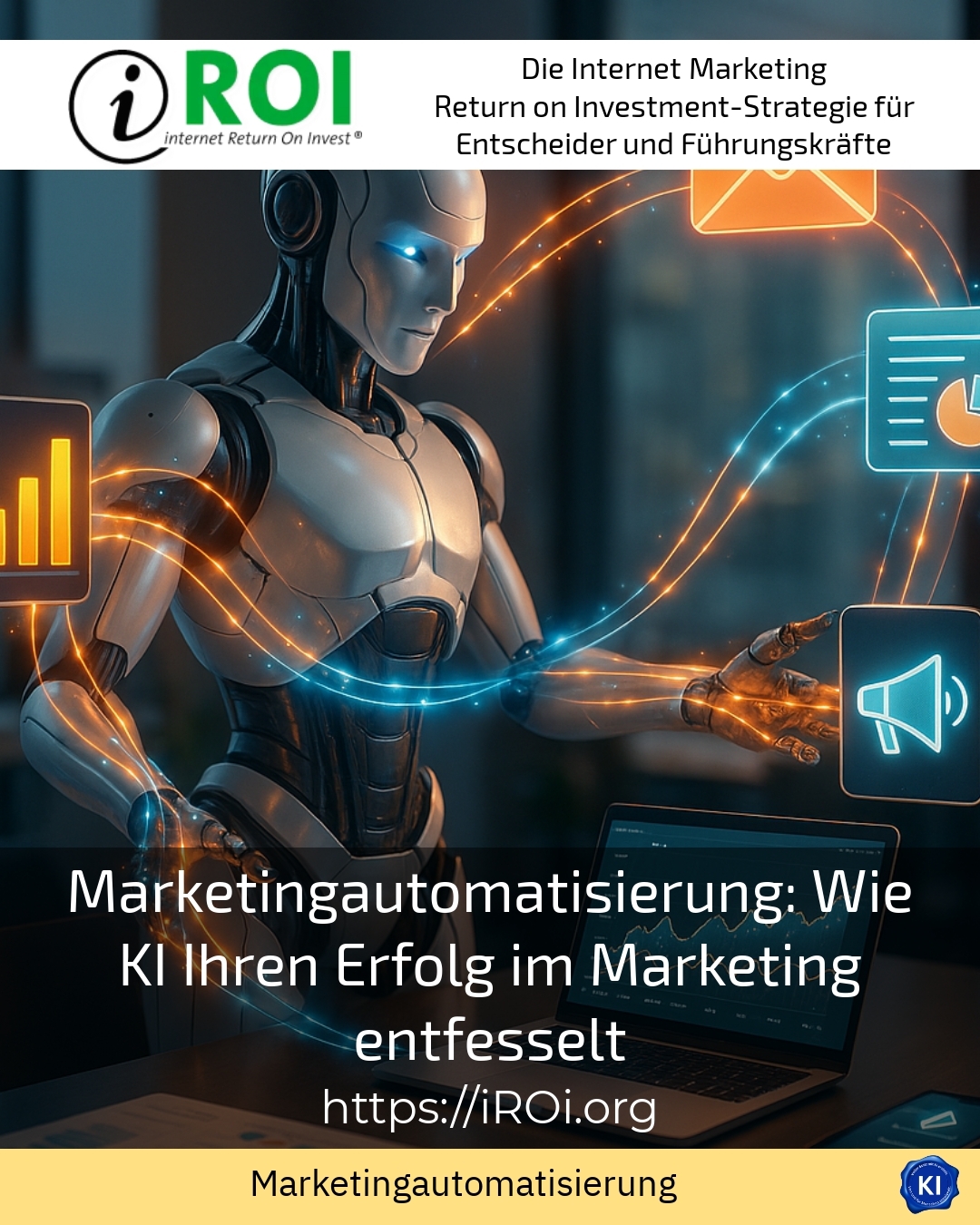
Marketing automation offers companies diverse opportunities to make their marketing processes more efficient and measurably increase their success. Through the targeted use of digital technologies, recurring tasks are automated, allowing marketing and sales teams to concentrate on creative and strategic issues. It is becoming increasingly clear how essential smart automation is for successfully operating in complex markets with personalised customer approaches and data-based decisions.
Efficiency and personalisation through marketing automation
Marketing automation helps companies to automate routine tasks such as email campaigns, lead scoring and follow-ups. An example from the software industry shows how automated workflows save time: an IT service provider uses marketing automation to specifically segment potential customers based on their interaction with webinar content and automatically send out suitable information packages. This enabled the team to make customer relationship management significantly more efficient while simultaneously increasing the conversion rate.
The targeted use of personalised content is also gaining importance in retail. A clothing company can analyse customer behaviour through marketing automation and send targeted product recommendations based on previous purchases and interests. This not only improves customer satisfaction but also the revenue per customer.
Furthermore, service companies, such as those in the coaching sector, benefit: Automated reminders, appointment confirmations, and personalised follow-ups make it possible to actively support customer loyalty and build long-term relationships. Overall, marketing automation primarily means saving time and resources while simultaneously increasing marketing effectiveness.
How AI is revolutionising marketing automation
Artificial intelligence (AI) is giving marketing automation a completely new dimension. With AI, customer data can be evaluated more extensively and precisely in order to align communication measures even more accurately with individual needs. For instance, a property company can use AI-powered analysis to identify which prospective buyers are currently most ready to purchase, and approach them with priority.
AI algorithms also support content creation: for example, a publisher automatically generates personalised newsletters with topics that are particularly well-received by the respective subscribers – based on their reading behaviour. This not only ensures higher open rates but also makes marketing campaigns scalable.
Another practical example involves a logistics company using AI for predictive analytics. Based on historical customer interactions and seasonal data, the company forecasts changes in demand and flexibly adjusts marketing campaigns. It thus uses marketing automation to identify optimal times for offers and promotions.
Personalised customer engagement thanks to AI integration
The combination of marketing automation and AI not only creates efficiency but also elevates customer communication to a new level. For instance, an e-commerce provider can automatically detect if a customer is abandoning their shopping cart and send personalised reminders with individual discounts. Such measures significantly increase conversion rates.
Sales teams also benefit significantly from lead qualification: AI automatically analyses customer profiles and interactions, meaning only promising contacts are passed on to sales. One software company reports that this led to a more than 20 percent increase in their conversion rate, thanks to more targeted engagement.
Last but not least, AI enhances the learning capability of marketing automation: campaigns are continuously adapted based on results, so that marketing measures can always respond to changing customer needs. This is particularly important in industries with fast trends and high competitive pressure, such as fashion or technology.
BEST PRACTICE with one customer (name hidden due to NDA contract) A medium-sized consulting firm used AI-powered marketing automation to optimise its web tracking and lead nurturing. Potential leads were segmented based on their click behaviour and addressed accordingly. The tailored automated email sequences resulted in a significant increase in Marketing Qualified Leads, thereby considerably improving the ROI.
Practical tips for implementing marketing automation
Starting with marketing automation requires careful planning and clear objectives. An advisable first step is to analyse existing marketing processes. It is recommended to identify repetitive tasks that can be automated first. For example, in the tourism sector, sending out seasonal offers or booking confirmations can be automated.
Furthermore, it is important to select appropriate tools that can be flexibly integrated into existing systems such as CRM or e-commerce platforms. For example, a manufacturer of sports equipment was able to quickly implement personalised, cross-channel campaigns by seamlessly integrating the marketing automation tool into its CRM system.
Finally, it is advisable to start with manageable pilot projects and to continuously measure the results. Adjustments based on data analysis ensure the long-term success of marketing automation. Training internal experts and support from experienced partners, such as iROI-Coaching, help to make the transition practical and efficient.
My analysis
Marketing automation helps companies to gain efficiency, strengthen customer relationships and increase marketing ROI. In combination with AI, these processes gain momentum, precision and scalability. The integration of data-based analyses and personalised communication helps to make marketing measures more relevant and measurable. Companies should therefore leverage the potential of marketing automation to assert themselves in dynamic markets. Professional guidance, for example through iROI coaching, can provide valuable impetus and support.
Further links from the text above:
Marketing Automation: Examples, Benefits & Tools
Marketing Automation: More efficiency through automation
Marketing Automation – Definition, Advantages & Examples
Marketing Automation: How B2B Companies Use the Technology
Marketing Automation Definition und Vorteile
What is Marketing Automation? – Salesforce
For more information and if you have any questions, please contact Contact us or read more blog posts on the topic internet Return on Investment - Marketing here.








 Deutsch
  English (UK)