
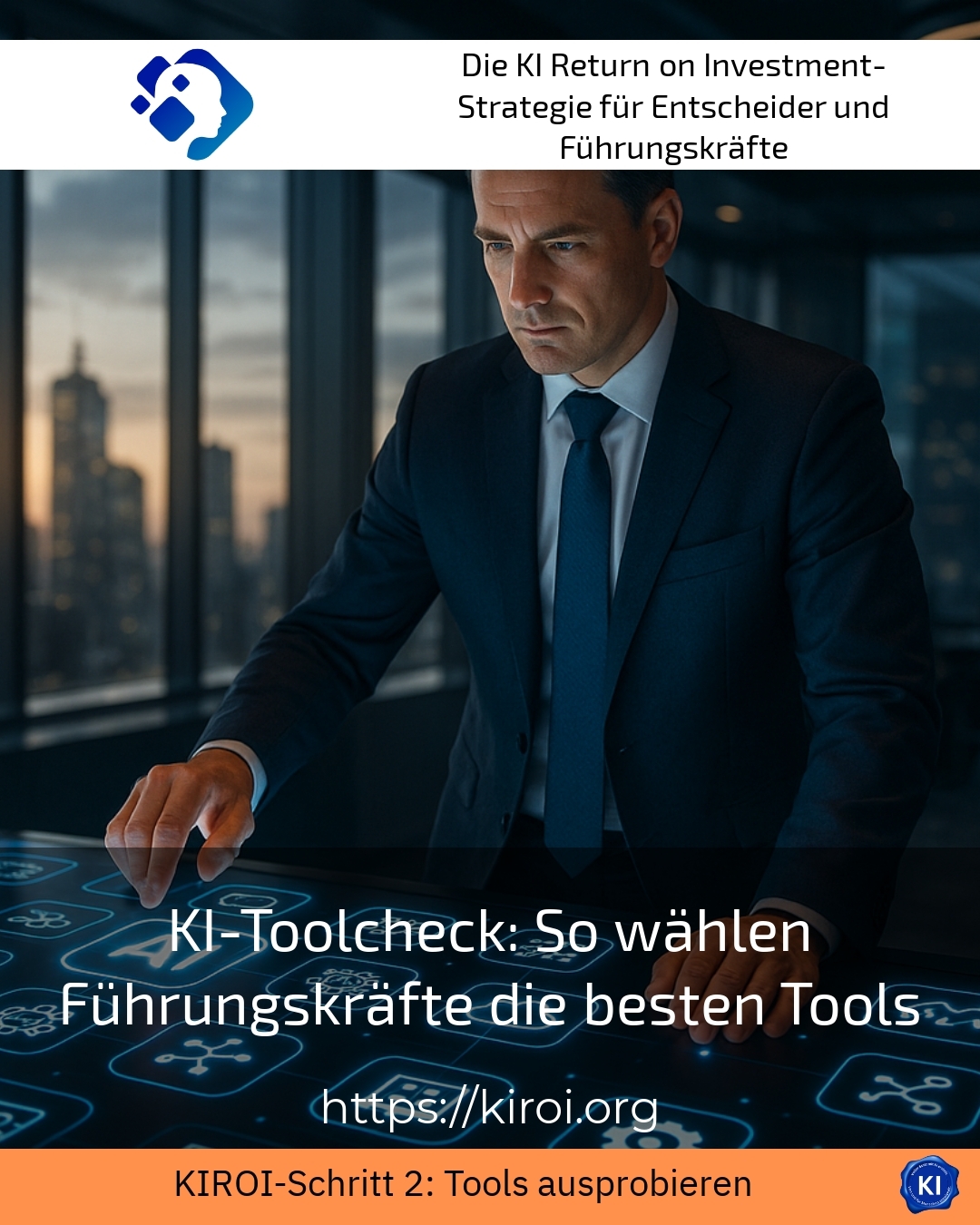
Digital transformation is fundamentally changing companies and presenting decision-makers with new challenges. Leaders today are faced with an almost overwhelming selection of intelligent software solutions. AI Tool Check: How managers choose the best tools This makes it a core strategic competence. Those who choose the right tools give their company a decisive competitive advantage. But how can this selection be done systematically and with sound judgement? Which criteria play a central role? This article provides you with practical impulses and concrete recommendations for action for your decision-making processes.
The strategic importance of tool selection for modern organisations
Intelligent systems are now permeating all areas of business and fundamentally changing established ways of working. The possible applications range from automated data analysis and customer interaction to process optimisation. Executives often report difficulties in selecting the right solutions from the multitude of available options. This challenge affects small and medium-sized enterprises (SMEs) as well as international corporations alike [1].
For example, a logistics company implemented a route optimisation system and was able to significantly reduce delivery times as a result. A financial services provider uses intelligent algorithms for fraud detection, thereby considerably improving its security standards. Retail companies are also relying on predictive analytics to manage inventory more efficiently. These examples show how diverse the fields of application already are today. At the same time, they highlight the need for careful selection.
Key Criteria for AI Tool Checks: How Leaders Choose the Best Tools
The selection of suitable tools requires a structured approach and clear evaluation criteria. First, managers should precisely define and document the specific use case. What problem is to be solved, and which processes are the focus of optimisation? These questions form the foundation of any well-founded decision. Furthermore, technical aspects such as integration capability, scalability, and data security play a significant role [2].
A manufacturing company systematically evaluated various predictive maintenance solutions for its machinery. Decision-makers examined compatibility with existing systems and the quality of analytical results. A retailer tested several customer offer personalisation platforms under real-world conditions. An insurance company also compared different claims analysis software providers using clearly defined key performance indicators. This structured approach helps to avoid poor decisions and utilise resources efficiently.
Best practice with a KIROI customer
A medium-sized engineering company faced the challenge of modernising its quality control. The previous manual inspection methods were time-consuming and prone to errors, prompting management to seek intelligent alternatives. As part of a transruption coaching programme, we supported the project team over several months in systematically evaluating various image recognition systems. Together, we developed a structured catalogue of criteria that comprehensively considered both technical requirements and economic aspects. During this process, the managers learned how to critically question supplier promises and set up realistic pilot projects. A particularly valuable insight was that the optimal choice was not the most powerful system, but the one that could be best integrated. Following implementation, the detection rate of production defects improved significantly, and employees gained time for value-adding activities. The project impressively demonstrated how professional support can accelerate transformation processes and minimise risks.
Organisational Prerequisites for Successful Implementations
The technical selection alone does not guarantee sustainable success when implementing intelligent systems. Rather, managers must also carefully design and continuously adapt the organisational framework. This includes the qualification of employees, the adaptation of processes, and the development of a data-driven corporate culture [3]. Without these supporting measures, even the best tools will fall far short of their potential.
A telecommunications company invested in extensive training programmes for its teams in parallel with the software implementation. A pharmaceutical company established its own centres of excellence, which acted as internal consultants for various departments. An energy provider also created new roles and responsibilities to sustainably anchor the integration of intelligent systems. These examples illustrate that technological and organisational changes must go hand in hand. Managers play an important role model function in this process and actively drive cultural change.
Typical stumbling blocks and how to avoid them
When introducing intelligent systems, managers regularly encounter recurring challenges and obstacles. Clients often report unrealistic expectations, which lead to disappointment and resistance within the company. Another typical stumbling block is insufficient data quality, which makes precise analyses difficult or impossible. Furthermore, the lack of involvement of the affected employees regularly leads to acceptance problems and implementation delays [4].
An automotive supplier initially underestimated the effort required for data preparation and had to fundamentally re-plan its project. A retail group started with too many use cases simultaneously and thus became bogged down in implementation. A technology company also experienced resistance from its workforce because communication about goals and impacts was insufficient. These experiences show how important realistic planning and transparent communication are for project success. Transruptions coaching supports managers in recognising and avoiding such pitfalls early on.
The systematic AI tool check: How executives methodically select the best tools
Ideally, a structured selection process follows several sequential phases with clear milestones. In the first phase, managers analyse the status quo and identify optimisation potential in their core processes. This is followed by the definition of requirements and evaluation criteria, which encompass both functional and non-functional aspects. The third phase involves market research and the pre-selection of suitable providers based on the defined criteria [5].
A healthcare provider successfully used this methodical approach when selecting a scheduling solution. An industrial company documented every step of its evaluation process, thus creating a valuable knowledge base for future projects. A media conglomerate also benefited from the systematic approach when implementing content analysis tools. The fourth phase then involves pilot projects and practical tests under realistic conditions. Finally, a decision is made based on documented findings and measurable results.
Best practice with a KIROI customer
An international management consultancy wanted to support and streamline its research and analysis processes with intelligent tools. However, the partners faced the challenge of identifying the optimal solution from a variety of providers and implementing it sustainably. As part of a multi-month support process, we jointly developed a tailor-made evaluation framework that took into account the specific requirements of the industry. We placed particular emphasis on aspects such as confidentiality, source validation, and integration into the consultants' existing workflows. The management team conducted structured comparative tests with three final candidates and systematically documented their experiences in a specially developed matrix. The involvement of end-users in the evaluation process proved particularly helpful, significantly improving later adoption. The selected system now supports hundreds of consultants in their daily work and is continuously being further developed. The partnership impressively demonstrated the added value of professional support for complex transformation projects.
Economic feasibility studies and investment decisions
The economic evaluation of intelligent systems presents particular methodological challenges and uncertainties for executives. Traditional metrics such as Return on Investment often fall short because strategic advantages are difficult to quantify. Nevertheless, decision-making bodies expect understandable economic calculations that justify and secure investments. Executives should therefore incorporate both quantitative and qualitative benefit aspects into their reasoning [6].
A logistics group calculated the savings from optimised route planning, thus convincingly justifying the investment. A financial institution quantified the reduced fraud losses through intelligent detection systems and demonstrated the concrete added value. A personnel service provider also systematically documented the time savings in candidate pre-selection and the improved quality of placements. These examples show how important measurable proof of success is for the acceptance of investments. At the same time, strategic aspects such as competitiveness and innovative strength must not be neglected.
Long-term development and continuous optimisation
The introduction of intelligent systems is not a one-off project, but an ongoing development process with regular adjustments. Executives should therefore establish and maintain structures for continuous learning and improvement from the outset. Regular reviews, user feedback, and technical updates are essential elements of a sustainable operating strategy. Monitoring market developments and new providers also belongs to the permanent tasks of those responsible [7].
A construction company established quarterly review meetings to evaluate and adjust the benefits of its project management support. A chemical group set up its own Competence Centre to systematically evaluate and recommend new technologies. A transport service provider also maintains close partnerships with its software providers to benefit from developments early on. These examples illustrate the importance of a long-term perspective in technological investments. The AI Tool Check should therefore be understood as a recurring process and institutionalised.
My KIROI Analysis
The systematic selection of intelligent tools is increasingly developing into a core strategic competency for modern leaders and organisations. My experience from numerous support projects shows that successful companies combine and consistently implement three essential factors. Firstly, they invest sufficient time in the analysis phase and define their requirements precisely and comprehensively. Secondly, they involve relevant stakeholders early on, thus creating the basis for broad acceptance. Thirdly, they understand tool selection as an ongoing process and not as a one-off decision.
At the same time, I am observing typical patterns in less successful transformation projects that are avoidable. Often, there is a lack of clear linkage between technological innovation and strategic company goals in the planning phase. The underestimation of organisational and cultural aspects also regularly leads to delays and frustrations for all involved. Transruption coaching offers valuable impulses and guidance here to avoid these pitfalls and shape projects successfully.
The AI Tool Check: How managers choose the best tools will continue to gain importance and be refined in the coming years. The dynamics of the market require continuous development of one's own valuation skills and methods. Leaders who invest in these skills today create sustainable competitive advantages for their organisations. The combination of a methodical approach, organisational integration, and professional support forms the foundation for long-term success.
Further links from the text above:
[1] McKinsey: The State of AI
[2] Gartner: AI Insights and Research
[3] Harvard Business Review: Artificial Intelligence
[4] Bitkom: Artificial Intelligence
[5] Accenture: AI Research and Insights
[6] PwC Germany: Artificial Intelligence
[7] Forbes: AI and Machine Learning
For more information and if you have any questions, please contact Contact us or read more blog posts on the topic Artificial intelligence here.











 Deutsch
  English (UK)