
Leadership Development: Building Competence in Practice
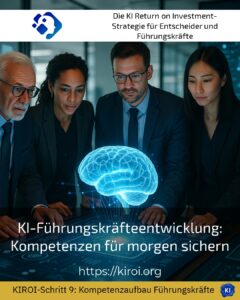
The development of leadership competencies is of increasing importance in companies. The demands on leaders are constantly changing – especially in the digital age. Leadership development supports the acquisition of new skills and the targeted strengthening of existing competencies. Many leaders come to us with questions about which methods they can use for further development, how they can master the challenges of complex projects, and how AI technologies can additionally support them. Diverse approaches to competency building are emerging in different industries.
Practical methods for leadership development
A tried and tested method for building competence is the use of individual assessments and tailored development plans. Coaching plays a vital role here, as experienced coaches provide impetus and encourage reflection. This allows leaders to expand their own scope for action. Additionally, mentors or peer groups offer support for exchanging knowledge and learning from one another. On-the-job training is particularly effective in manufacturing companies, as it directly integrates learning into the daily work routine. In the IT sector, agile learning formats and digital tools have proven effective in actively supporting rapid change. In the social sector, conflict management and psychosocial competencies are key themes in leadership development, as the focus here is often on team cohesion under difficult conditions.
AIROI Best Practice at Amperius (Name changed due to NDA) Here, leadership development is implemented through a hybrid learning programme that combines digital modules with face-to-face coaching. This enables leaders to flexibly further develop their leadership skills while consolidating them through practical application in their daily work. The integration of AI tools supports the evaluation of personal learning progress and offers individual recommendations.
Strategic Integration of Competency Models
Effective leadership development is particularly successful when competency models are integrated across all stages of talent management. This affects the selection, development, succession planning, and performance appraisal of leaders. Companies can thus specifically ensure that their leaders are strengthened in the relevant competencies and make well-founded decisions. The identification of important competency areas is guided by the challenges of the respective industry and the company's objectives. The active involvement of all stakeholders – from employees to senior management – promotes acceptance and fosters sustainable success.
AIROI Best Practice at Neonactiva (Name changed due to NDA) This involves the development of a competency framework specifically tailored to the needs of sales leaders. Targeted development programmes were implemented with a focus on communication and analytical skills. Leaders regularly report improved team performance and higher employee satisfaction.
Digital tools and individual support in competence development
Modern leadership development is increasingly incorporating digital applications that support and measure learning processes. AI technologies help to create personalised learning paths and analyse progress. These technological support options are understood not as a replacement, but as a valuable supplement to human guidance. AIROI coaching can thus support leaders in developing competencies in current projects and provide impetus for their own leadership behaviour. Clients often report that this helps them to react better to complex situations and feel more confident in dealing with new challenges.
AIROI best practice at Heliona (name changed due to NDA agreement) In the field of Human Resources, an AI-powered platform is used which breaks down leadership development into various modules. The platform combines self-assessments, coaching sessions, and practical exercises. The individual support, which is tailored to the specific challenges faced by the leaders, is particularly valued.
My analysis
Leadership development benefits from an integrated approach that combines individual needs with practical methods and modern technologies. AIROI's support helps leaders develop their competencies situationally and design projects successfully. A flexible approach tailored to the respective industry is important. Different methods – from on-the-job training to digital tools – are sensible and complement each other well. Leadership development is therefore not a rigid process, but dynamic support that responds to new demands and provides impetus for sustainable competency building.
Further links from the text above:
[1] Leadership Development: Strengthening Competencies with AIROI 9
[2] How to build a framework for leadership skills
[4] Leadership Development: Concept, Methods & ROI – AVANSA
[5] Successful Strategy for Your Leadership Competence
For more information and if you have any questions, please do not hesitate to contact us regarding the topic. Leadership Development or read more blog posts on the topic Leadership Development here.







 Deutsch
  English (UK)