
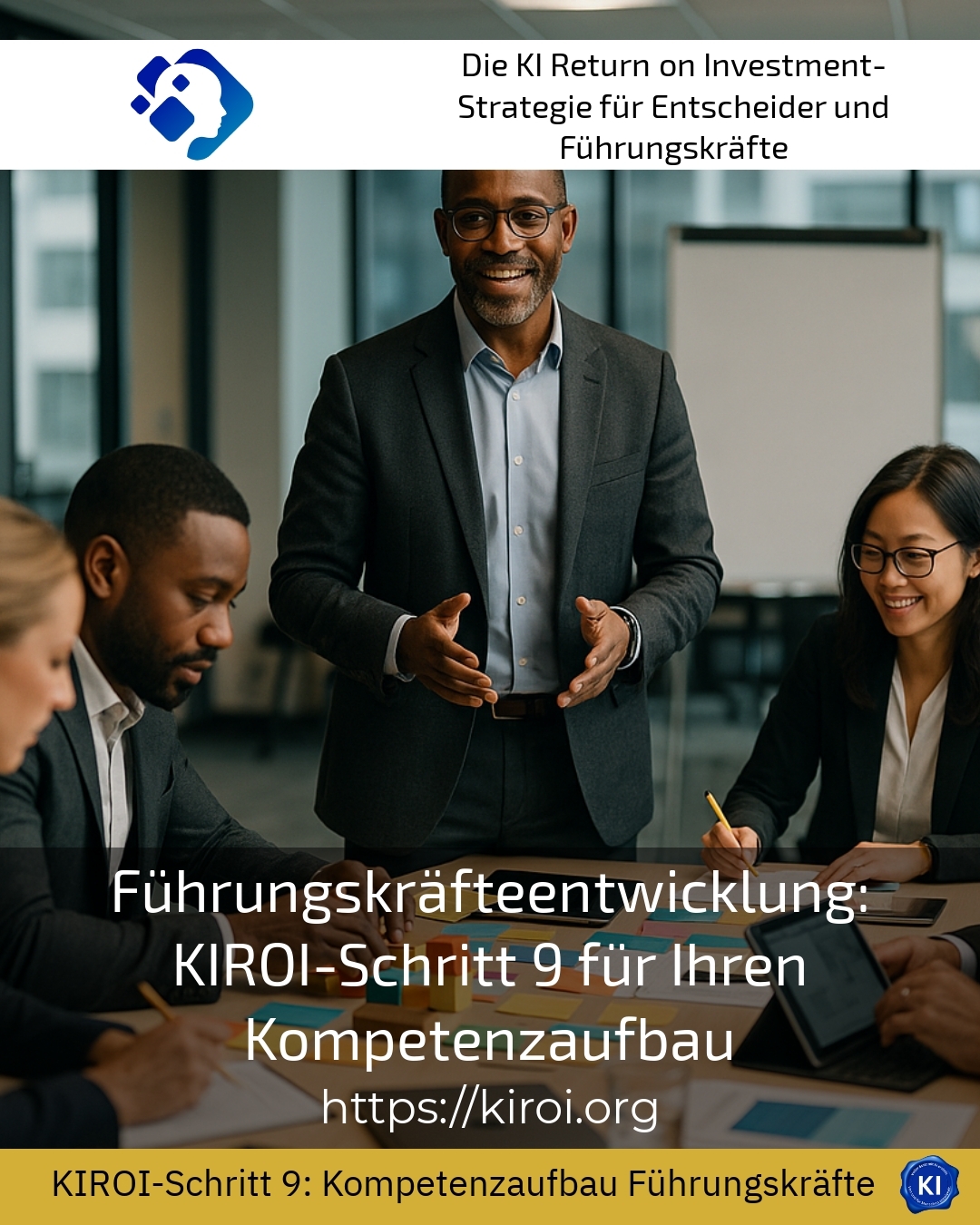
Leadership development is a key component for sustainable business success. Many organisations today rely on targeted programmes to strengthen their leaders and equip them for future challenges. A structured approach that considers individual needs while also keeping company goals in mind is particularly important here. In this article, we will shed light on how leadership development can be specifically designed and which methods have proven effective.
Leadership Development: Methods and Approaches
Companies employ a variety of methods for leadership development. These include seminars, workshops, and individual coaching. These measures impart both technical and social competencies. Many companies also utilise rotation programmes, whereby leaders gain experience in different departments. This fosters a broader understanding of business processes.
Another approach is mentoring. Here, experienced managers exchange ideas with younger colleagues. They offer valuable tips and support career development. Feedback discussions are also an important part of management development. They help to recognise strengths and identify areas for development.
Real-world examples show that companies such as Siemens and Bosch regularly offer internal training programmes. Google and IBM also rely on coaching and mentoring to develop their executives. Lufthansa uses Action Learning, where executives work in groups on real projects, thus applying their skills directly.
Leadership Development: Practice-Oriented Approaches
Coaching and Mentoring
Coaching and mentoring are proven methods in leadership development. A coach supports the leader in developing specific competencies and overcoming challenges. Mentoring, on the other hand, offers the opportunity to learn from experienced colleagues. Both approaches promote personal and professional development.
In coaching, various methods are used, such as personality analyses, 360-degree feedback, and self-reflection exercises. These help to create a comprehensive picture of individual strengths and areas for development. The results serve as the basis for tailored development plans.
Example: A medium-sized company relies on regular coaching sessions for its managers. Participants report a significant improvement in their communication skills and conflict resolution abilities.
Seminars and workshops
Seminars and workshops are structured educational programmes aimed at imparting leadership skills. These can include internal training programmes, external seminars, or online courses. Topics range from strategic controlling and conflict resolution to team leadership.
Example: A large corporation offers several internal leadership workshops annually. The participants learn how to lead and motivate their teams more effectively. The workshops are practice-oriented and offer many opportunities for interaction.
Job Rotation and Practice-Oriented Learning
Job rotation allows managers to gain experience in different departments. This leads to a broader understanding of operational processes and interdependencies. Practice-oriented learning, such as group work or fixed-term projects, promotes the application of leadership skills under real-world conditions.
Example: A company is running a rotational programme for junior managers. Participants switch to a different department every six months. They report a significant increase in knowledge and improved networking within the company.
Leadership Development: Success Factors
Several factors are crucial for successful leadership development. These include a sound analysis of the current situation, the identification of development goals, and the selection of appropriate measures. Regular feedback discussions and the evaluation of measures are also important.
Example: A company conducts a potential analysis annually. The results form the basis for individual development plans. Managers receive regular feedback and can track their progress.
Another success factor is the integration of leadership development into the company strategy. Only in this way can it be ensured that the measures have a long-term impact and support the company's objectives.
My analysis
Leadership development is a continuous process that takes into account individual needs and company objectives. Through the use of various methods such as coaching, mentoring, seminars, and job rotation, leaders can be systematically supported. Practice-oriented approaches and regular feedback are crucial for sustainable success. Companies that invest in structured leadership development strengthen their leaders and secure their competitiveness.
Further links from the text above:
Leadership development methods at Randstad
Executive Coaching at Element Leadership
Leadership Development at Forum Verlag
Leadership Development: The Best Methods at Softgarden
Leadership Development at Rainmaker Society
Leadership Development: 6 Key Methods at Kakoii
Leadership Development with Markus Czerner
6 essential team leadership methods from FranklinCovey
Leadership Development: Trends and Measures at Brainershub
Team leadership methods explained at Younited
Leadership Development: Methods & Practical Tips at Masterplan
The 5 most important competencies of a leader at Targetter
Leadership Development: Definition, Methods & Goals at HRworks
Leadership Development: The HR Guide for Personio
Leadership Development • Definition at Gabler Economics Lexicon
Leadership Development: Comprehensive Guide at Haufe Akademie
For more information and if you have any questions, please contact Contact us or read more blog posts on the topic Artificial intelligence here.










 Deutsch
  English (UK)