
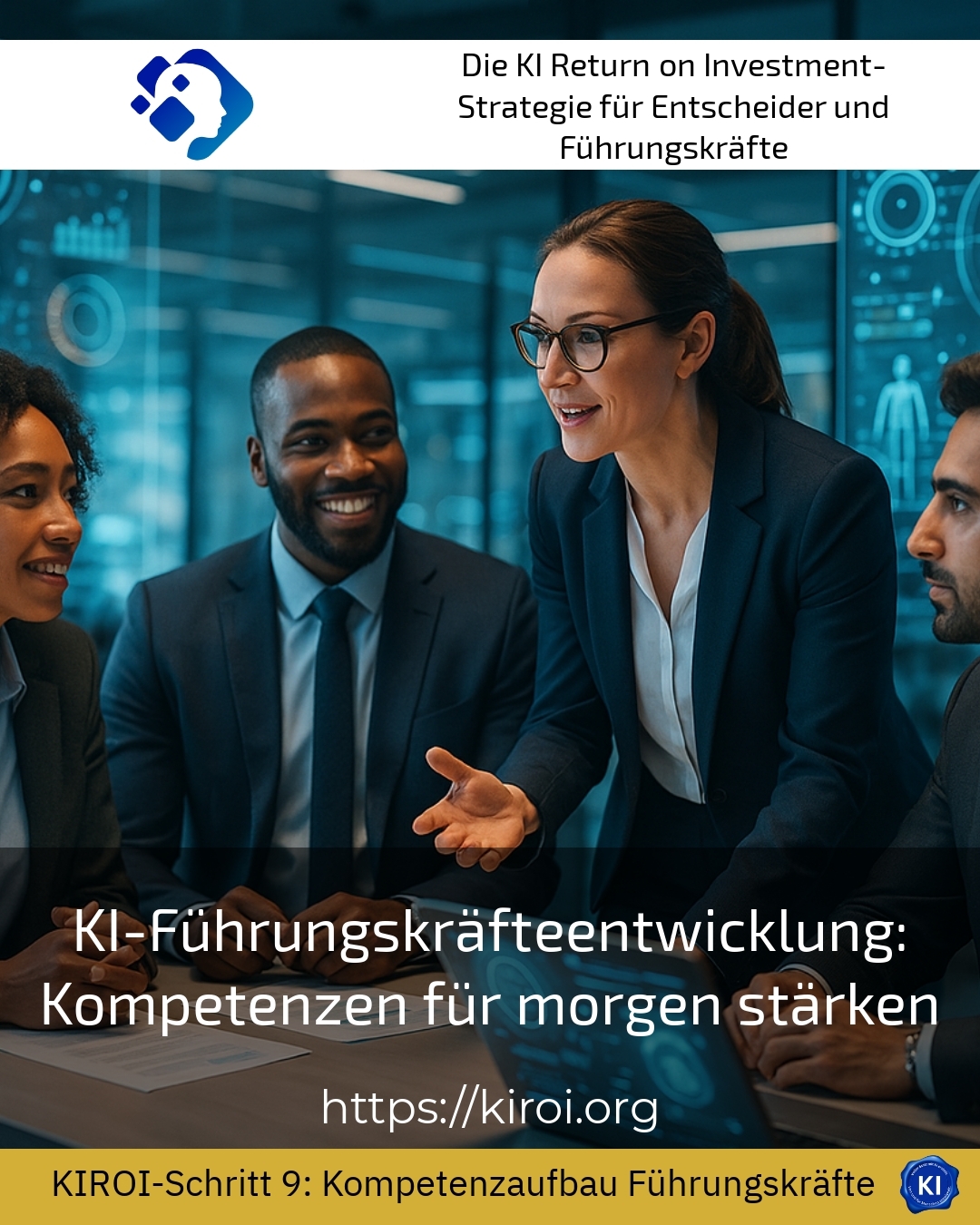
Digital transformation is changing companies at a breathtaking pace. Leaders are facing challenges that seemed unthinkable just a few years ago. AI Leadership Development becomes a decisive competitive factor. Those who do not act now risk being left behind in a new era of corporate leadership. But what does this mean in concrete terms for people in leadership positions? How can they prepare for a future characterised by intelligent systems? These questions are currently occupying boards of directors, managing directors, and HR managers alike. The answers to these questions will determine the success or failure of entire organisations.
Why traditional leadership models are reaching their limits
Classic leadership development approaches originated in a different era. They were based on stable markets and predictable business cycles. Hierarchical structures were considered unshakeable. Decision-making processes were linear and manageable. This world no longer exists today. Intelligent algorithms analyse vast amounts of data in seconds. Automated systems are taking over tasks that once occupied entire departments. Therefore, leaders must develop completely new competencies.
An example from the logistics industry powerfully illustrates this development. Companies there are now using systems that optimise supply chains in real time. The role of the leader is fundamentally changing as a result. They no longer have to make every decision themselves. Instead, they monitor the quality of algorithmic recommendations. At the same time, they bear responsibility for ethical issues. This constellation requires a completely new skills profile.
A similar pattern is emerging in healthcare. Hospital management teams are now working with diagnostic support systems. The technology identifies patterns in patient data with astonishing precision. Managers need to understand how such tools work. Only then can they responsibly manage their use. In the financial sector, intelligent systems are already automating credit decisions and risk assessments. Bank managers are faced with the task of optimally integrating humans and machines.
AI Leadership Development as a Strategic Imperative
Companies are increasingly recognising the urgency of this transformation. Executives often report uncertainty when dealing with new technologies. They feel overwhelmed by the speed of change. Some even experience existential anxieties about their professional future. These concerns are understandable and deserve serious consideration. At the same time, they offer a valuable starting point for development processes.
The AI Leadership Development addresses precisely these challenges. It not only imparts fundamental technical knowledge about modern systems, but also strengthens the ability to make strategic decisions under uncertainty. It promotes critical thinking when dealing with algorithmic recommendations and develops emotional intelligence for leading hybrid teams.
In the manufacturing industry, for example, we support production managers with the integration of automated quality control. The technology detects errors faster than any human. However, the responsibility for product safety remains with the manager. In retail, we help branch managers design personalised customer engagement ethically. And in the energy sector, we assist managers in making sensible use of predictive maintenance systems.
Best practice with a AIROI customer
A medium-sized engineering company faced a tremendous challenge. Management had decided to introduce intelligent systems into production planning. However, middle management showed considerable resistance. They feared for their relevance and influence. Transruptions coaching accompanied the company over several months. We initially worked on the individual concerns of each manager. It became clear that technical training alone was not enough. People primarily needed clarity about their new roles. Together, we developed a competence model for digital transformation. The managers learned to critically question algorithmic recommendations. They practiced defining ethical boundaries for technology use. And they discovered new ways to lead their teams through change processes. After completing the programme, participants reported significantly increased self-confidence. The introduction of the new systems went far more smoothly than initially feared. Today, the company is considered a pioneer in its industry.
Core competencies for the leadership of tomorrow
The requirements for modern leaders can be broken down into several areas. Firstly, basic technological competence is paramount. Leaders must understand how intelligent systems function. They don't need programming skills. However, they should know what data a system requires. They should understand how algorithms arrive at results. And they must be aware of the limitations of these technologies.
In the insurance sector, for example, this means correctly classifying claims forecasts. Managers there work daily with automated assessment systems. They need to be able to recognise when a system might be wrong. In the media industry, editorial management uses content analysis tools. They need to understand what biases these systems can exhibit. And in human resources, companies are increasingly relying on automated pre-selection of applicants. HR managers are responsible for fair and non-discriminatory processes.
Another key competence concerns ethical judgment. Technology knows no moral boundaries. It optimises for given goals without regard for side effects. Therefore, leaders must define clear guardrails. They decide which decisions may be automated. They specify where human control remains indispensable. And they are responsible for the impact on employees and society.
The role of transruption coaching in transformation projects
Transformational processes of this magnitude require professional guidance. Transruptions-Coaching offers leaders precisely this support. It is not about ready-made solutions or quick fixes. Rather, the guidance provides impetus for independent thinking. It creates spaces for reflection and exchange. And it supports the development of individual strategies for action.
Many clients approach us with specific concerns. They are facing the introduction of new systems in their areas. They need to guide teams through profound changes. Or they are seeking direction for their personal development. They frequently report feeling torn between tradition and innovation. This tension is completely normal and even productive. It shows that someone is taking the complexity of the situation seriously.
In the pharmaceutical industry, we support laboratory managers with the integration of automated research processes. The systems significantly accelerate experiments and analyses. However, they also change the way entire research teams work. In the construction industry, we assist project managers in the use of predictive planning tools. These automatically optimise resource deployment and schedules. And in the education sector, we help school management teams make meaningful pedagogical use of adaptive learning systems.
Implementing AI leadership development in practice
Practical implementation requires a thoughtful approach. First, it is important to honestly analyse the current level of competence. Where do the managers stand today? What strengths do they bring with them? And where are the greatest development needs? This analysis forms the basis for all further steps.
Afterwards, the focus is on defining clear development goals. These should be ambitious, but achievable. They must align with the company strategy. And they should be personally meaningful to those involved. Only then will motivation for sustainable change arise.
The AI Leadership Development combines various learning formats. Workshops convey fundamental knowledge about technologies and their applications. Coaching sessions delve into individual topics and questions. Peer learning groups enable exchange between managers from different areas. And practical projects ensure the immediate application of what has been learned.
Best practice with a AIROI customer
An international trading group wanted to prepare its entire management level for digital transformation. The company employed more than three hundred managers at various locations worldwide. The challenge was to get everyone on the same page. At the same time, individual development needs had to be considered. We developed a modular programme over twelve months. Each manager first underwent a comprehensive assessment of their current position. This identified specific strengths and areas for development. All participants then completed a common foundational module. This provided basic technological knowledge and strategic perspectives. The programme then branched into specialised tracks. Managers from sales dealt with personalised customer interactions. Colleagues from logistics worked on automated supply chain optimisation. And the finance team learned to critically evaluate algorithmic forecasts. Regular coaching sessions offered space for personal reflection. Participants could also address concerns and resistance there. At the end of the programme, the group had a digitally competent management team. The subsequent technology implementation benefited significantly from this preparatory work.
Understanding resistance as an opportunity for development
Change almost always triggers resistance. This is human and completely understandable. Leaders are no exception to this rule. They too experience uncertainty in the face of profound transformations. Some fear their experience might be devalued. Others worry about their position within the company. Still others feel overwhelmed by the complexity of new technologies.
These resistances deserve respect and serious consideration. They contain valuable information about the needs of those affected. Those who ignore them risk the success of the entire transformation process. Those who acknowledge and address them gain committed allies for change.
We're seeing this phenomenon particularly clearly in the automotive industry. Experienced engineers suddenly have to work with generative design systems. Their decades of expertise suddenly seem to be worth less. In law, automated contract analysis is unsettling even experienced lawyers. And in architecture, parametric design tools are competing with the creative intuition of designers [1].
My AIROI Analysis
Developing leadership skills for a technologically driven future is no longer optional. It represents an existential necessity for companies across all sectors. Frequently, the pace of change outstrips the adaptability of traditional human resource development. Therefore, organisations require new approaches that combine technological understanding with human development.
Working with numerous companies clearly shows that technical training alone is not enough. Leaders require holistic development programmes. These must address cognitive, emotional, and ethical dimensions equally. Only then can truly future-proof competencies be developed. Successful transformations are characterised by a clear focus on people. Technology always remains a means to an end.
The creation of psychological safety in change processes seems particularly important to me. Leaders must be able to voice their uncertainties. They need space for honest reflection without fear of negative consequences. Coaching formats offer precisely these protected development spaces. Investing in AI Leadership Development is repeatedly worthwhile. It significantly reduces resistance to technological innovations. It measurably accelerates the adoption of new systems. And it strengthens the loyalty of valuable managers to the company [2]. Organisations that invest in this development today will secure their competitiveness for decades to come.
Further links from the text above:
[1] McKinsey: AI and the New Leadership Imperative
[2] Harvard Business Review: Artificial Intelligence Research and Insights
For more information and if you have any questions, please contact Contact us or read more blog posts on the topic Artificial intelligence here.









 Deutsch
  English (UK)