
kiroi.org

KIROI - Artificial Intelligence Return on Invest
The AI strategy for decision-makers and managers

Business excellence for decision-makers & managers by and with Sanjay Sauldie

KIROI - Artificial Intelligence Return on Invest: The AI strategy for decision-makers and managers

KIROI - Artificial Intelligence Return on Invest: The AI strategy for decision-makers and managers

Start » KIROI Step 9: Management Development through Competence Building
30 October 2025

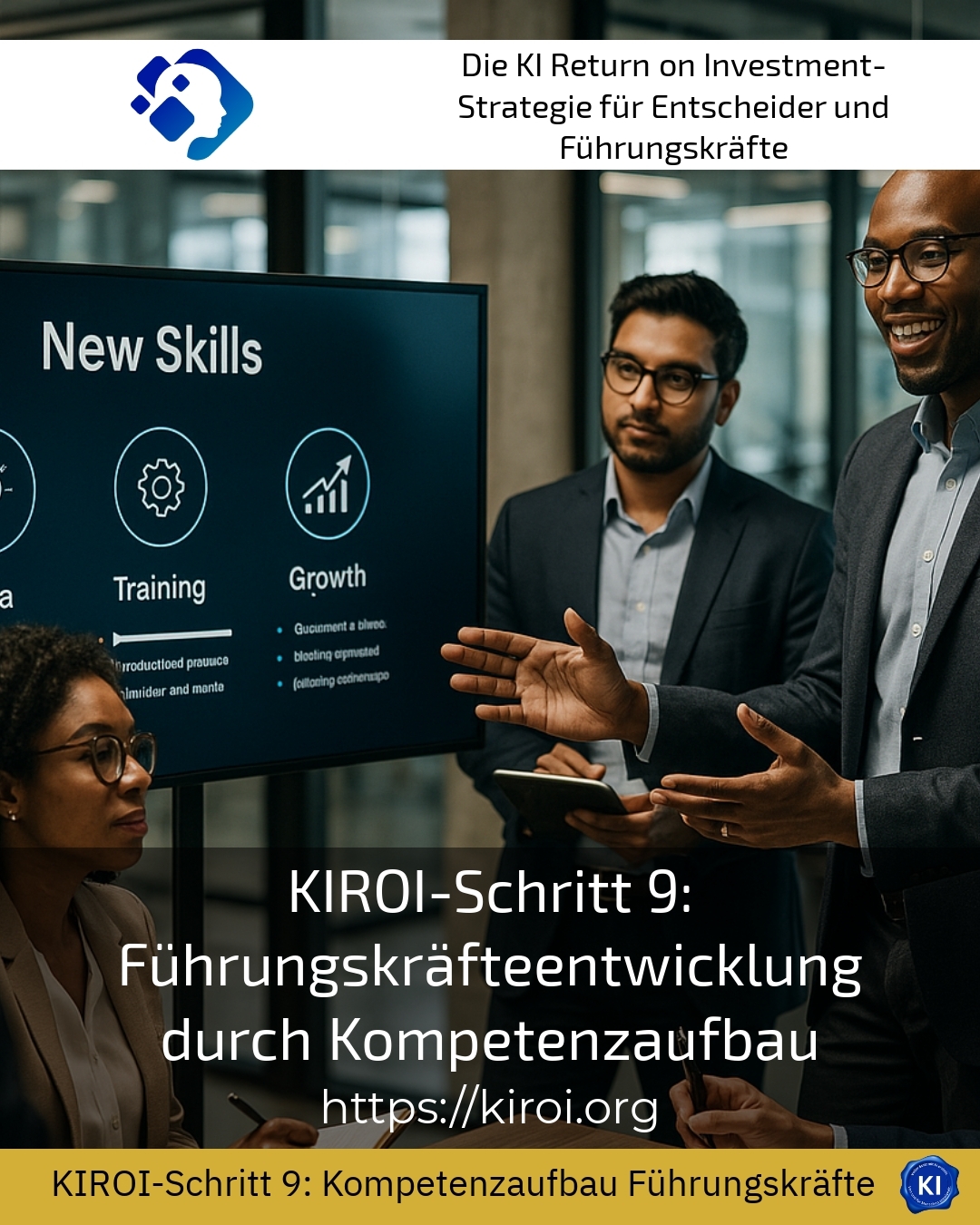
KIROI Step 9: Management Development through Competence Building

4.7
(1779)

Leadership development is a central building block for sustainable success in companies. Many organisations recognise that the targeted promotion of leadership skills not only increases performance, but also strengthens team motivation and retention. In this post, you will learn how competence building succeeds in practice and which methods have proven effective.

Leadership Development: Why Competence Building is Crucial

Leadership development begins with the awareness that leadership is not solely about authority. Rather, it's about inspiring people, communicating goals, and shaping change. Competence building is key to this. It encompasses technical, social, and methodological skills.

Many managers report experiencing everyday challenges. These include team conflicts, change processes, or finding a balance between goal setting and employee motivation. These issues can be systematically addressed with targeted measures.

Real-world examples show that in a technology company, a leadership development programme was launched. The aim was to strengthen communication skills. After six months, participants reported greater trust within the team and clearer objective agreements.

Another example: Rotational programmes were introduced in an international trading company. Managers temporarily swapped departments. This led to a better understanding of processes and stronger collaboration.

In a medium-sized service company, management development was also supported through regular feedback rounds. Managers received constructive feedback from employees and colleagues. This led to greater transparency and faster improvements.

Leadership development through coaching and mentoring

Coaching and mentoring are proven methods of leadership development. They enable individual support and the exchange with experienced colleagues. Coaching helps to overcome specific challenges and gain new perspectives.

In systemic coaching, leaders are considered within the context of their organisation. This fosters an understanding of team dynamics and helps to develop solutions for complex situations.

Creative coaching methods, such as visualisations or role-playing games, open up new ways of thinking. They help leaders to react flexibly to challenges.

An example: The GROW model was implemented in a corporation. Managers defined clear objectives and developed concrete measures. This led to measurable improvements in achieving targets.

Another example: In a start-up, constellation work was used. Managers visualised the relationships within the team. This helped to identify conflicts early and find solutions.

A third example: In a medium-sized company, the concept of the „Inner Team“ was applied. Managers learned to recognise and integrate their inner parts. This led to greater clarity and self-confidence.

Leadership development through seminars and training

Seminars and training courses are classic instruments for executive development. They impart knowledge on topics such as self-management, communication or conflict resolution. Online courses offer flexibility and can be used individually.

Internal training sessions on strategic controlling were offered at a large industrial company. The managers expanded their specialist competencies and were able to make better decisions.

Another example: In a service company, external teambuilding seminars were held. Participants reported increased cohesion and more effective meetings.

A third example: An international company offered online courses in intercultural communication. The managers improved their skills in dealing with international teams.

Leadership development through practical experience

Practical experience is an important component of leadership development. Projects, rotation programmes, or overseas assignments enable the acquisition of skills in real-life situations.

In a technology company, managers were temporarily seconded to other departments. This promoted knowledge sharing and flexibility.

Another example: In an international company, overseas deployments were offered. Managers gained experience in other countries and further developed their organisational and social skills.

A third example: In a medium-sized company, fixed-term projects were launched. Managers were able to demonstrate their skills and gain new experience.

BEST PRACTICE with one customer (name hidden due to NDA contract) An international company combined a leadership development programme with coaching, seminars, and practical projects. The managers received individual support, participated in workshops, and took on projects in other departments. After one year, the participants reported increased self-confidence, improved communication skills, and stronger teamwork. Employee satisfaction rose noticeably.

My analysis

Leadership development is a continuous process. It requires a combination of coaching, training, and practical experience. Only in this way can competencies be built sustainably and challenges be successfully overcome. The targeted development of leaders not only strengthens individual performance but also the entire organisation.

Further links from the text above:

Leadership Development: Methods & Practical Tips

Coaching methods for everyday leadership

Leadership Development Methods

The 5 most important competences of a leader

Leadership Development: 6. Key Methods and Approaches

For more information and if you have any questions, please contact Contact us or read more blog posts on the topic Artificial intelligence here.

How useful was this post?

Click on a star to rate it!

Average rating 4.7 / 5. Vote count: 1779

No votes so far! Be the first to rate this post.

Spread the love

transruption.org

The digital toolbox for
the digital winners of today and tomorrow

Business excellence for decision-makers & managers by and with Sanjay Sauldie

transruption
transruption

transruption: The digital toolbox for
the digital winners of today and tomorrow

Start » KIROI Step 9: Management Development through Competence Building
30 October 2025

KIROI Step 9: Management Development through Competence Building

4.7
(1779)

Leadership development is a central building block for sustainable success in companies. Many organisations recognise that the targeted promotion of leadership skills not only increases performance, but also strengthens team motivation and retention. In this post, you will learn how competence building succeeds in practice and which methods have proven effective.

Leadership Development: Why Competence Building is Crucial

Leadership development begins with the awareness that leadership is not solely about authority. Rather, it's about inspiring people, communicating goals, and shaping change. Competence building is key to this. It encompasses technical, social, and methodological skills.

Many managers report experiencing everyday challenges. These include team conflicts, change processes, or finding a balance between goal setting and employee motivation. These issues can be systematically addressed with targeted measures.

Real-world examples show that in a technology company, a leadership development programme was launched. The aim was to strengthen communication skills. After six months, participants reported greater trust within the team and clearer objective agreements.

Another example: Rotational programmes were introduced in an international trading company. Managers temporarily swapped departments. This led to a better understanding of processes and stronger collaboration.

In a medium-sized service company, management development was also supported through regular feedback rounds. Managers received constructive feedback from employees and colleagues. This led to greater transparency and faster improvements.

Leadership development through coaching and mentoring

Coaching and mentoring are proven methods of leadership development. They enable individual support and the exchange with experienced colleagues. Coaching helps to overcome specific challenges and gain new perspectives.

In systemic coaching, leaders are considered within the context of their organisation. This fosters an understanding of team dynamics and helps to develop solutions for complex situations.

Creative coaching methods, such as visualisations or role-playing games, open up new ways of thinking. They help leaders to react flexibly to challenges.

An example: The GROW model was implemented in a corporation. Managers defined clear objectives and developed concrete measures. This led to measurable improvements in achieving targets.

Another example: In a start-up, constellation work was used. Managers visualised the relationships within the team. This helped to identify conflicts early and find solutions.

A third example: In a medium-sized company, the concept of the „Inner Team“ was applied. Managers learned to recognise and integrate their inner parts. This led to greater clarity and self-confidence.

Leadership development through seminars and training

Seminars and training courses are classic instruments for executive development. They impart knowledge on topics such as self-management, communication or conflict resolution. Online courses offer flexibility and can be used individually.

Internal training sessions on strategic controlling were offered at a large industrial company. The managers expanded their specialist competencies and were able to make better decisions.

Another example: In a service company, external teambuilding seminars were held. Participants reported increased cohesion and more effective meetings.

A third example: An international company offered online courses in intercultural communication. The managers improved their skills in dealing with international teams.

Leadership development through practical experience

Practical experience is an important component of leadership development. Projects, rotation programmes, or overseas assignments enable the acquisition of skills in real-life situations.

In a technology company, managers were temporarily seconded to other departments. This promoted knowledge sharing and flexibility.

Another example: In an international company, overseas deployments were offered. Managers gained experience in other countries and further developed their organisational and social skills.

A third example: In a medium-sized company, fixed-term projects were launched. Managers were able to demonstrate their skills and gain new experience.

BEST PRACTICE with one customer (name hidden due to NDA contract) An international company combined a leadership development programme with coaching, seminars, and practical projects. The managers received individual support, participated in workshops, and took on projects in other departments. After one year, the participants reported increased self-confidence, improved communication skills, and stronger teamwork. Employee satisfaction rose noticeably.

My analysis

Leadership development is a continuous process. It requires a combination of coaching, training, and practical experience. Only in this way can competencies be built sustainably and challenges be successfully overcome. The targeted development of leaders not only strengthens individual performance but also the entire organisation.

Further links from the text above:

Leadership Development: Methods & Practical Tips

Coaching methods for everyday leadership

Leadership Development Methods

The 5 most important competences of a leader

Leadership Development: 6. Key Methods and Approaches

For more information and if you have any questions, please contact Contact us or read more blog posts on the topic Artificial intelligence here.

How useful was this post?

Click on a star to rate it!

Average rating 4.7 / 5. Vote count: 1779

No votes so far! Be the first to rate this post.

Spread the love

Other content worth reading:

KIROI Step 9: Management Development through Competence Building

written by:

Keywords:

#Big Data #Coaching #compliance #Datenintelligenz #Ethikrichtlinien 1TP5Management development #InnovationDurchAchtsamkeit #Kompetenzaufbau #artificial intelligence #mentoring #Sustainability #praxiserfahrung #SmartData #Unternehmenskultur #Verantwortungsketten

Follow me on my channels:

Questions on the topic? Contact us now without obligation

Contact us

[wpforms id="331781" title="false"]

More articles worth reading

    Leave a comment










