
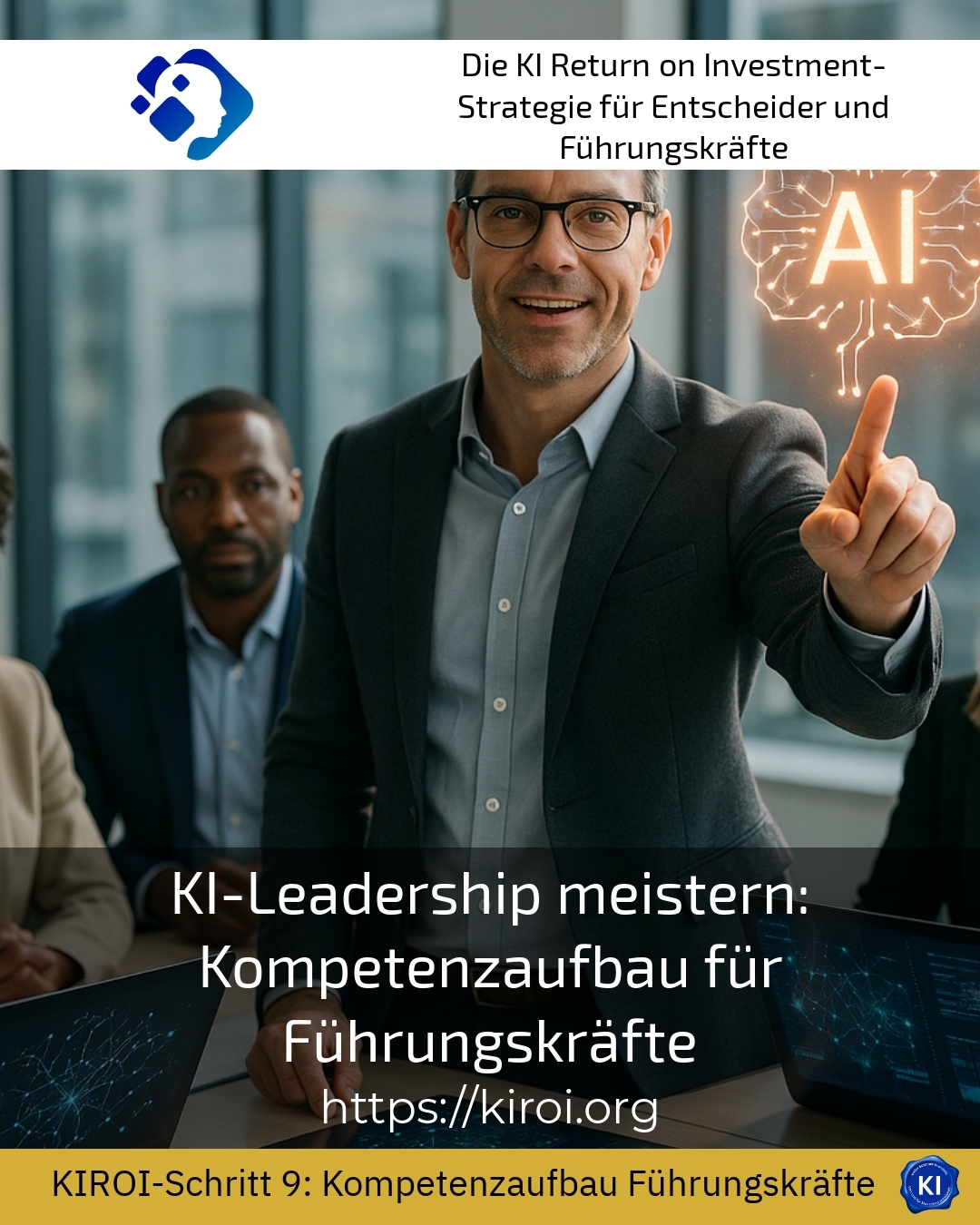
Digital transformation is fundamentally changing how businesses are run. Leaders face the challenge of developing entirely new skill sets. Those who today Mastering AI Leadership: Competence Building for Executives As a strategic goal, it positions itself as a shaper of the future. This isn't just about technical understanding. Rather, managers must learn to bring humans and machines into a productive symbiosis. The requirements are complex and multifaceted. At the same time, they offer enormous opportunities for forward-thinking decision-makers. In this article, you will learn which skills are crucial and how you can systematically develop them.
Why traditional leadership models are reaching their limits
The classic management approaches were developed for a different era. They are based on linear processes and hierarchical structures. However, today's working world functions fundamentally differently. Decisions have to be made faster than ever before. At the same time, the complexity of the information landscape is increasing exponentially. Managers frequently report feeling overwhelmed by these new demands. They are looking for guidance in a world full of data and algorithms. This is precisely where professional support comes in, providing impetus and supporting development processes.
Let's take, for example, a managing director from the mechanical engineering sector. He has decades of experience in industry leadership, yet he feels unsure about the integration of intelligent systems. A sales manager in the consumer goods sector faces similar questions. How can automated analyses be used meaningfully? Which decisions should still be made by humans? These uncertainties are widespread and entirely understandable. They clearly highlight the need for targeted skills development [1].
The changing role of leadership in the digital age
Modern leaders must fill multiple roles simultaneously. They are strategists, coaches, and technology translators all rolled into one. This diversity requires a completely new understanding of oneself. The banking sector exemplifies this. Branch managers today must drive digital transformation projects. At the same time, they must nurture personal customer relationships. The situation in the retail sector is similarly challenging. Store managers integrate intelligent inventory management systems into their operations. They need to understand how algorithmic recommendations are generated. Only then can they make informed decisions and lead their teams.
These developments are also clearly evident in healthcare. Hospital managers are evaluating diagnostic support systems for their departments. They must consider ethical questions and meet regulatory requirements. However, they often lack the fundamental technical understanding for informed assessments. Transruption coaching supports exactly these kinds of projects with a structured methodology. It helps leaders to find their bearings and make wise decisions.
Best practice with a KIROI customer A medium-sized logistics provider was facing the introduction of an intelligent route planning system. Initially, management was sceptical about the new technology. There was a lack of trust in automated decision-making processes. Together, we developed a structured skills development plan for the entire management team. The managers learned to critically question and evaluate algorithmic recommendations. They understood the basic principles of the optimisation methods used without requiring in-depth technical expertise. After six months of intensive support, attitudes had fundamentally changed. The managers now confidently made decisions about technology investments. They confidently communicated changes to their teams and addressed concerns. Fleet utilisation improved noticeably through intelligent route planning. Above all, however, the company developed a sustainable learning culture for digital topics.
Mastering AI Leadership: Building Competencies for Executives as a Strategic Priority
The systematic development of new skills is decisive for long-term business success. This is not about programming skills or technical details. Rather, managers need a conceptual understanding of intelligent systems. They must be able to recognise potential and realistically assess limitations. Pharmaceutical companies that analyse research data need competent decision-makers. As do energy suppliers with intelligent grids. Every industry faces specific challenges in integrating new technologies.
Clients frequently report similar starting situations. They feel overwhelmed by the speed of technological developments. They fear missing relevant trends or making the wrong decisions. These concerns are legitimate and deserve serious attention. At the same time, experience shows that targeted support enables astonishing progress. Leaders develop a sound understanding of complex contexts within a few months [2].
Core competencies for digital leadership practice
Successful managers of the future will possess a range of skills. Firstly, they will require analytical competence for data-driven decision-making processes. A production manager in the automotive sector, for example, interprets quality data from sensor-based production lines. They must be able to recognise patterns and derive recommendations for action. Intelligent systems will support them in this, providing processed information. However, the final assessment remains a deeply human task.
Furthermore, emotional intelligence is gaining importance in technology-intensive environments. Employees bring anxieties and uncertainties when new systems are introduced. A department head in the insurance industry is guiding her team through such changes. She must build trust and ensure transparent communication. In the media sector, editorial managers face comparable challenges. They lead teams that are increasingly working with automated analysis tools. The human dimension of leadership remains indispensably important.
Ultimately, strategic thinking across technology cycles is crucial. A board in the telecommunications sector plans investments with a multi-year horizon. They must anticipate technological developments, even though predictions are difficult. This ability for informed speculation can be systematically developed. Transruption coaching offers tried-and-tested frameworks and reflection methods for this purpose.
Practical Ways to Master Sustainable AI Leadership: Building Competence for Executives
Theory alone is not enough to truly embed new skills. Leaders learn most effectively through practical application and reflection. A proven approach combines various learning formats into an integrated development path. Workshops impart conceptual knowledge in a condensed form. Coaching sessions allow for individual deepening and personal support. Practical projects create opportunities for direct application of what has been learned [3].
In the construction industry, project managers are increasingly using intelligent planning tools. They optimise resource deployment and schedules with the help of algorithmic support. However, they must understand the assumptions underlying the recommendations. A hotel manager faces similar requirements in pricing. Dynamic pricing systems suggest room rates based on demand data. The manager makes the final decision, taking other factors into account. In the education sector, school principals are evaluating adaptive learning systems for their institutions. They weigh up pedagogical advantages against data protection concerns.
Best practice with a KIROI customer A retail executive from the food industry approached us with a complex problem. The company was planning to introduce an intelligent demand forecasting system for fresh produce. Regional management was tasked with overseeing and driving the implementation across several stores, but they lacked the necessary understanding of algorithmic decision-making logic. Over a period of several months, through a coaching process, we jointly developed this competency. We worked on concrete case studies from the day-to-day operations of the stores. The executive learned to interpret forecasting deviations and question system parameters. She developed an intuition for when human intervention is sensible and necessary. After the completion of the coaching, she was able to conduct training sessions for other managers independently. The company significantly reduced food waste through optimised ordering quantities. The executive reported increased self-confidence in making technological decisions.
The role of reflection and continuous learning
Competence development is not a one-off project but an ongoing process. The technological landscape continues to change. Leaders must be prepared to regularly question their usual ways of thinking. A CFO continuously updates their understanding of risk models. A Head of Marketing closely follows developments in automated campaign management. Both benefit from structured reflection formats and external sparring.
Agriculture impressively demonstrates how quickly the use of technology can change. Farm managers today work with precision farming systems and autonomous machines. Just a few years ago, such applications were still science fiction for many practitioners. Similar dynamic developments are emerging in the transport sector. Fleet managers are preparing for semi-autonomous vehicles. They need to develop new competency profiles for drivers and dispatchers. All these changes require leaders who are willing to learn and are adaptable.
Overcoming obstacles and constructively using resistance
On the path to new leadership skills, managers encounter various hurdles. A lack of time is frequently cited as the biggest obstacle, and it's understandable. Operational demands dominate daily life, leaving little room for development. Pragmatic learning formats that can be integrated into everyday work are helpful here. Short reflection sessions can meaningfully replace hours of in-person training. Digital micro-learning formats allow for flexible learning between appointments [4].
Resistance within one's own team can also present leaders with challenges. A plant manager in the chemical industry is introducing new quality control systems. Experienced employees react sceptically to the changes, fearing a loss of control or devaluation of their expertise. The leader must communicate sensitively here and take their fears seriously. In the creative sector, similar dynamics are evident with generative design tools. Graphic designers feel threatened by automated draft suggestions. Creative directors moderate these discussions and create new perspectives.
Sometimes resistance also comes unexpectedly from higher management levels. Boards of directors hesitate with investments whose benefits appear difficult to quantify. Well-founded argumentation skills support the internal persuasion process here. Managers learn to present business cases for technology projects convincingly. They comprehensibly link technical possibilities with business objectives.
My KIROI Analysis
Engaging with this complex field reveals several key insights. Firstly, it is clear that technical knowledge alone is not sufficient. Leaders require an integrated competency profile encompassing analytical, emotional, and strategic skills. This combination enables sound decisions in uncertain situations. It equips them to lead teams through transformation processes.
Secondly, it becomes clear that individual support can make a crucial difference. Standardised training formats often fall short when it comes to the depth of these changes. Coaching and personal reflection enable sustainable competence development at an individual level. They take into account the specific challenges of each leader and industry.
Thirdly, the analysis confirms that continuous learning remains indispensable. One-off training measures are no longer sufficient to meet dynamic demands. Managers need structured processes for ongoing competence updates. They benefit from networks that facilitate the exchange of experiences with other decision-makers.
In conclusion, the challenges described are manageable. With the right guidance and suitable methods, competency development can be achieved systematically. Transruption coaching supports leaders with proven approaches and individual support. The future belongs to those who invest in their development today.
Further links from the text above:
[1] McKinsey: The State of AI
[2] Harvard Business Review: AI and Machine Learning
[3] World Economic Forum: Artificial Intelligence Agenda
[4] MIT Sloan Management Review: Technology
For more information and if you have any questions, please contact Contact us or read more blog posts on the topic Artificial intelligence here.











 Deutsch
  English (UK)