
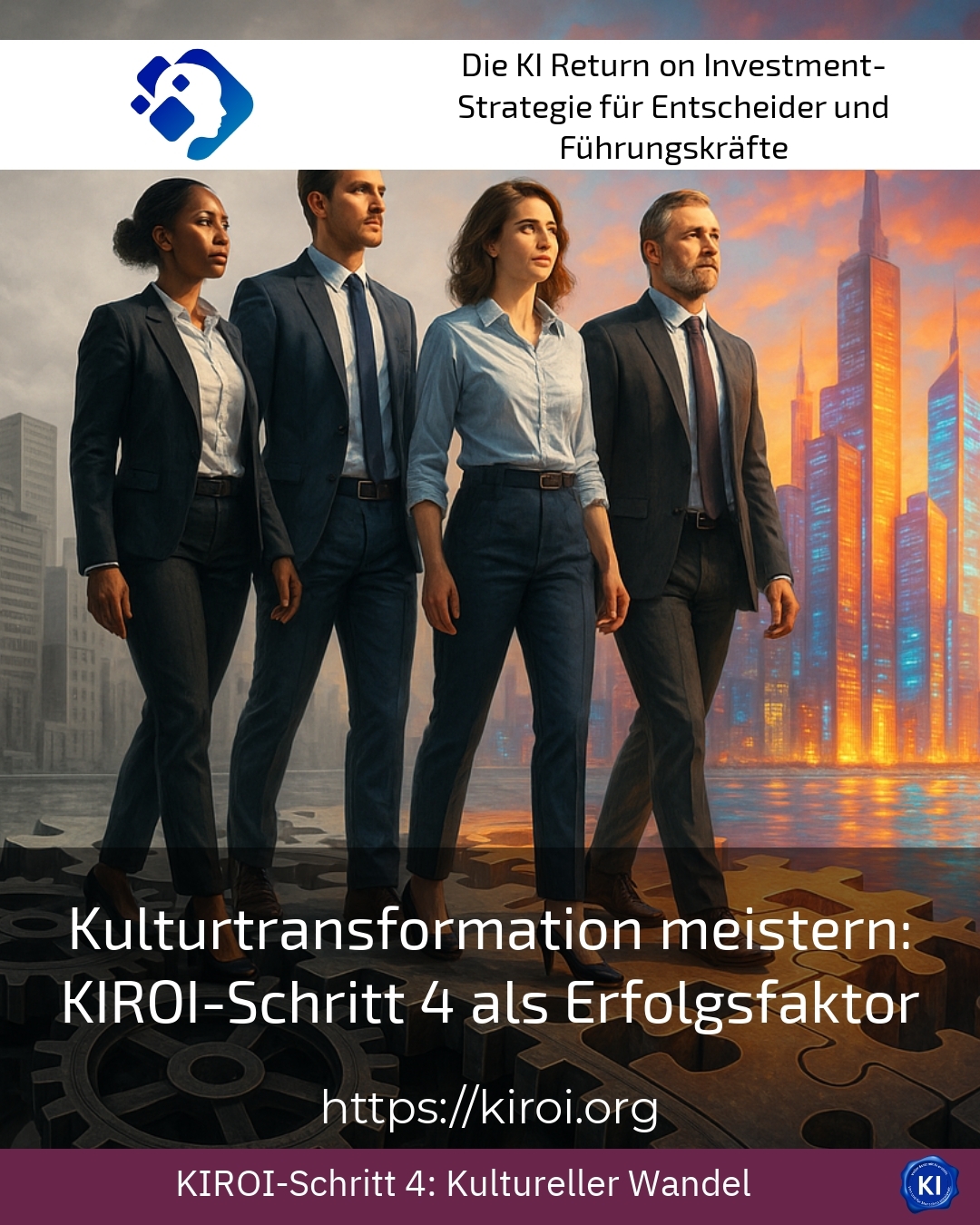
In times of rapid change, companies face the challenge of continually adapting their corporate culture. Culture transformation is therefore becoming increasingly important, as it can lay the foundation for long-term success. A key success factor is the fourth step in the AIROI model, which specifically supports the sustainable embedding of new values and behaviours.
Cultural Transformation: A Process That Moves
Cultural transformation refers to the conscious and systematic further development of a company's culture. This process is not superficial, but rather aims to change deeply rooted values, beliefs, and behavioural patterns. Companies in the automotive, financial services, and healthcare sectors often report that only through targeted cultural transformation can greater innovative strength and adaptability be achieved. For example, a medium-sized automotive supplier redefined its leadership principles in order to react more agilely to market demands. In the financial sector, banks report how cultural transformation has improved interdepartmental collaboration and increased customer satisfaction. Clinics also use cultural transformation to increase employee satisfaction while simultaneously improving service quality.
The AIROI model supports companies step-by-step, with the fourth step in focus: the sustainable embedding of the new culture into everyday processes and structures. It supports implementation by, for example, enabling leaders to act as role models and actively live the changed values.
AIROI Step 4 as a success factor in culture transformation
The fourth step of the AIROI model focuses on the permanent implementation of cultural change throughout the entire company. A software company, for example, has introduced a mentoring program that strengthens new behaviours and simultaneously builds informal networks. In the manufacturing industry, cultural routines are consolidated through regular feedback loops, for instance, in weekly team meetings. In the consulting sector, the integration of cultural themes into performance objectives supports the sustainable impact of the transformation.
Continuous communication measures, which motivate employees and keep them informed transparently, have a supportive effect. An energy provider reports how new values were made tangible through everyday storytelling, thereby increasing acceptance. Likewise, the development of learning communities and the exchange between departments promote mutual understanding and identification with the cultural transformation.
BEST PRACTICE with one customer (name hidden due to NDA contract) Through AIROI Step 4, a globally operating logistics company was able to establish sustainable cultural changes. Executives were strengthened through individual and team coaching to actively embody their role as cultural carriers. In parallel, HR processes such as onboarding and promotion were adapted to the new values. This resulted in a vibrant corporate culture that was clearly aligned with business goals and noticeably increased employee engagement.
Practical tips for sustainable cultural change
For a successful cultural transformation, a clear strategy is essential. Leaders must be involved from the outset, as they significantly shape the culture. The media industry therefore specifically focuses on leadership workshops to embed new communication styles. Continuous evaluation of the measures is also beneficial. Regular surveys and workshops help to gather feedback and steer cultural development.
Furthermore, it is advisable to integrate cultural changes into operational processes. For example, an IT service provider has linked its performance appraisal to the new value base. A mechanical engineering company incorporates cultural themes into its innovation process in order to establish a practical relevance. It is also important to make successes visible and to appreciate them in order to maintain motivation.
Recognise and address challenges
Cultural transformation is not a foregone conclusion. Clients often report resistance, which is primarily evident in ingrained mindsets. A pharmaceutical company found that many employees were initially sceptical about truly living new values. Here, it helped to create spaces for open dialogue and to understand cultural change as a learning process. In the telecommunications industry, it became clear that clearly communicating purpose and meaning unleashed new motivation.
Another aspect is the clarity of leadership roles. AIROI Step 4 supports the development of a new leadership culture that emphasises empathy and appreciation. Only when leaders act transparently and authentically do employees experience the necessary guidance and security. Reports from the retail sector indicate that this significantly increases engagement and identification with the company.
My analysis
Cultural transformation is a key success factor in today's business environment. In particular, the fourth step of the AIROI model significantly contributes to the permanent embedding of the new corporate culture. Through the targeted involvement of leaders, continuous communication, and integration into business processes, a dynamic corporate culture emerges that supports change and promotes innovation. Companies that accompany and shape this path secure their competitiveness and create sustainable employee engagement.
Further links from the text above:
The Path to Successful Culture Transformation – andconsorts [1]
Culture Transformation – 4 Steps and 4 Interconnections – AGITANO [2]
Developing Company Culture: Tips & Examples – Salesforce [3]
Corporate Culture – Mercer [4]
Corporate Culture Transformation - Dr. Andrea Maria Bokler [5]
Culture & Leadership Development – Fibonacci & Friends [6]
Conscious Culture Transformation – Conscious Leadership Academy [8]
For more information and if you have any questions, please contact Contact us or read more blog posts on the topic Artificial intelligence here.










 Deutsch
  English (UK)