
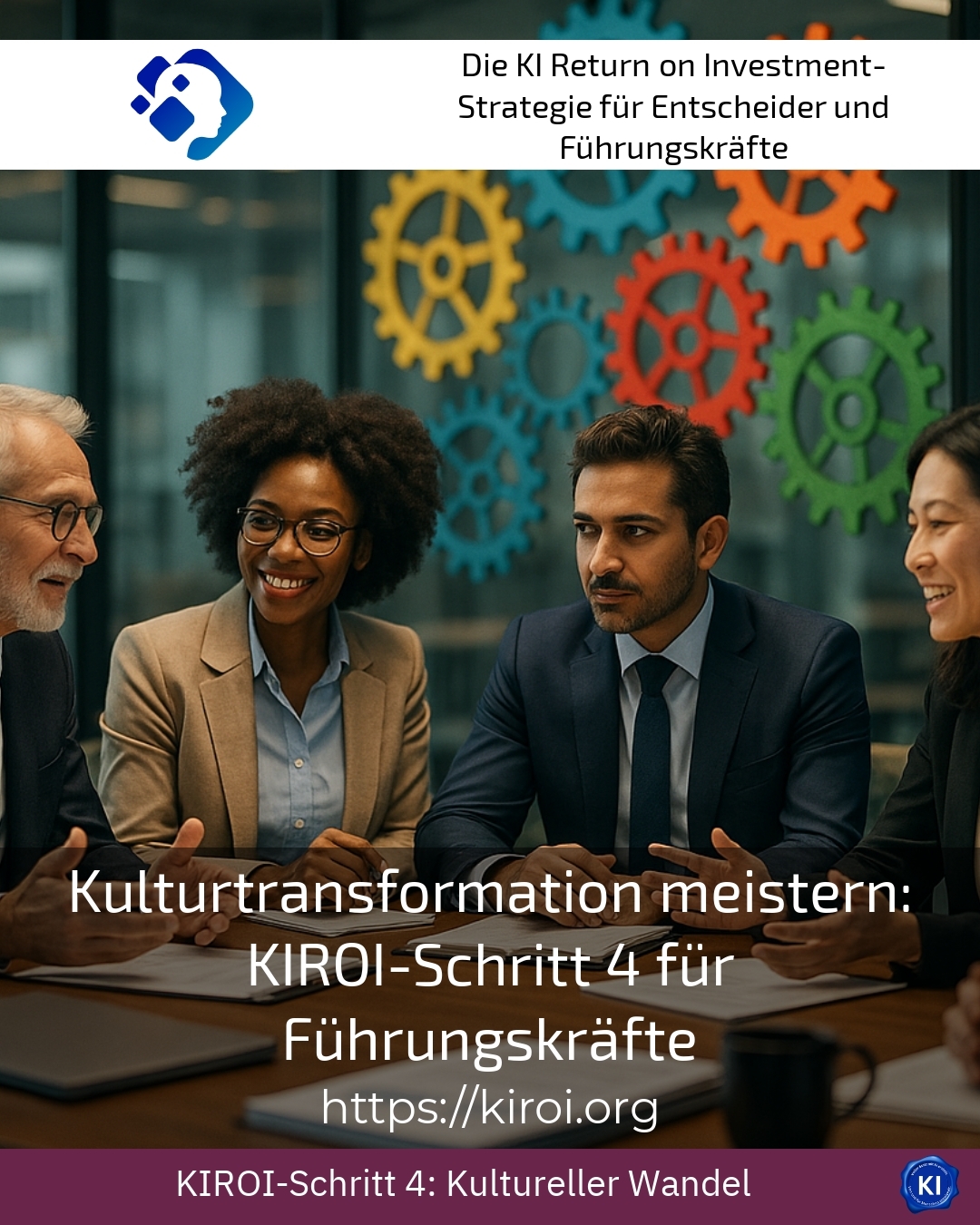
For many companies, cultural transformation is a crucial step in remaining competitive in the long term and responding to constant market changes. Leaders, in particular, are in demand during this phase, as they act as role models and architects, significantly guiding and steering the change. The focus of this article is KIROI Step 4, which specifically supports leaders in effectively mastering cultural transformation.
Culture Transformation: Why Leaders Must Accompany Change
Cultural transformation involves the profound change of values, norms, and behaviours within a company. Leaders play a central role because they must set a good example and credibly embody the new culture. Crucial impetus, trust, and direction arise primarily from their leadership skills. In this way, they foster an atmosphere where open communication and collaboration are possible, and innovations can flourish.
An example from the automotive industry shows how important leadership is in cultural change: there, a consistent role model function of executives established an agile and learning-ready team language, which made processes much faster and more efficient. In the mid-sized mechanical engineering sector, companies reported significantly improved employee retention because managers consciously allowed space for further development and a culture of error. In the IT industry too, executives supported cultural change with targeted team coaching by strengthening collaborative values and breaking down hierarchies.
KIROI Step 4: Position Leaders as Culture Drivers
The fourth step in the KIROI process requires understanding leaders as active drivers of cultural transformation. This involves empowering them to remove obstacles and lead with a values-oriented approach through individual coaching and team processes. Freedom of action and navigating uncertainties are thus realistically manageable.
For example, in the energy sector, managers were specifically trained to foster open feedback and a constructive culture of error. This significantly increased innovation capability. Another example from the healthcare sector shows how systematic team coaching helped to reduce leadership barriers and restore trust among colleagues. In a service company, managers are succeeding in bringing the desired culture to life through role-modelling and continuous dialogue.
BEST PRACTICE with one customer (name hidden due to NDA contract) In a medium-sized technology group, Step 4 was used to intensively coach a leadership team in dealing with new agile methods and value-oriented communication. The teams subsequently showed a significant increase in initiative and self-responsibility, which significantly advanced the cultural change.
Practical Tips for Leaders During Cultural Transformation
For leaders to successfully guide cultural transformation, there are some proven approaches and methods:
- Actively shaping communication: Leaders should provide transparent information about the goals and intermediate steps of change and create open feedback channels.
- Consciously embody the role model: Live values and desirable behaviour to generate credibility and inspire employees.
- Using team coaching: Joint reflections and exercises foster mutual understanding and strengthen cohesion.
- Establishing rituals and new habits: Regular meetings and recognition of progress can set new cultural anchors.
- Continuous professional development: Leaders should systematically enhance their skills in dialogic leadership, conflict resolution, and agile thinking.
In the financial sector too, the importance of actively engaging all employees to embed cultural transformation sustainably is evident. In the construction industry, regular workshops lead to greater identification with the new values, while in IT start-ups, agile coaches form a vital link between strategy and implementation.
Recognising and supporting challenges
Cultural transformation is not a quick process. Typical challenges include resistance to change, team uncertainty, and underlying fears. Leaders should therefore listen empathetically and create avenues for motivation. Looking at systemic connections helps to better understand and purposefully change processes and behavioural patterns. Exercises for self-reflection and openness to feedback are supportive.
An example from the logistics sector illustrates how frustration can arise despite cultural work if processes remain unchanged. Adjustments were made by executives independently seeking solutions for obstacles. In the retail sector, successes were also deliberately made visible to generate positive momentum. In the pharmaceutical industry, it was discovered that even small adjustments in daily communication had a significant impact on the working atmosphere.
My analysis
Cultural transformation is an inclusive, multi-layered process that is significantly shaped by leadership. The KIROI Step 4 ensures that leaders understand their role as culture drivers and actively fulfil it. This enables leaders to guide teams through challenging phases, strengthen them, and sustainably change the corporate culture. Companies that strategically embrace this change and effectively support their leaders not only increase their innovative strength but also the satisfaction and retention of their employees.
Further links from the text above:
Successful culture transformation for businesses
Corporate Transformation: Culture, Processes & AI
Cultural change in companies: Your path to the future
For more information and if you have any questions, please contact Contact us or read more blog posts on the topic Artificial intelligence here.











 Deutsch
  English (UK)