
Rethinking knowledge transfer: Why now is the time to change course
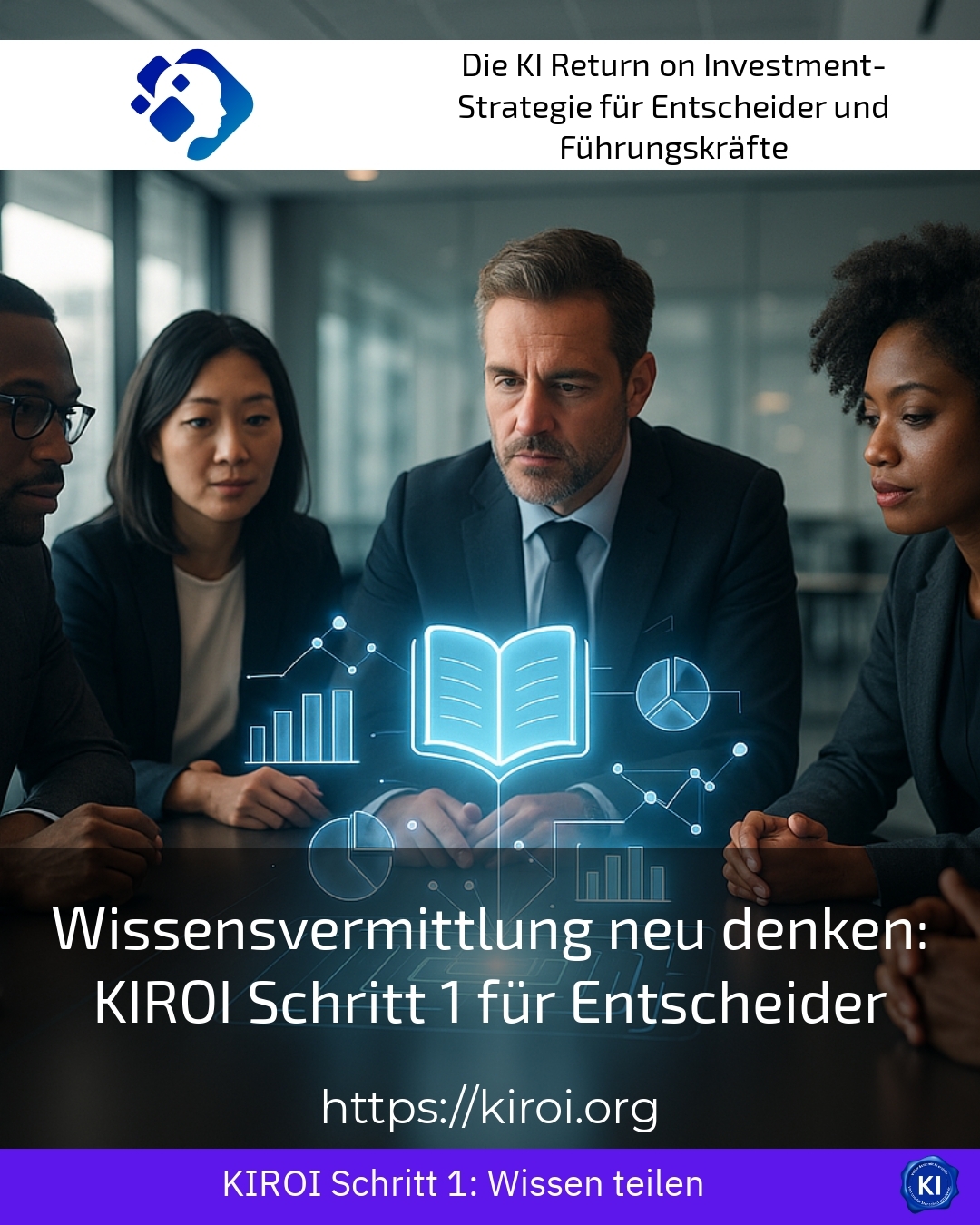
Knowledge transfer is the central driver for the success of any organisation. However, traditional methods – dry lectures, thick manuals, or rigid in-person training sessions – are often no longer up to date. Today, learners and teams expect interactive, flexible approaches tailored to their needs to not only receive knowledge but to truly understand and apply it [3]. The choice of suitable methods influences how enduring and vibrant knowledge remains within your organisation [1]. AIROI Step 1 provides decision-makers with concrete steps to critically evaluate their own knowledge transfer and make it future-proof. This is how you create a learning organisation that is open to innovation and change.
More and more managers are approaching us with concrete concerns: How can I secure the experiential knowledge of my long-serving team before they retire? Our employees complain about a lack of transparency and inadequate onboarding. New digital tools are being introduced, but knowledge transfer isn't working. These challenges show how relevant modern knowledge transfer is today. Transruption Coaching supports organisations in becoming active with fresh impulses and clear measures.
Utilising the diversity of knowledge transfer
Knowledge transfer can be much more than simply passing on information. It's about structuring knowledge so that it's understood, internalised, and applied in everyday work [3]. Different methods offer different possibilities: Direct communication – such as in meetings, discussions, or presentations – allows for lively exchange and quick clarification of open questions [1]. Written documentation, digital learning platforms, and interactive e-learning modules offer flexibility and scalability [1][5]. Practice-oriented workshops and role-playing games make complex topics tangible and promote application directly in the workplace [2][8].
Here are three examples from practice: A medium-sized company relies on a mix of personal mentoring and digital micro-learning units to onboard new employees more quickly. An international corporation uses interactive best-practice platforms on which teams worldwide share their experiences. An authority has established regular „Lunch & Learn“ sessions in which colleagues pass on their specialist knowledge in short, interactive units.
These examples show: the choice of methods always depends on the type of knowledge, the target audience, and the specific situation. It is worth trying out different approaches and combining them in a targeted way. Because only a mix of direct communication, self-directed learning and digital tools enables sustainable knowledge transfer that really makes an impact.
Innovative ways of knowledge transfer: AIROI Step 1
AIROI Step 1 supports decision-makers in taking the first, systemic look at their own knowledge culture. The aim is to specifically identify weaknesses, recognise potential, and develop initial, effective measures. The analysis begins with an inventory: What knowledge is passed on and how? Which methods are used? Are there areas where knowledge is lost or remains unused? This serves as the starting point for specifically developing one's own knowledge transfer.
Transruptions-Coaching supports organisations through this process – in a structured, authentic, and solution-oriented way. Clients often report that even small changes have a big impact: regular digital knowledge sharing between teams, the introduction of „communities of practice“, or the systematic documentation of project experiences are just a few examples. The challenge lies in questioning existing habits and trying out new forms of collaboration.
BEST PRACTICE with a client (Name concealed due to NDA) As part of a change process, we developed a digital knowledge platform together with management. Employees can share not only documents but also short experience reports and video tutorials. Additionally, there are monthly feedback sessions where open questions are discussed and new learning formats are presented. The acceptance and use of the new tools increased significantly, and knowledge transfer between teams visibly improved. The platform is now a central point of contact for all topics relating to the core business.
Best Practices for Modern Knowledge Transfer
To successfully rethink knowledge transfer, it makes sense to combine tried-and-tested approaches with innovative impulses. Mentoring programmes connect experienced with new employees, thereby creating a direct, personal connection [6]. Digital collaboration platforms such as Microsoft Teams or Slack enable the rapid exchange of information and ideas – even across locations [6]. The continuous documentation of best practices ensures that experiential knowledge is not lost, but passed on [5].
Another example: Following an employee survey, an organisation introduced so-called „learning journeys“, where employees temporarily switch to other departments to gain knowledge and experience. Another company established so-called „learning islands“, where experts regularly offer open consultation hours on specific topics. A third example is a firm that uses virtual reality simulations to play through complex processes in advance and thus impart practical knowledge.
A successful knowledge transfer also involves employees being able to actively shape their own learning. Self-learning phases, supported by digital media and microlearning, contribute to individual knowledge growth and sustainable application [8]. It is important that the organisation creates time, space and incentives for continuous learning.
My analysis
Rethinking knowledge transfer today requires courage, openness, and a clear compass. The mix of traditional and digital, individual and networked approaches is crucial. AIROI Step 1 provides decision-makers with a structured entry point to scrutinise and specifically improve their own processes. Knowledge transfer is more than an organisational task – it is the foundation for innovation, agility, and sustainable business success.
Transruptions-Coaching supports organisations in actively shaping this development. Together, we analyse, develop and implement tailor-made solutions that fit your culture, your team and your goals. Because only through lively, flexible and applied knowledge transfer can your company remain future-proof in times of change.
For more information and if you have any questions, please contact Contact us or read more blog posts on the topic Artificial intelligence here.
Further links from the above text:
Knowledge transfer: Meaning, methods, and practical tips
Teaching method: The way in which knowledge is imparted
Knowledge Transfer: 7 Brilliant Tricks for Effective Learning
Knowledge Management: Definition and Methods[5]
Knowledge Transfer Methods: Strategies for Knowledge Preservation
Learning Methods: Different Approaches to Knowledge Transfer[8]








 Deutsch
  English (UK)