
Knowledge exchange is a crucial factor for the success of modern organisations today. Many decision-makers are looking for ways to structure this process purposefully and improve it sustainably. Knowledge exchange becomes a decisive factor, particularly in complex projects or during company changes. The KIROI approach allows for structured steps to be implemented that sustainably improve knowledge exchange. The first steps are often the most important in establishing a culture of openness and collaboration.
Knowledge sharing as the basis for successful projects
In the day-to-day operations of many companies, knowledge is generated in various places, such as development, customer service, or marketing. However, this knowledge often remains siloed within individual departments or among specific employees. Focused knowledge sharing helps to break down these silos, enabling new ideas to be implemented more quickly. Teams can benefit from and learn from each other.
In a software company, the development team works closely with the support team. Through regular exchange meetings, experience gained from customer conversations is fed directly into product development. This leads to faster improvements and higher customer satisfaction.
Another example: In a consulting firm, experiences from projects are systematically documented. New employees are given access to these documents, allowing them to get started with their tasks more quickly. Knowledge sharing thus becomes part of the company culture.
Knowledge sharing also plays an important role in the healthcare industry. Doctors and nurses regularly exchange information about new treatment methods. This benefits patients from the latest findings.
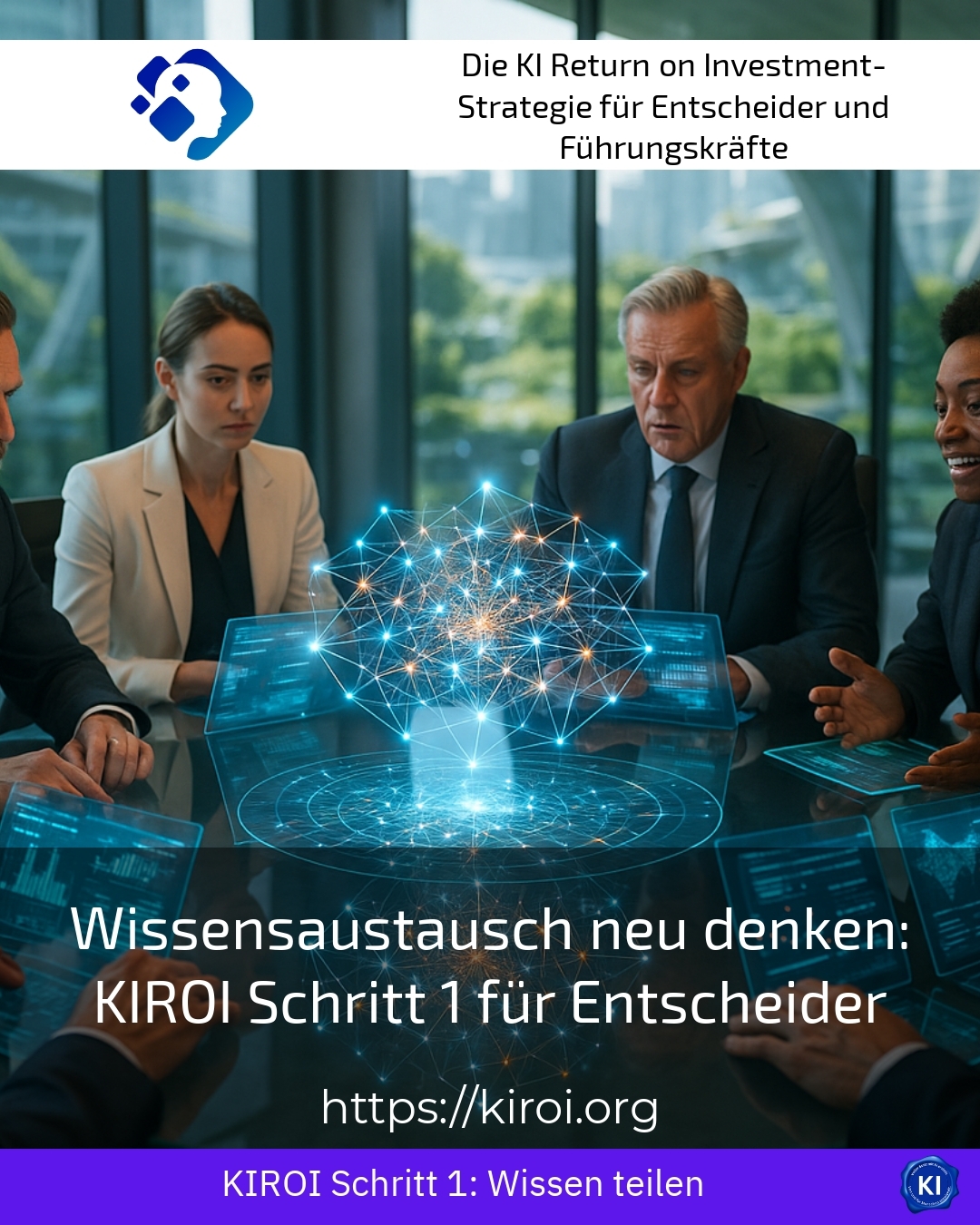
Rethinking knowledge exchange: KIROI step 1 for decision-makers
KIROI stands for a step-by-step development of competencies that enable sustainable knowledge sharing. Step 1 focuses on raising awareness among decision-makers. Clients often report that knowledge sharing is not a matter of course. Here, I offer targeted support in developing a culture of openness and mutual trust. This can mean engaging leaders as role models for knowledge sharing or establishing specific feedback loops.
For example, one insurance company has connected the knowledge of older employees with new colleagues through mentoring programmes. Another example: an IT service provider uses short, regular video updates to share project experiences within the team. It is important to make the benefits visible to everyone involved – because knowledge sharing benefits not only the organisation but also every individual.
Identifying and dismantling barriers to knowledge sharing
Structural or cultural hurdles often impede exchange. These include outdated systems, a lack of time resources, or the feeling that knowledge means power. Clients often report that employees do not share their knowledge for fear of losing value. Transparent communication can help here, as can clear incentives for sharing know-how.
Example: An industrial company has introduced a bonus system for knowledge contributions. A publishing house relies on playful quiz formats to collect and disseminate knowledge. Digital platforms such as social intranets or collaborative tools also support knowledge exchange, as long as they match the users' needs.
BEST PRACTICE with a client (name obscured due to NDA): As part of an AIROI project, an internal knowledge platform was established at a medium-sized industrial company. Parallel to this, regular exchange formats such as short presentations took place. This allowed employees to make their expertise more visible and use it across departments. This led to a noticeable improvement in the project workflow and stronger team dynamics.
My analysis
Knowledge sharing is a systematic process involving the exchange of information, skills, and expertise between individuals or groups. It is essential for enhancing mutual understanding and performance within organisations. Effective knowledge sharing fosters innovation, accelerates problem-solving, and improves decision-making processes. It encompasses both tacit and explicit knowledge and can occur vertically or horizontally across different levels or departments. Leveraging technologies such as intranets and collaborative platforms is crucial, as is addressing barriers like outdated systems and siloed departments. By cultivating a culture of transparency and collaboration, organisations can unlock significant competitive advantages.
Further links from the text above:
Knowledge Exchange – The Office Expert
Mastering knowledge exchange: KIROI Step 1 for decision-makers
Definition Knowledge Exchange | Business Processes Glossary
Rethinking Knowledge Exchange: KIROI Step 1 for…
Knowledge Exchange in Knowledge Management: Tools & …
Mastering knowledge exchange: How to get started with KIROI…
Knowledge Sharing: The Ultimate Guide
Knowledge transfer - methods, examples, definition
Knowledge transfer: Definition - Sage
For more information and if you have any questions, please contact Contact us or read more blog posts on the topic Artificial intelligence here.











 Deutsch
  English (UK)