
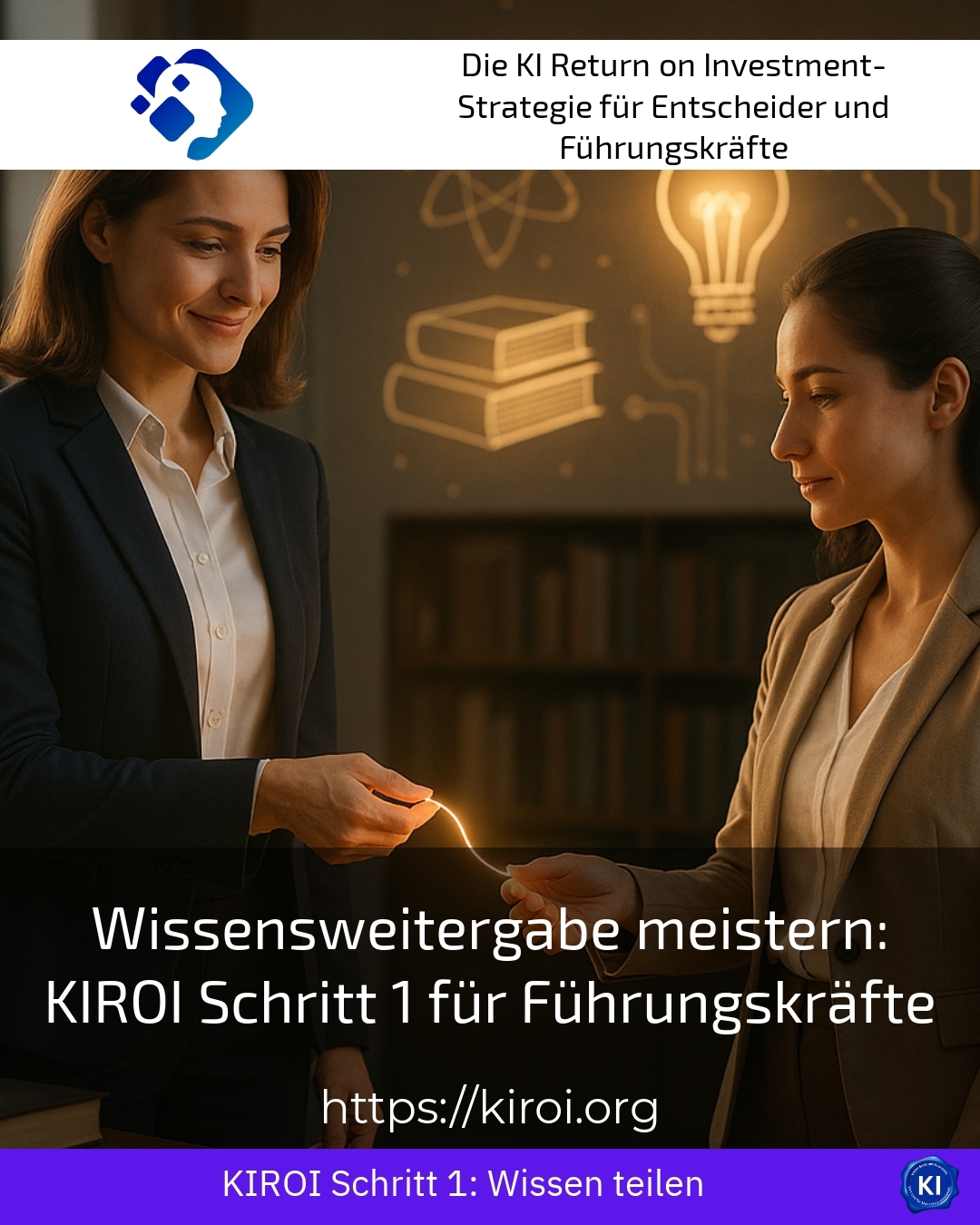
**Knowledge transfer** is a key success factor for managers to secure knowledge within the company on a permanent basis. It forms the basis for efficient project work, innovation, and sustainable growth. Especially in times of rapid change and demographic shifts, it is essential to systematically capture and transfer knowledge. The challenge lies in establishing the appropriate methods and processes that ensure lively communication and sustainable transfer.
Understanding knowledge sharing as a leadership task
Managers play a key role in knowledge transfer. They must initiate, guide, and create a trusting environment for the transfer process. An open culture promotes the willingness to share experiences and know-how. Managers thus create a learning environment that supports sustainable exchange and avoids knowledge loss.
A practical example: In a medium-sized mechanical engineering company, experienced engineers were specifically involved in moderated dialogue rounds to ensure that implicit knowledge, for instance from project experience, was not lost. The company also used digital tools to optimise documentation and accessibility.
Another example involves an IT service provider that has established a mentoring programme. Senior developers mentor new colleagues, aiming to pass on not only technical knowledge but also company values. Management coordinates regular feedback sessions to ensure progress and keep the exchange dynamic.
Finally, a consulting firm has built a knowledge base, which is continuously supplemented with workshops and training. Management provided the impetus for its use and put in place reward systems to actively motivate knowledge sharing.
Methods and instruments for knowledge transfer
Practical approaches to knowledge transfer are diverse. Moderated discussions and so-called knowledge relays enable structured handover of experience between employees. An external or internal moderator ensures that even seemingly self-evident knowledge is explicitly articulated.
Mentoring and coaching are informal yet highly effective methods, particularly when dealing with complex knowledge domains. They combine personal support with professional development, thereby fostering a sustainable culture of knowledge.
Furthermore, digital platforms are playing an increasingly important role. Collaboration tools such as corporate wikis or specialised knowledge databases make it possible for knowledge to be accessible at any time and continuously expandable. This is where companies benefit, especially with distributed teams and rapid project changes.
BEST PRACTICE with one customer (name hidden due to NDA contract) An internationally operating company successfully implemented a combination of moderation and digital tools. Experienced project managers systematically passed on their tried-and-tested methods. A specially created knowledge portal also supported team communication and the targeted search for needed expertise. This led to a measurable increase in project quality and reduced onboarding times.
BEST PRACTICE with one customer (name hidden due to NDA contract) A mentoring programme was launched at a large bank, where experienced employees supported new colleagues as knowledge providers during their first few months. Managers actively supported this programme and created an environment in which knowledge transfer is recognised as a key task. This not only improved communication but also strengthened team cohesion.
BEST PRACTICE with one customer (name hidden due to NDA contract) A medium-sized pharmaceutical company introduced regular cross-team workshops to systematically pool and share knowledge from different departments. Management ensured clear objectives and well-structured follow-up of results. This promoted sustainable knowledge transfer and helped to identify innovation potential early on.
Integrate knowledge sharing effectively in a digital way
Digital tools offer a wide range of possibilities for facilitating knowledge transfer. They support the storage, organisation, and dissemination of knowledge without replacing personal interaction. It is important that they are easy to use and can be integrated into everyday work.
For example, companies are increasingly using internal chat apps and wikis to make information quickly accessible. These tools help to gather and make searchable both documented and implicit knowledge. Managers are responsible for actively demonstrating and promoting their use.
My analysis
**Knowledge transfer** is a complex process that managers must strategically design. A combination of moderated dialogues, personal guidance through mentoring, and modern digital platforms offers a good foundation. Practical examples from various industries show how diverse and effective these methods can be.
Because it's no longer just about storing knowledge, but about keeping it alive and continuously disseminating it. Leaders who actively support this process and promote an open learning culture create sustainable added value for their teams and the entire company.
Further links from the text above:
GUIDE Knowledge Transfer Municipal Administration Wiesbaden
Knowledge Transfer Methods: Strategies for Knowledge Retention
Knowledge Management in Business: Methods + Tips
Knowledge transfer methods – using knowledge in companies
Knowledge Management: The top 5 methods
Knowledge management in companies: The 3 best methods
Knowledge Transfer in Businesses – A Guide
Knowledge Transfer Methods: Securing Know-how Effectively
Structured Knowledge Transfer upon Retirement – Concept
For more information and if you have any questions, please contact Contact us or read more blog posts on the topic Artificial intelligence here.











 Deutsch
  English (UK)