kiroi.org

KIROI - Artificial Intelligence Return on Invest
The AI strategy for decision-makers and managers

Business excellence for decision-makers & managers by and with Sanjay Sauldie

KIROI - Artificial Intelligence Return on Invest: The AI strategy for decision-makers and managers

KIROI - Artificial Intelligence Return on Invest: The AI strategy for decision-makers and managers

Start » KIROI Step 1: Targeted knowledge transfer specifically for decision-makers
2 July 2025

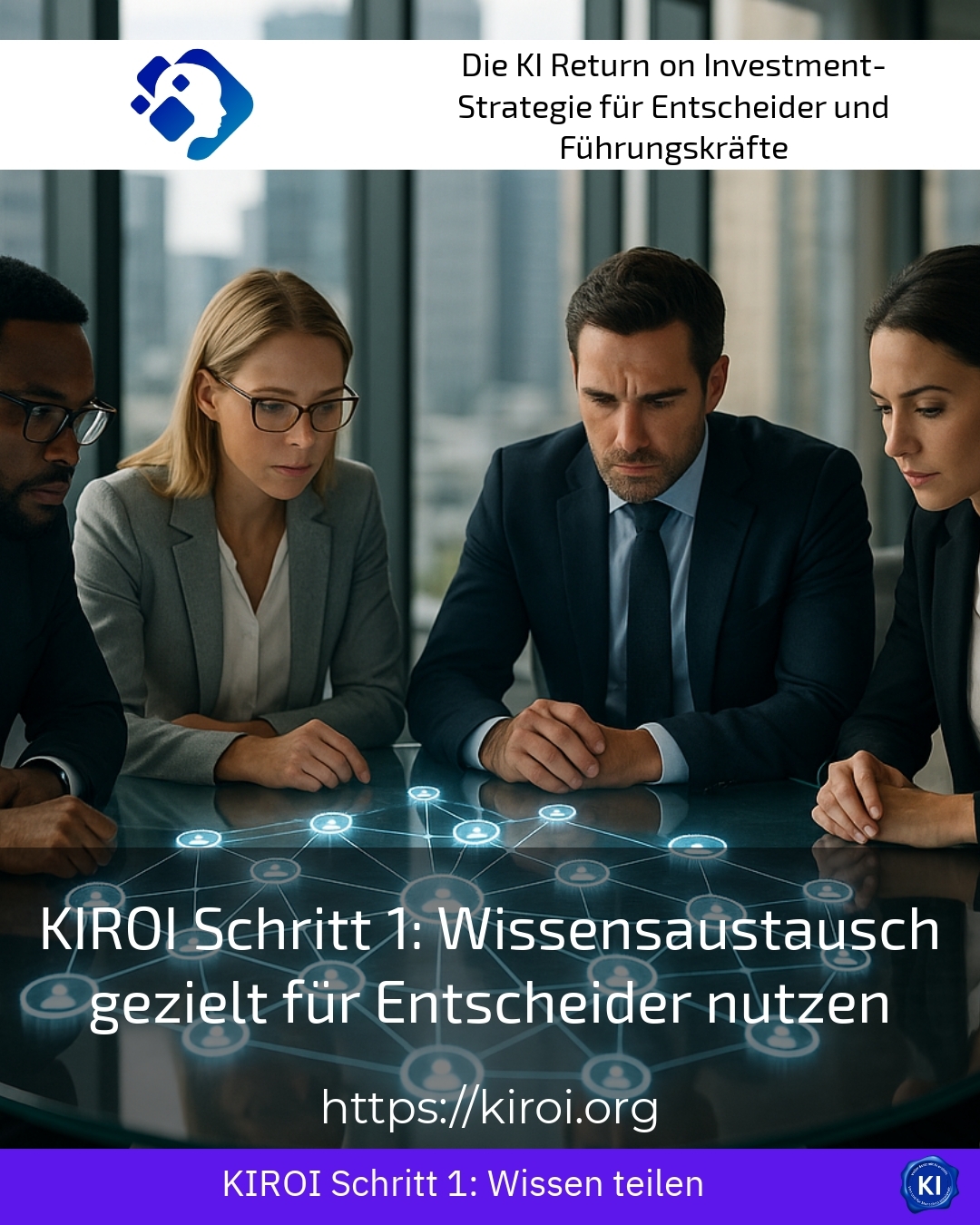
KIROI Step 1: Targeted knowledge transfer specifically for decision-makers

4.7
(1135)

The targeted use of knowledge sharing is essential for decision-makers in companies to drive projects forward efficiently and secure sustainable success. Knowledge sharing means consciously and structurally sharing knowledge, experiences, and information within teams or organisations. This fosters a learning organisation in which innovation, productivity, and collaboration grow. Many leaders are looking for ways to use this exchange strategically, as only then can synergies be effectively exploited and collective know-how be strengthened.

Knowledge exchange as a key tool for decision-makers

Decision-makers face complex challenges daily and must make informed choices. Targeted knowledge exchange is particularly beneficial for them, allowing access to a wide range of perspectives and experiences. In the IT industry, for example, regular team meetings where developers and project managers share their knowledge help to avoid common pitfalls and develop innovative solutions more quickly.

Knowledge-sharing platforms are also common in the automotive industry, where engineers document their findings from testing phases and make them available to other departments. This shortens development cycles and improves product quality. Consulting firms also benefit in a similar way when consultants systematically share their project experiences. In this way, best-practice approaches are developed that can be effectively applied to clients in the future.

An important aspect of using knowledge sharing is the creation of a trusting corporate culture. Only when employees feel their expertise is valued will they willingly share their knowledge. This relieves pressure on managers and supports agile project management, as all participants can act more quickly and with more information.

Promoting knowledge sharing – three practical examples

The introduction of short, weekly „knowledge snacks“ at a medium-sized software company led to visible improvements. In these short meetings, employees report on current problems and their solutions. This encourages exchange and accelerates problem-solving.

An international pharmaceutical company is establishing cross-project workshops where research and development teams collaboratively discuss solution approaches for regulatory challenges. These regular meetings enhance product quality and minimise errors through better coordination.

In mechanical engineering, a company implemented a digital knowledge platform that allows employees to access and supplement documentation, technical guides, and practical experience at any time. This ensures that know-how is retained even when employees leave.

BEST PRACTICE with one customer (name hidden due to NDA contract) The client employed a hybrid coaching method, providing individual support to leaders to strengthen targeted knowledge sharing within cross-functional project teams. This demonstrably improved internal communication and fostered innovative solutions that had not previously been utilised.

Targeted methods for implementing knowledge exchange

The successful integration of knowledge exchange depends on the selection of appropriate methods. For example, role-playing and scenario exercises in decision-making processes are effective tools. They enable leaders to simulate experiences, practically test knowledge, and learn from each other.

Likewise, digital tools such as internal wikis or communication platforms offer a technical basis for providing information independent of location and time. This gives decision-makers the opportunity to access relevant know-how at any time, for example for short-term strategic adjustments.

Another approach is the establishment of communities of practice, in which experts from various fields meet regularly to systematically exchange and develop their knowledge. This creates valuable networks and innovative impulses.

Tips for decision-makers on using knowledge sharing

As a decision-maker, focus on your team's needs: What knowledge is crucial for successfully completing projects? Ask specifically about their experience.

Strengthen employee motivation: Offer recognition and incentives for knowledge sharing, for example through feedback or integration into performance agreements.

Bet on transparency: Create easily accessible channels and clear processes so that knowledge can be shared and found easily.

My analysis

The deliberate use of knowledge sharing enables decision-makers to manage projects more efficiently and promote innovative solutions. An open corporate culture and clear strategies are crucial in overcoming inhibitions to sharing knowledge. Practical examples from a wide range of industries demonstrate how sustainable improvements in everyday work can be achieved through the conscious use of communication formats, digital tools, and coaching methods. Companies that actively support knowledge sharing benefit from increased collaboration, better decisions, and long-term competitive advantages.

Further links from the text above:

[1] The importance of knowledge sharing
[2] Knowledge transfer
[3] Knowledge sharing in knowledge management
[4] Knowledge Management in Business
[5] Knowledge sharing at work
[6] Knowledge sharing within companies
[7] 5 tips for a culture of knowledge sharing
[8] Wissensaustausch ist aus mehreren Gründen von entscheidender Bedeutung für Unternehmen. Erstens fördert er Innovation und Kreativität, indem er verschiedene Perspektiven und Ideen zusammenbringt. Dies kann zur Entwicklung neuer Produkte, Dienstleistungen und Prozesse führen. Zweitens verbessert er die Problemlösungsfähigkeiten, da Mitarbeiter auf ein breiteres Spektrum an Wissen und Erfahrungen zurückgreifen können, um Herausforderungen zu bewältigen. Drittens steigert er die Effizienz und Produktivität, da Mitarbeiter nicht mehr bei Null anfangen müssen und von den Erkenntnissen anderer lernen können. Viertens trägt er zur Mitarbeiterentwicklung und -bindung bei, da er Lernmöglichkeiten bietet und die Mitarbeiter stärker in das Unternehmen einbindet. Schließlich hilft er, organisatorisches Wissen zu bewahren und zu verbreiten, wodurch der Verlust von kritischem Wissen durch Mitarbeiterfluktuation oder Ruhestand minimiert wird.
[9] 3 ways to use knowledge sharing

For more information and if you have any questions, please contact Contact us or read more blog posts on the topic Artificial intelligence here.
How useful was this post?

Click on a star to rate it!

Average rating 4.7 / 5. Vote count: 1135

No votes so far! Be the first to rate this post.

Spread the love

transruption.org

The digital toolbox for
the digital winners of today and tomorrow

Business excellence for decision-makers & managers by and with Sanjay Sauldie

transruption
transruption

transruption: The digital toolbox for
the digital winners of today and tomorrow

Start » KIROI Step 1: Targeted knowledge transfer specifically for decision-makers
2 July 2025

KIROI Step 1: Targeted knowledge transfer specifically for decision-makers

4.7
(1135)

The targeted use of knowledge sharing is essential for decision-makers in companies to drive projects forward efficiently and secure sustainable success. Knowledge sharing means consciously and structurally sharing knowledge, experiences, and information within teams or organisations. This fosters a learning organisation in which innovation, productivity, and collaboration grow. Many leaders are looking for ways to use this exchange strategically, as only then can synergies be effectively exploited and collective know-how be strengthened.

Knowledge exchange as a key tool for decision-makers

Decision-makers face complex challenges daily and must make informed choices. Targeted knowledge exchange is particularly beneficial for them, allowing access to a wide range of perspectives and experiences. In the IT industry, for example, regular team meetings where developers and project managers share their knowledge help to avoid common pitfalls and develop innovative solutions more quickly.

Knowledge-sharing platforms are also common in the automotive industry, where engineers document their findings from testing phases and make them available to other departments. This shortens development cycles and improves product quality. Consulting firms also benefit in a similar way when consultants systematically share their project experiences. In this way, best-practice approaches are developed that can be effectively applied to clients in the future.

An important aspect of using knowledge sharing is the creation of a trusting corporate culture. Only when employees feel their expertise is valued will they willingly share their knowledge. This relieves pressure on managers and supports agile project management, as all participants can act more quickly and with more information.

Promoting knowledge sharing – three practical examples

The introduction of short, weekly „knowledge snacks“ at a medium-sized software company led to visible improvements. In these short meetings, employees report on current problems and their solutions. This encourages exchange and accelerates problem-solving.

An international pharmaceutical company is establishing cross-project workshops where research and development teams collaboratively discuss solution approaches for regulatory challenges. These regular meetings enhance product quality and minimise errors through better coordination.

In mechanical engineering, a company implemented a digital knowledge platform that allows employees to access and supplement documentation, technical guides, and practical experience at any time. This ensures that know-how is retained even when employees leave.

BEST PRACTICE with one customer (name hidden due to NDA contract) The client employed a hybrid coaching method, providing individual support to leaders to strengthen targeted knowledge sharing within cross-functional project teams. This demonstrably improved internal communication and fostered innovative solutions that had not previously been utilised.

Targeted methods for implementing knowledge exchange

The successful integration of knowledge exchange depends on the selection of appropriate methods. For example, role-playing and scenario exercises in decision-making processes are effective tools. They enable leaders to simulate experiences, practically test knowledge, and learn from each other.

Likewise, digital tools such as internal wikis or communication platforms offer a technical basis for providing information independent of location and time. This gives decision-makers the opportunity to access relevant know-how at any time, for example for short-term strategic adjustments.

Another approach is the establishment of communities of practice, in which experts from various fields meet regularly to systematically exchange and develop their knowledge. This creates valuable networks and innovative impulses.

Tips for decision-makers on using knowledge sharing

As a decision-maker, focus on your team's needs: What knowledge is crucial for successfully completing projects? Ask specifically about their experience.

Strengthen employee motivation: Offer recognition and incentives for knowledge sharing, for example through feedback or integration into performance agreements.

Bet on transparency: Create easily accessible channels and clear processes so that knowledge can be shared and found easily.

My analysis

The deliberate use of knowledge sharing enables decision-makers to manage projects more efficiently and promote innovative solutions. An open corporate culture and clear strategies are crucial in overcoming inhibitions to sharing knowledge. Practical examples from a wide range of industries demonstrate how sustainable improvements in everyday work can be achieved through the conscious use of communication formats, digital tools, and coaching methods. Companies that actively support knowledge sharing benefit from increased collaboration, better decisions, and long-term competitive advantages.

Further links from the text above:

[1] The importance of knowledge sharing
[2] Knowledge transfer
[3] Knowledge sharing in knowledge management
[4] Knowledge Management in Business
[5] Knowledge sharing at work
[6] Knowledge sharing within companies
[7] 5 tips for a culture of knowledge sharing
[8] Wissensaustausch ist aus mehreren Gründen von entscheidender Bedeutung für Unternehmen. Erstens fördert er Innovation und Kreativität, indem er verschiedene Perspektiven und Ideen zusammenbringt. Dies kann zur Entwicklung neuer Produkte, Dienstleistungen und Prozesse führen. Zweitens verbessert er die Problemlösungsfähigkeiten, da Mitarbeiter auf ein breiteres Spektrum an Wissen und Erfahrungen zurückgreifen können, um Herausforderungen zu bewältigen. Drittens steigert er die Effizienz und Produktivität, da Mitarbeiter nicht mehr bei Null anfangen müssen und von den Erkenntnissen anderer lernen können. Viertens trägt er zur Mitarbeiterentwicklung und -bindung bei, da er Lernmöglichkeiten bietet und die Mitarbeiter stärker in das Unternehmen einbindet. Schließlich hilft er, organisatorisches Wissen zu bewahren und zu verbreiten, wodurch der Verlust von kritischem Wissen durch Mitarbeiterfluktuation oder Ruhestand minimiert wird.
[9] 3 ways to use knowledge sharing

For more information and if you have any questions, please contact Contact us or read more blog posts on the topic Artificial intelligence here.

How useful was this post?

Click on a star to rate it!

Average rating 4.7 / 5. Vote count: 1135

No votes so far! Be the first to rate this post.

Spread the love

Other content worth reading:

KIROI Step 1: Targeted knowledge transfer specifically for decision-makers

written by:

Keywords:

#compliance #Ethikrichtlinien #InnovationDurchAchtsamkeit #Sustainability #Projektmanagement #Unternehmenskultur #Verantwortungsketten #Wissensaustausch #Wissensmanagement

Follow me on my channels:

Questions on the topic? Contact us now without obligation

Contact us

[wpforms id="331781" title="false"]

More articles worth reading

    Leave a comment