
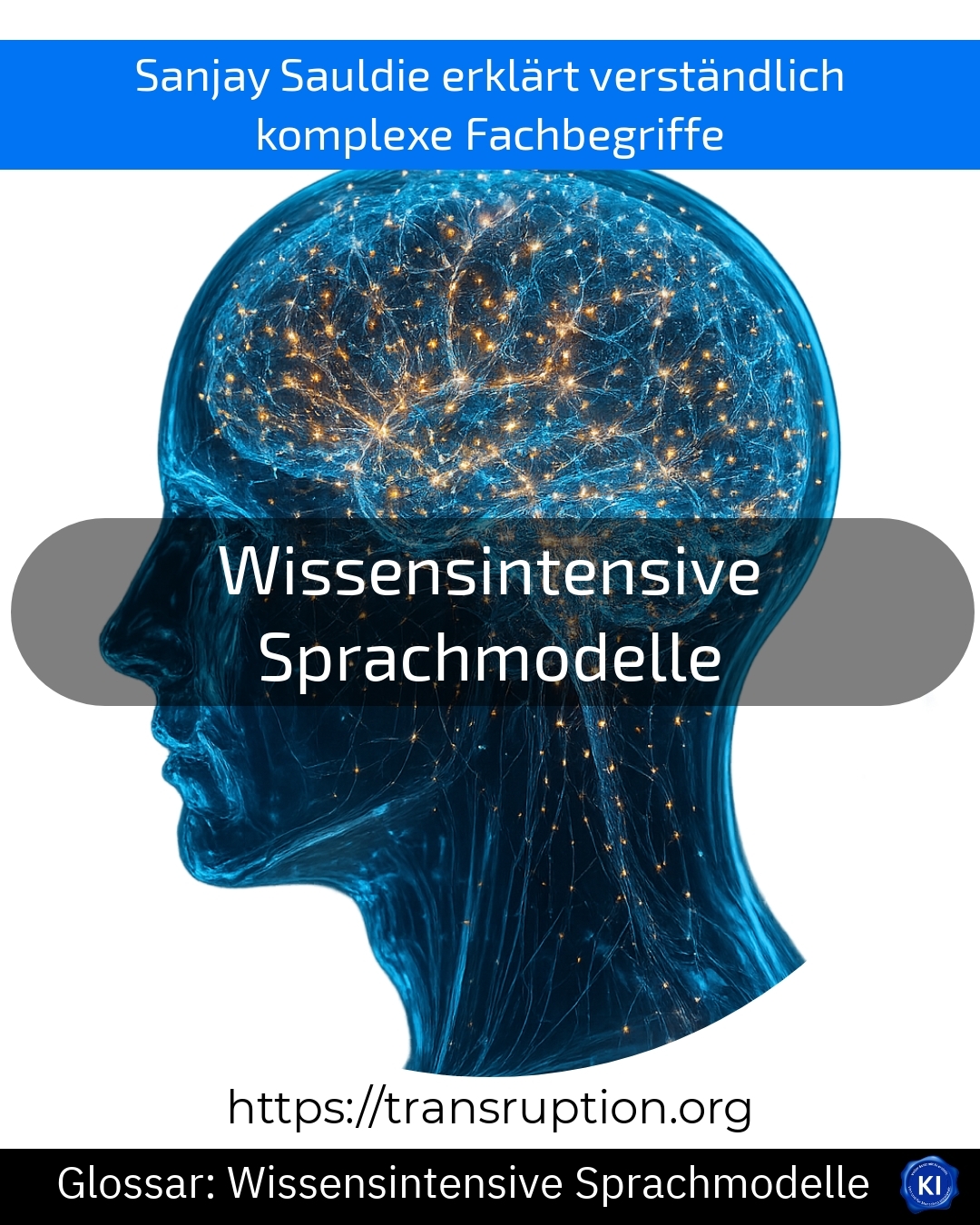
The term „knowledge-intensive language models“ belongs to the categories of Artificial Intelligence, Big Data and Smart Data, and Digital Transformation. These language models are programmes trained on vast amounts of text data so that they can understand and generate human language themselves. They are particularly „knowledge-intensive“ because they absorb and link a lot of information from very different sources.
In practical use, this means that knowledge-intensive language models can recognise connections, answer questions, or even help develop new ideas. Companies, for example, use them to automatically answer customer queries, summarise reports, or identify market trends early on.
A vivid example: A company wants to know what customers think about a new product. A knowledge-intensive language model searches reviews and opinions on the internet for this purpose, identifies the most important statements, and provides an understandable summary.
These language models help companies quickly gain useful insights from a flood of data – without employees having to spend hours reading texts. Knowledge-intensive language models are therefore an important building block of digital transformation and increase efficiency in many areas.







 Deutsch
  English (UK)