
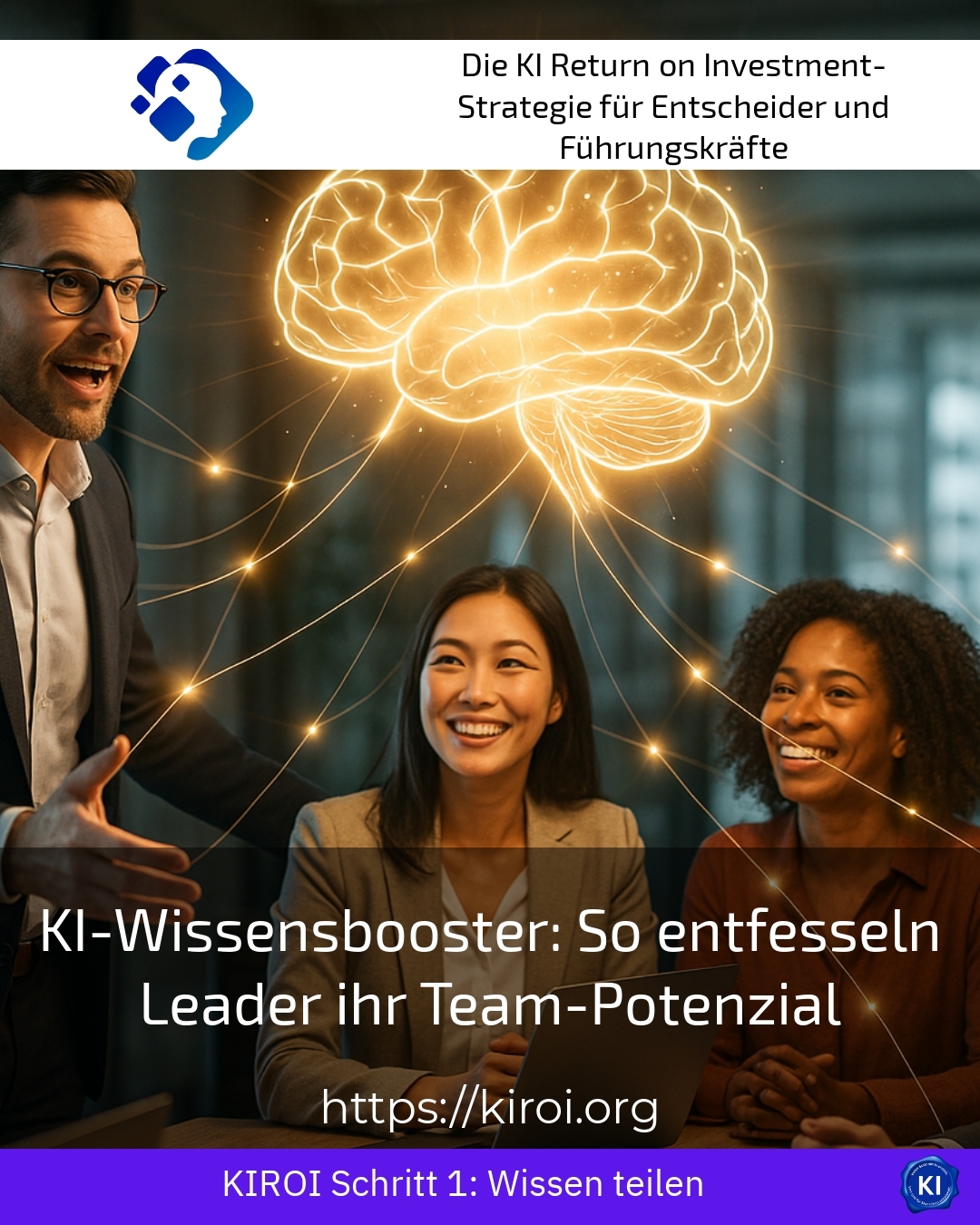
Imagine your team suddenly working with a precision and speed you've previously only known from futuristic visions. Leaders today face the fascinating challenge of activating an AI knowledge booster that unlocks hidden talents and untapped potential. But how do modern leaders actually manage to harness this transformative power? The answer lies in a clever combination of technological understanding, human intuition, and a company culture that promotes continuous learning. This isn't about mere automation, but about genuinely empowering people. In this post, you'll discover which strategies work and how you can sustainably strengthen your team.
The new role of the leader in the digital age
Leaders are currently experiencing a fundamental shift in their roles and responsibilities. They are increasingly acting as enablers and mentors. The classic top-down hierarchy is giving way to a collaborative leadership model. The focus is on developing individual strengths. Leaders create space for experimentation and foster a culture of learning. This results in teams that can independently develop innovative solutions.
A medium-sized manufacturing company from southern Germany has impressively mastered this transformation [1]. The management first invested in training programmes for all levels of the hierarchy. At the same time, interdisciplinary project groups were formed. These teams combined traditional specialist knowledge with new digital competencies. The result was a significant increase in the innovation rate.
Another example is provided by a commercial company with over 500 employees. They introduced so-called learning partnerships between experienced and younger employees. These pairs regularly exchanged ideas on new technologies and best practices. This enabled knowledge transfer in both directions. Older colleagues benefited from the digital expertise of the younger ones. The younger employees, in turn, learned from the experience of their mentors.
A third example comes from the financial sector. A regional bank radically transformed its leadership culture. Managers now regularly spent time with operational teams. They learned about their employees' daily challenges. This proximity created trust and significantly sped up decision-making processes.
AI Knowledge Booster as a Strategic Instrument of Team Development
The targeted use of intelligent systems can elevate teams to a completely new level of performance. The AI knowledge booster acts as a catalyst for individual and collective growth. It supports employees with repetitive tasks and creates space for creative work. At the same time, it delivers valuable insights from large amounts of data. These insights aid in well-informed decisions.
A logistics company used intelligent analysis tools to optimise its route planning. Drivers received daily updated recommendations based on traffic data and delivery priorities, leading to an average reduction in driving times of 18 percent. Employees reported less stress and higher job satisfaction. Management was able to deploy resources more efficiently.
In the healthcare sector, a clinic group adopted intelligent documentation systems. Nursing staff now dictated their reports using voice input. The system automatically translated these into structured documentation. The time saved was redirected to direct patient care. The quality of care improved measurably.
An architecture firm experimented with generative design tools. These created hundreds of design variations within minutes. As a result, the architects were able to concentrate on conceptual and aesthetic issues. Their creativity was not replaced, but rather complemented. Clients received high-quality proposals more quickly.
Best practice with a AIROI customer
An international consulting firm approached transruption coaching with a specific challenge. Despite increasing revenues, management observed growing frustration within the team. Employees felt overwhelmed by the deluge of information and complained about a lack of development opportunities. As part of the support process, we first analysed the existing communication structures and knowledge flows within the organisation. This revealed that valuable experience-based knowledge remained isolated within individual departments. The introduction of an intelligent knowledge platform provided a solution and networked the various areas of expertise. Simultaneously, we developed a new mindset with the management team regarding their role as learning facilitators. They learned to ask questions rather than dictate answers. Within six months, team dynamics had noticeably changed. Employees took on more personal responsibility for their projects. Staff turnover decreased by 23 percent, while customer satisfaction rose in parallel. Particularly noteworthy was the development of new business areas through bottom-up initiatives from the team. This example impressively demonstrates how the combination of technological impetus and human support enables sustainable transformation.
The practical implementation of the AI knowledge booster concept in everyday life
The integration of intelligent tools into daily work requires careful planning and a step-by-step approach. Leaders should first thoroughly analyse their teams' needs. Which tasks take up a disproportionate amount of time? Where do information bottlenecks occur? These questions guide the selection of suitable solutions.
An engineering firm introduced weekly experimentation slots. Employees were given two hours to test new tools. They documented their experiences in a shared wiki. This organically created a collection of best practices. The best ideas were later rolled out across the company.
A marketing agency used intelligent text assistants for initial drafts of campaign copy. The creatives then refined and personalised these templates. The process sped up considerably without any drop in quality. Clients particularly appreciated the faster response times.
In recruitment consultancy, intelligent systems assisted in the pre-selection of applications. This allowed recruiters to concentrate more intensely on personal interviews. The quality of matching improved because more time was available for in-depth analyses. Both companies and candidates benefited from this approach.
Human leadership remains indispensable
Despite all technological possibilities, the human factor remains crucial for success. Intelligent systems cannot replace empathy. They do not understand nuances in interpersonal relationships. Leaders must therefore continuously develop their emotional intelligence.
A family business in the food industry provided an impressive demonstration of this. The management concurrently invested in technology and leadership development. Managers completed coaching programmes on appreciative communication. They learned to give and receive constructive feedback. This combination of technical and human competence proved particularly effective.
An IT service provider introduced regular reflection sessions for its team leaders. There, they discussed challenging leadership situations without judgment. Colleagues provided each other with insights from their own experiences. This peer support sustainably strengthened the leadership team. Problems were identified and resolved earlier.
An insurance company implemented a mentoring programme for emerging talent. Experienced leaders guided younger colleagues over a twelve-month period. They shared not only technical knowledge but also experiences with setbacks. This openness created a culture of trust.
Develop the AI knowledge booster as a team together
The most successful transformations emerge from participatory processes. Employees should be involved from the outset. Their practical experience is indispensable for designing meaningful solutions. Leaders act as facilitators of a joint development process.
A pharmaceutical company formed cross-functional innovation teams. These identified potential improvements in their respective work areas. Monthly pitches to management ensured visibility and resources. The best ideas received budget for pilot projects. Successful pilots were scaled up.
A hotel chain established an internal suggestion scheme with direct feedback loops. Employees submitted improvement suggestions digitally. A panel composed of various hierarchical levels evaluated these weekly. Successful suggestions were implemented and recognised promptly. The submission rate steadily increased.
A mechanical engineer organised hackathons for his.
Best practice with a AIROI customer
A medium-sized corporate group from the manufacturing sector sought support for a fundamental cultural change. The management recognised that traditional hierarchies were hindering innovation. As part of the transruption coaching, we collaboratively developed a vision for future collaboration. The involvement of all management levels from the outset was particularly important. We designed workshops where managers could address their own fears of change. This psychological safety proved to be a fundamental prerequisite for genuine change. Subsequently, individual departments experimented with new forms of work and digital tools. They shared their experiences with colleagues from other areas in company-wide forums. These success stories inspired other teams to emulate and further develop the approaches. After eighteen months, the corporate culture had noticeably changed. Employees proactively submitted suggestions for improvement and took responsibility for their implementation. Management reported a significantly increased identification with the company. Economic indicators also developed positively, although the exact figures are subject to confidentiality. This project demonstrates that sustainable transformation requires time and continuous support.
Common Challenges and How Leaders Master Them
Many leaders report similar hurdles when transforming their teams. Resistance to change is among the most common themes. Some employees fear for their positions or feel overwhelmed. Patient communication and the gradual introduction of new tools help here.
A telecommunications company faced resistance with transparency. The management openly explained the reasons for changes. They also named potential risks and uncertainties. This honesty significantly built trust and reduced anxieties. Employees felt like partners rather than those affected.
An energy provider implemented change agents at all levels. These ambassadors acted as intermediaries between management and teams. They collected concerns and passed them upwards. At the same time, they explained decisions in understandable language. This bridging function proved to be extremely valuable.
An auditing firm created safe spaces for experimentation. Mistakes were explicitly defined as learning opportunities and were not penalised. Teams also transparently documented failed attempts for others. This error culture significantly accelerated the learning process.
My AIROI Analysis
The successful transformation of teams using intelligent technologies requires a holistic approach. Leaders must combine technological competence with human leadership qualities. The AI knowledge booster only unfolds its potential through the right cultural embedding [2]. It repeatedly becomes clear that participatory approaches are more successful than top-down implementations.
The examples of success that I've observed share common characteristics. They all invested in both people and technology simultaneously. They created spaces for experimentation and tolerated mistakes as learning opportunities. They communicated transparently about goals, risks, and progress. And they actively involved employees in design processes.
At the same time, experience warns against inflated expectations. Technology alone does not solve organisational or cultural problems. It can even exacerbate existing dysfunctions if the fundamentals are not right. Therefore, I always recommend an honest assessment before any technological initiative.
The role of leaders is continually evolving [3]. They are increasingly becoming coaches and facilitators. This development requires new competencies and sometimes a changed self-perception. Many leaders who come to transruption coaching are working on precisely this personal transformation. They recognise that their own growth is a prerequisite for the growth of their teams. This realisation often marks the turning point towards sustainable change.
Further links from the text above:
[1] McKinsey – Future of Work Insights
[2] Harvard Business Review – Leadership Articles
[3] World Economic Forum – Future of Work Agenda
For more information and if you have any questions, please contact Contact us or read more blog posts on the topic Artificial intelligence here.








 Deutsch
  English (UK)