
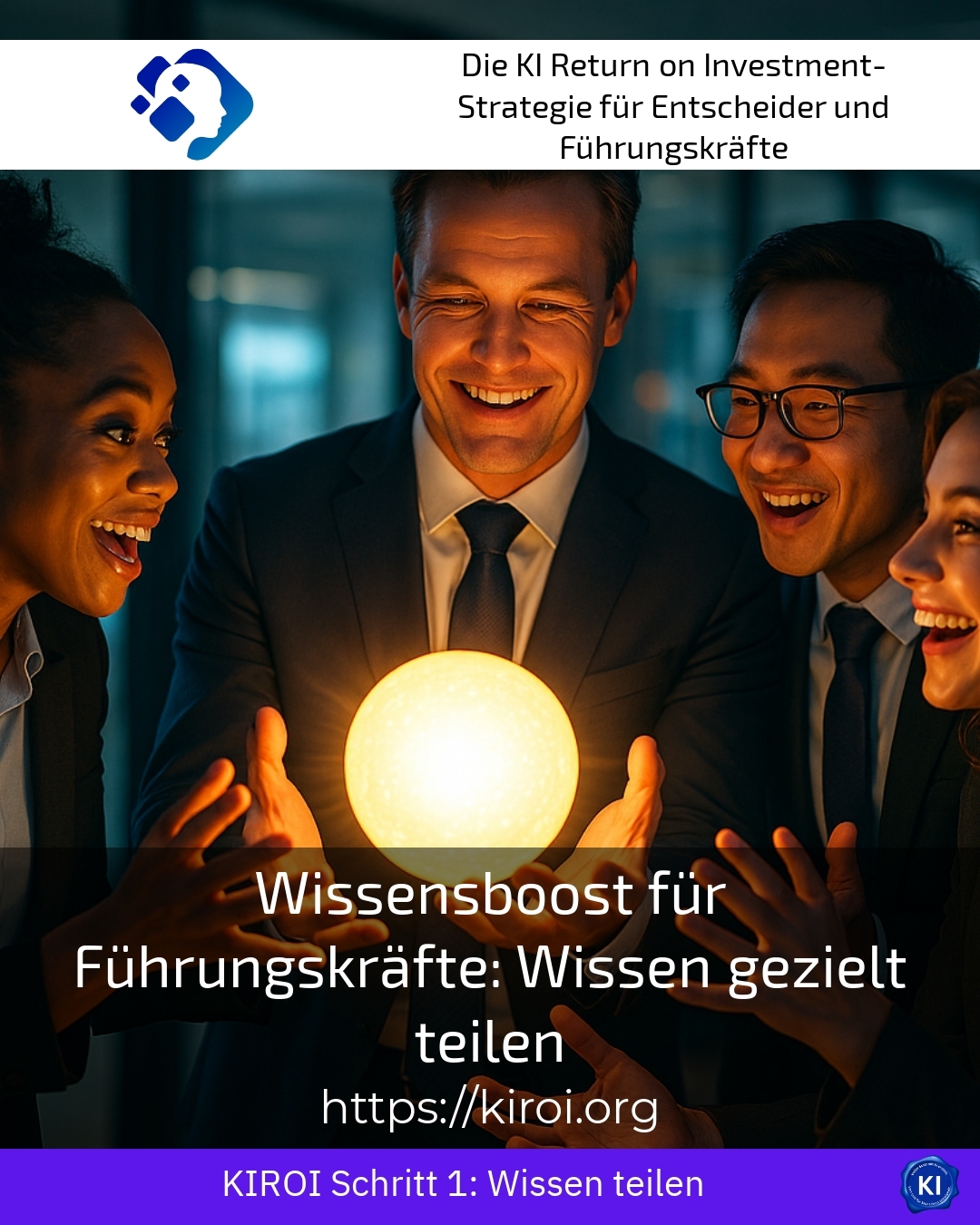
Imagine your company's most valuable asset seeping away daily into unused minds and locked drawers. The Knowledge boost for leaders begins where experiences are systematically shared and expertise is no longer tied to individuals. In a world of accelerated change, the ability to intelligently share knowledge determines the success or failure of entire organisations. Leaders face the challenge of not only learning themselves but also empowering others. This article shows you concrete ways you can become a catalyst for organisational learning as a decision-maker.
The strategic importance of knowledge transfer in modern organisations
Leaders in the financial sector often report a recurring problem. Experienced employees leave the company, taking valuable knowledge with them. This challenge is particularly evident in consulting firms. Senior consultants possess customer relationships and industry knowledge built up over years. Without structured handover processes, these assets are lost irrevocably. We experience similar situations in the healthcare industry. Chief physicians with decades of clinical experience retire. Their implicit knowledge of complex diagnoses and treatment strategies has never been documented [1].
The manufacturing industry faces similar challenges. Foremen and technicians know their machines down to the smallest detail. They recognise problems by sound or minimal vibrations. This experiential knowledge cannot simply be transferred into manuals. The retail sector is also facing this task. Branch managers know exactly which products are particularly in demand at certain times. They understand their local customers and their preferences. Without active sharing, this knowledge remains hidden. The Knowledge boost for leaders sets about this very point and creates structures for sustainable skills development.
Knowledge boost for managers through systematic mentoring programmes
Mentoring programmes offer a proven framework for focused knowledge transfer. In the insurance industry, such initiatives have already achieved measurable success. Experienced sales managers mentor younger colleagues during client appointments. They share their negotiation strategies and objection-handling techniques in practice. The learning effect significantly exceeds any theoretical training. Banks use similar approaches for their junior executives. Private banking experts pass on their knowledge of affluent client segments. They explain the subtle differences in communication and expectations.
The pharmaceutical industry is increasingly focusing on structured tandem models. Experienced researchers work closely with junior scientists. They share not only expertise but also intuition and creativity. In the logistics sector, mentorships between different locations are proving successful. Logistics managers exchange best practices for process optimisation. They learn from each other and jointly develop new approaches. The skilled trades are also discovering the power of structured knowledge transfer. Master craft businesses are documenting traditional techniques in modern formats. Videos and step-by-step instructions supplement traditional training.
Best practice with a AIROI customer
A medium-sized company in the mechanical engineering sector faced a critical situation. Within three years, five of its most experienced design engineers would be retiring. The company had not established any structured processes for knowledge transfer. As part of transruption coaching, we collaboratively developed a comprehensive concept. First, we identified the critical knowledge through structured interviews with the experienced employees. It emerged that knowledge concerning special designs and customer-specific adaptations was particularly at risk. We introduced a tandem system, where each experienced design engineer intensively mentored a younger colleague. Additionally, we documented complex design decisions in an internal knowledge database. Management received guidance on creating an open learning culture. They learned how to actively promote and value knowledge sharing. After eighteen months, the company had not only secured its critical knowledge, but had also established a new culture of continuous learning. The younger employees felt valued and developed more rapidly.
Digital tools as amplifiers of knowledge boosts for leaders
Modern technologies are opening up entirely new possibilities for knowledge transfer. The telecommunications industry is already using comprehensive internal learning platforms. Managers share short video units on specific topics there. Employees can access this content anytime and anywhere. In the automotive industry, digital twins of production facilities are being created. Tacit knowledge is directly linked to virtual models. New employees learn from these simulations without any risk to real facilities [2].
The aviation industry has long relied on comprehensive simulation systems. Pilots train for critical situations in a completely safe environment. The knowledge of experienced flight instructors is incorporated into the scenarios. Similar approaches can be found in the energy sector. Technicians for wind turbines practice complex maintenance tasks virtually. They benefit from the documented experience of their colleagues. The media industry uses collaborative platforms for editorial knowledge. Journalists share research methods and contact networks in protected spaces.
Artificial intelligence is increasingly supporting knowledge preparation. Chatbots answer common questions based on internal expert knowledge. In the legal industry, intelligent systems search through precedents and contract templates. They make the knowledge of experienced lawyers accessible to everyone. The real estate industry is experimenting with virtual tours and annotation systems. Experienced estate agents leave digital notes on property specifics. Their successors benefit from this documented wealth of experience.
Leadership culture as the foundation for successful knowledge sharing
The best technical framework is of little use without the right company culture. Leaders significantly shape the willingness to share knowledge through their behaviour. In the hotel industry, successful managers demonstrate the desired behaviour. They openly share their experiences with difficult guests and crisis situations. Employees adopt this behaviour and pass on knowledge themselves. The catering industry thrives on precisely this openness. Head chefs who share their recipes and techniques create loyal teams.
In the advertising industry, creative knowledge dictates success. Agencies with a strong sharing culture win more pitches and retain talent longer. The construction industry benefits from documented project experiences. Site managers who share their solutions for unexpected problems save colleagues time and money. The event sector thrives on recurring challenges with events. Experienced event managers are happy to pass on their knowledge about suppliers and venues. They know that the entire industry benefits from this exchange [3].
Best practice with a AIROI customer
An international management consultancy approached us with a specific challenge. The partners possessed enormous industry knowledge across various sectors. However, this knowledge was hardly being systematically passed on, and junior consultants had to painstakingly gain their own experience. As part of the transruption coaching, we first analysed the existing knowledge flows and identified significant barriers in the company culture. Partners feared becoming replaceable through knowledge sharing. Together, we developed an incentive system for active knowledge sharers. Partners who regularly held internal workshops received special recognition. Additionally, we introduced structured debriefings after each project completion. The documented knowledge was stored in a searchable database. Management received continuous support in the culture change process. After one year, internal training activity increased by over fifty percent. The onboarding time for new employees was measurably reduced, and client satisfaction improved due to more consistent consulting quality.
Knowledge boost for leaders in times of demographic change
The aging workforce in many industries makes structured knowledge transfer urgently necessary. In the steel industry, experienced blast furnace specialists are retiring. Their knowledge of optimal process parameters is often undocumented. The chemical industry faces similar challenges with lab managers and production specialists. Decades of experience with reactions and safety protocols are at risk of being lost. The textile industry struggles with the knowledge of traditional craft techniques. Weavers and tailors with specialist skills often find no suitable successors.
Agriculture is experiencing a dramatic generational shift. Farmers with decades of experience of local soils and weather patterns are retiring. Forestry is increasingly documenting knowledge of sustainable management. Foresters are sharing their findings on forest development and species protection in databases. Fishing is developing systems for passing on knowledge of water bodies and fish stocks. Experienced fishermen are documenting their knowledge for subsequent generations.
Practical methods for immediate deployment
Leaders can start with simple measures immediately. Regular learning circles in the sales department promote the exchange of experiences. Field sales representatives report on successful customer conversations and failed attempts. The insights benefit everyone. In customer service, documented case studies help with recurring problems. Service employees find solutions faster and learn from colleagues. The IT department benefits from internal wikis with problem solutions. Administrators document their troubleshooting for future cases [4].
In human resources, testimonials about recruitment processes are proving effective. Recruiters share their insights on successful interview techniques. The accounting department organises regular updates on legislative changes and their impact. Experienced accountants explain complex issues in an understandable way. Marketing establishes creative brainstorming sessions with structured documentation. Campaign ideas and their results are recorded for future projects. Product development uses retrospectives after project completion. Teams reflect together and document learnings for upcoming initiatives.
My AIROI Analysis
The systematic transfer of experiential knowledge presents one of the biggest challenges for modern organisations. The Knowledge boost for leaders requires the interplay of various factors. Firstly, it needs a clear commitment from senior management. Without this signal, any initiative remains superficial and short-lived. Equally important is the creation of psychological safety within teams. Employees will only share their knowledge if they do not fear negative consequences.
The technical infrastructure supports the process but does not replace the human element. Leaders must themselves act as role models for open knowledge sharing. They must allocate time and resources for learning activities. Incentive systems should reward knowledge sharers and not just recognise individual performance. The integration of knowledge transfer into regular work processes increases sustainability. Separate projects often fizzle out after initial enthusiasm.
Support from external coaching can provide crucial impetus. Neutral observers identify barriers that are overlooked internally. They bring experience from other organisations and sectors. The Knowledge boost for leaders is not a one-off measure, but a continuous process. Organisations that consistently pursue this path secure their long-term competitiveness. They become learning systems that constantly evolve and improve.
Further links from the text above:
[1] Harvard Business Review – Knowledge Management
[2] McKinsey – Organisational Performance Insights
[3] Forbes – Leadership Section
[4] MIT Sloan Management Review – Knowledge Management
For more information and if you have any questions, please contact Contact us or read more blog posts on the topic Artificial intelligence here.






 Deutsch
  English (UK)