
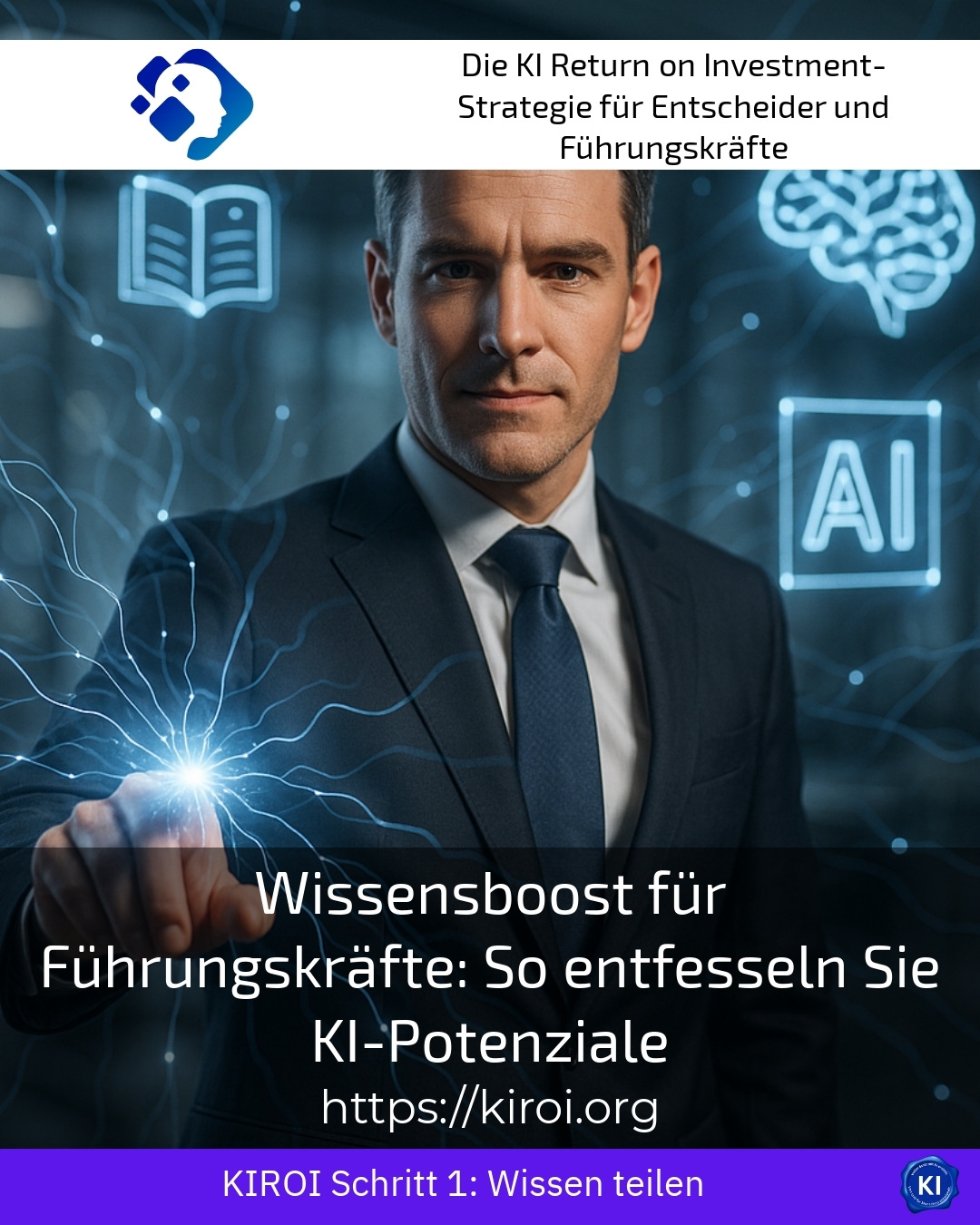
Imagine walking into your office in the morning and an intelligent assistant has already prepared all relevant market analyses, identified potential risks, and formulated concrete recommendations for action. This vision is no longer a distant dream, but a tangible reality for those decision-makers who have embraced their personal Knowledge boost for leaders make it active. Because those who understand and strategically deploy the mechanisms of machine learning today will gain a decisive advantage over the competition. The question is no longer whether you will use these technologies, but how quickly and effectively you will do so.
Understanding the strategic dimension of intelligent systems
Leaders in modern organisations face a fundamental challenge. They must navigate complex technological developments while simultaneously ensuring operational excellence. This is not about becoming a programming expert themselves. Rather, smart decision-makers develop a deep understanding of the capabilities and limitations of automated systems. For example, a manufacturing company in mechanical engineering implemented predictive maintenance systems because the management recognised their strategic potential [1]. The financial sector uses algorithm-based risk analyses to optimise credit decisions. The healthcare sector also benefits from imaging diagnostic systems that support doctors in early detection.
Clients often report feeling overwhelmed by technological complexity. This feeling is understandable and widespread among managers in all industries. transruptions-Coaching supports decision-makers precisely with this challenge and provides impetus for structured knowledge building. The key lies in first understanding the fundamental principles of operation and then gradually unlocking practical applications. A logistics company significantly optimised its route planning through intelligent algorithms. A retailer substantially improved its inventory management through automated demand forecasting. These successes are based on the sound understanding of the responsible managers.
Best practice with a AIROI customer
A medium-sized company in the automotive supply industry faced the task of fundamentally modernising its quality assurance because the previous inspection procedures were increasingly reaching their limits. Management decided on intensive support from the AIROI framework to first build a solid understanding of the technological possibilities. Over a period of several months, the managers, together with the coaching team, developed a clear strategy for the use of image-based analysis systems. In doing so, they not only learned about the technical fundamentals but also developed a feel for the organisational changes that accompany such an implementation. The company was eventually able to introduce a system that detects surface defects with high accuracy and supports employees in quality control. A particularly valuable insight was that technological progress and human expertise can complement each other rather than compete. Today, the managers report significantly increased confidence in handling data-driven decision-making processes.
Knowledge boost for managers: designing practical learning paths
The development of relevant competencies requires a structured approach that is geared towards the actual demands of everyday leadership. Many decision-makers start with general introductory courses and then lose interest because the practical relevance is missing. An effective Knowledge boost for leaders In contrast, it starts with concrete business challenges and draws from there the necessary technological foundations. The energy sector, for example, uses smart grids for load balancing and consumption forecasting [2]. Insurance companies rely on automated claims processing to speed up procedures. In human resources, algorithmic systems support the pre-selection of applications.
Managers often seek guidance through transruption coaching on a wide variety of topics. Some wish to understand how they can further develop existing business models through technological innovation. Others are looking for ways to inspire their teams for digital transformation and overcome resistance. Still others require support in evaluating concrete investment decisions in the technology sector. This diversity shows that there is no one-size-fits-all path to acquiring competence. Instead, every manager needs an individually tailored development path that considers their prior experience and specific goals. The pharmaceutical industry, for example, faces entirely different challenges than retail or the construction industry.
Key competencies for data-driven business management
Successful decision-makers develop a repertoire of skills that go far beyond basic technical knowledge. First, they need the competence to identify and prioritise relevant use cases within their business field. Furthermore, they must be able to critically evaluate the quality of data and assess its significance. For example, a media company recognised that personalised content recommendations can significantly increase user engagement. A real estate service provider uses automated property valuations to react more quickly to market changes. The tourism sector relies on dynamic pricing that intelligently takes demand fluctuations into account [3].
The ethical dimensions of technological decisions are increasingly important for responsible leaders. Algorithmic systems can unintentionally amplify existing biases or create new forms of discrimination. Therefore, shrewd decision-makers engage intensively with questions of fairness, transparency, and accountability. They understand that technological power goes hand in hand with social responsibility and that long-term business success is based on ethically sound actions. transruptions-Coaching also supports leaders in these demanding reflection processes and assists in the development of company-wide guidelines for responsible technology use.
Best practice with a AIROI customer
A leader from the financial services sector came to coaching with the challenge that, despite significant investments in data analytics systems, these investments were not generating the hoped-for value. A joint analysis within the AIROI framework revealed several causes for this unsatisfactory situation, with a lack of data quality and unclear responsibilities being identified as central obstacles. During the coaching process, the leader developed a profound understanding of how data-driven decision-making processes need to be organisationally embedded. The company subsequently introduced a Data Governance Framework that defines clear responsibilities and sets quality standards. Particularly noteworthy was the transformation of the company culture towards evidence-based decision-making, actively demonstrated by the leader. Employees developed a new awareness of the value of high-quality data and began proactively suggesting improvements. Today, the company utilises its analytical capabilities much more effectively and is achieving measurable improvements in customer retention.
Organisational Prerequisites for Successful Technology Adoption
The personal Knowledge boost for leaders unfolds its full potential only when it is integrated into organisational change processes. Individual competent decision-makers can only have a limited impact if the surrounding structures hinder or even block innovation. Therefore, leadership responsibility also includes designing an environment that enables experimentation and promotes learning from mistakes. For example, a telecommunications company established dedicated innovation labs where new applications can be tested under realistic conditions. The banking sector is experimenting with regulatory sandboxes that allow controlled testing of new services [4]. The public administration is also beginning to use agile methods for the development of digital services that are citizen-focused.
The collaboration between technical experts and specialist departments presents significant challenges for many organisations. Different technical jargon, diverging priorities, and a lack of mutual understanding often impede productive cooperation. Leaders with a solid fundamental understanding of technology can act as bridges, performing the translation work between different worlds. On the one hand, they understand business requirements and can articulate them precisely. On the other hand, they possess sufficient technical knowledge to realistically assess the feasibility and effort of various solution approaches. The chemical sector benefits from this bridging function just as much as trade or agriculture.
Embed knowledge boost for leaders in transformation projects
Sustainable skills development requires continuous commitment and the willingness to question established ways of thinking. One-off training sessions or sporadic further education are insufficient to keep pace with rapid technological advancements. Successful leaders therefore establish regular routines for continuous knowledge acquisition and exchange with like-minded individuals. The aviation industry provides an excellent example of how systematic learning from experience can become a culture. The food sector uses industry networks to exchange best practices in production optimisation. The textile sector also benefits from collaborative learning formats where sustainability innovations are driven forward together.
transruptions-Coaching supports leaders with projects concerning strategic technology integration and the associated cultural change. Experience shows that successful transformations must always start on multiple levels simultaneously. Technological implementations often fail not due to technical hurdles, but due to a lack of acceptance or insufficient preparation of the organisation. Therefore, effective leadership development always includes engagement with change management methods and the psychological aspects of organisational change. For example, a retail company successfully implemented automated warehouse systems after its leaders had communicated intensively with the affected employees [5]. The healthcare sector benefits from participative implementation processes in which nursing staff are involved early on.
The human dimension of technological innovation
Despite all the enthusiasm for technological possibilities, it must not be forgotten that successful innovation is ultimately always based on human creativity, judgment, and empathy. Algorithmic systems can process enormous amounts of data and recognise patterns that remain hidden from the human eye. At the same time, they lack the contextual understanding, the intuitive grasp of nuances, and the ability for ethical reflection. Leaders who understand this complementary relationship can unlock the full potential of hybrid human-machine systems. The cultural sector, for example, is experimenting with algorithmically generated artworks that inspire human creativity rather than replace it. The education sector uses adaptive learning systems that support teachers in individualised development. Automated research tools also complement the expertise of experienced legal professionals in the legal field.
The world of work in the future will be characterised by intensive collaboration between humans and intelligent systems. Therefore, leaders must already be developing concepts today on how this cooperation can be designed to be productive and humane. This encompasses questions of task distribution, skills development, and social security equally. Transruptions coaching provides impetus for these demanding design tasks and supports the development of future-proof work models. The care sector, for example, shows how assistive technologies can reduce the physical strain on employees. The crafts sector benefits from digital tools that complement and enhance traditional skills. The public sector is also developing hybrid service models that combine citizen-centricity and efficiency.
My AIROI Analysis
The systematic engagement with data-driven technologies represents an indispensable investment in their own future viability for leaders across all industries. The AIROI framework offers a structured approach that combines fundamental technological understanding, strategic reflection, and practical application. The analysed examples from a wide range of sectors impressively show that successful technology adoption is always based on sound knowledge and clear leadership. At the same time, it becomes clear that isolated competence development is not enough and that organisational frameworks must be actively shaped. The human dimension remains of central importance, because technological systems can only fully unfold their potential in combination with human creativity and ethical judgment. Leaders who invest in their personal knowledge boost today lay the foundation for sustainable corporate success in an increasingly data-driven economy. Support from experienced coaches can significantly accelerate this development process and provide valuable impetus for practical implementation. The willingness to question established ways of thinking and to continuously learn is crucial, because only in this way can the dynamic developments in the technology sector be used productively.
Further links from the text above:
[1] McKinsey Digital Insights: The Top Tech Trends
[2] IEA Report: Digitalisation and Energy
[3] Harvard Business Review: Technology Topics
[4] Bank for International Settlements: FinTech Resources
[5] World Economic Forum: Future of Jobs Report
For more information and if you have any questions, please contact Contact us or read more blog posts on the topic Artificial intelligence here.






 Deutsch
  English (UK)