
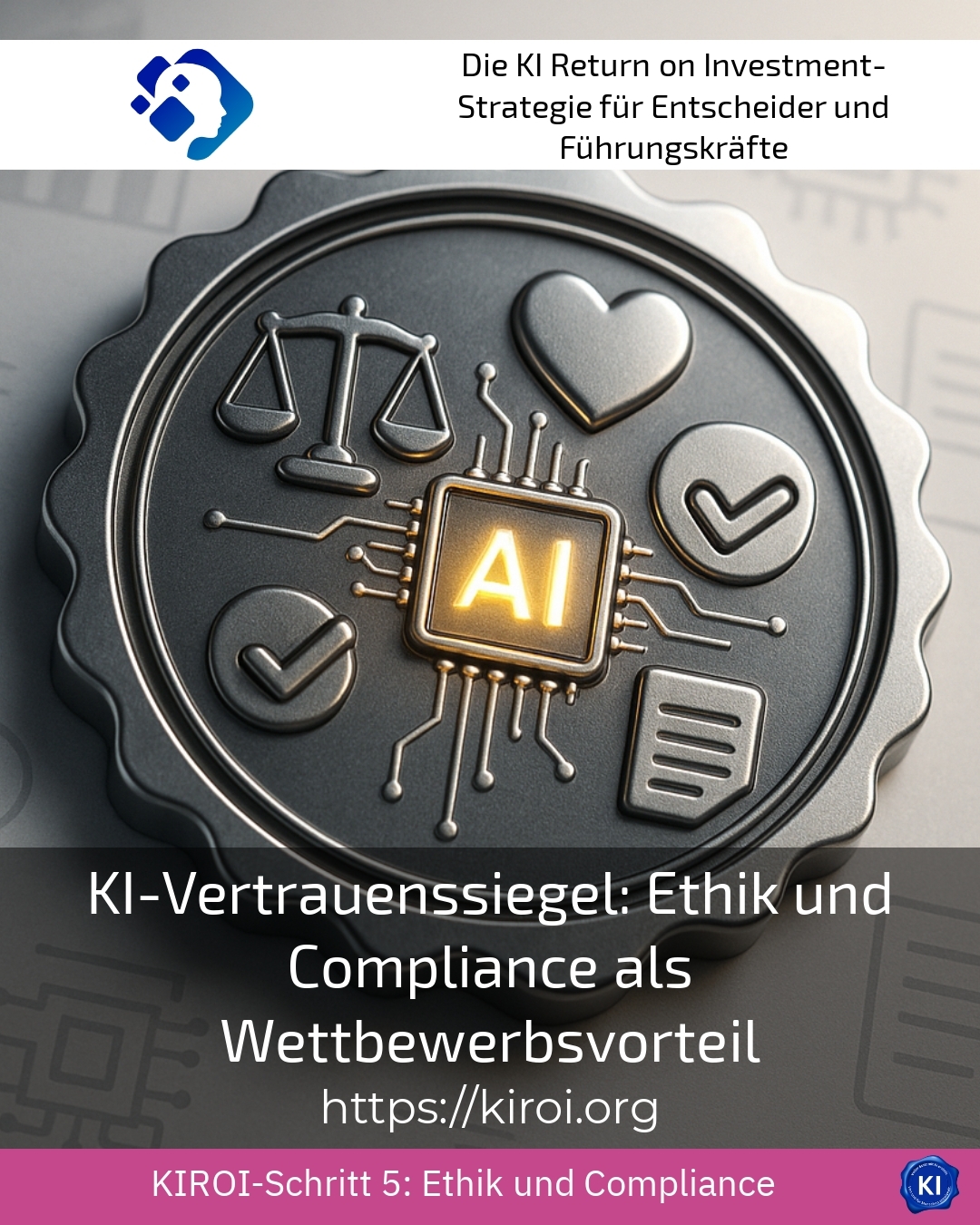
Imagine your company could sustainably strengthen the trust of customers and partners through a single quality feature. In an era where algorithmic systems increasingly influence decisions, the question of ethical responsibility becomes the decisive differentiating factor. AI Trust Seal: Ethics and Compliance as a Competitive Advantage This places it at the centre of strategic considerations. Companies that invest in transparent and responsible technology solutions today are positioning themselves as pioneers of a new era. But how exactly does this transformation work, and what concrete steps lead to success?
Why ethical standards become a business advantage
Digitalisation is fundamentally changing business models. Algorithms are making decisions about lending, personnel selection, and customer service. This development harbours enormous opportunities, but also considerable risks. Consumers and business partners are increasingly demanding transparency and traceability. For example, a financial service provider used machine learning for risk assessment. However, the opaque decision-making processes led to customer dissatisfaction. Trust only measurably increased after the introduction of explainable algorithms. A similar situation occurred with an insurance company that implemented automated claims processing. The lack of traceability led to negative press coverage and customer churn. By implementing ethical guidelines, the company was able to restore its image.
Comparable patterns are also emerging in the healthcare sector. One hospital implemented diagnostic support systems without documenting the decision-making logic. Patients and doctors reacted skeptically to the recommendations. The introduction of an ethics framework with clear transparency guidelines fundamentally changed the situation. The AI Trust Seal: Ethics and Compliance as a Competitive Advantage became a tangible quality feature. The acceptance of technological support increased significantly.
Regulatory requirements as a driver of innovation
Legislators worldwide are reacting to the growing importance of algorithmic systems. The European regulation on artificial intelligence sets strict standards [1]. Companies must conduct risk assessments and fulfil documentation obligations. These requirements may initially appear as a burden. However, smart organisations recognise the potential for differentiation. A logistics company used the compliance requirements as a starting point for process optimisation. The structured documentation led to better decisions and more efficient operations. A telecommunications provider integrated ethics audits into its development processes. The resulting increase in quality convinced even sceptical customers.
A similar picture emerges in retail. A major fashion retailer implemented personalised recommendation systems. Data protection requirements necessitated a revision of the algorithms. The result significantly surpassed the original solution in terms of quality and customer acceptance.
Best practice with a AIROI customer
A medium-sized manufacturing company from the automotive supply sector approached our transruption coaching with a complex challenge. The company had made significant investments in machine learning-based quality inspection systems. While the systems delivered precise results, the lack of transparency in their decision-making led to problems during customer audits. Clients often report similar situations where technical excellence alone is not enough. As part of the AIROI support, we jointly developed a comprehensive transparency concept for the algorithms used. Documenting the decision logic enabled complete traceability of all quality inspections for the first time. Furthermore, the company implemented an ethics board that conducts regular reviews of the systems. The supplier's customers reacted extremely positively to these measures and confirmed the increased trust in the quality processes. Certification audits subsequently ran smoothly, and the company was able to secure new orders that explicitly required transparent technology solutions. This example impressively shows how ethical standards can generate direct business advantages.
AI Trust Seal as a Strategic Instrument
The certification of ethical standards is developing into a competitive factor. More and more industries are establishing specific quality seals for algorithmic applications. An energy supplier was the first company in its sector to receive such a certificate. The external impact exceeded all expectations and led to measurable gains in new customers. Banks are also recognising the value of such awards. One institute used the certification of its credit lending algorithms as a marketing tool. The communication of the ethical standards particularly appealed to younger customer groups.
The topic is also gaining importance in human resources. Applicant tracking systems are under particular scrutiny. A technology group had its recruitment algorithms externally audited and certified. The transparency strengthened its employer branding and increased application rates from qualified candidates. A pharmaceutical company used certified systems for clinical trials. The ethical validation significantly accelerated regulatory approval processes.
Practical implementation of ethical guidelines
The implementation of ethical standards requires a systematic approach. First, companies analyse their existing algorithmic systems for potential risks. A media company reviewed its recommendation algorithms for possible discrimination patterns. The analysis revealed unconscious biases, which were subsequently corrected. A travel portal examined its pricing algorithms for fairness. The identified unequal treatments were eliminated by adjusted models.
Employee training forms another important building block. A retail company established a comprehensive training programme for all developers. Raising awareness of ethical issues led to higher quality solutions. A mechanical engineering company integrated ethics modules into its training programmes. Junior staff developed an awareness of responsible technology development from the outset.
Best practice with a AIROI customer
A service provider in the customer experience management sector sought support in the ethical transformation of its analysis processes. The company processed large volumes of customer data and employed automated systems for sentiment analysis. Management recognised that the ethical concerns of potential clients were increasingly jeopardising contract completions. Through transruptions-coaching, we supported the company in developing a holistic ethics concept. Together, we defined clear principles for handling sensitive data and designing automated decision-making processes. The company established an ethics council to evaluate all new projects before their launch. Furthermore, we developed a communication strategy that transparently conveys the ethical standards externally. The implementation of the concept took several months and required the involvement of all company divisions. However, the results were convincing across the board, as new customer acquisition increased by a double-digit percentage after communicating the ethical positioning. Existing clients extended their contracts with explicit reference to the trust-building measures. This example demonstrates how transruptions-coaching can effectively support companies in their strategic realignment.
Compliance as the Foundation of Sustainable Business Development
Adherence to regulatory requirements creates planning certainty. Companies that invest in compliance early on avoid costly adjustments later. A software company took all foreseeable requirements into account during the development phase. The products met all regulatory standards upon market launch. An industrial group established central compliance management for all algorithmic applications. The uniform standards significantly reduced complexity and accelerated project timelines.
Suppliers and partners also benefit from clear compliance structures. One automotive manufacturer required all suppliers to provide evidence of ethical technology standards [2]. This requirement led to a cross-industry increase in quality. A food group integrated ethical criteria into its supplier evaluations. Partners with certified systems received preferential access to contracts.
Future prospects for the AI trust seal
The importance of ethical certifications will continue to grow. Consumers are becoming increasingly aware of algorithmic decisions [3]. Companies that build trust today are securing their long-term market position. One insurance group is already observing that ethically positioned products achieve higher margins. A technology company is noting increased investor interest following ethical certification. These developments support the thesis that responsible technology development is economically viable.
The AI Trust Seal: Ethics and Compliance as a Competitive Advantage will be a quality feature of the future. Sectors from finance and healthcare to industry are recognising the potential. Investing in ethical standards pays off many times over.
My AIROI Analysis
A comprehensive review of current developments clearly shows that ethical technology standards have shifted from being a cost factor to a strategic differentiator. Companies across all industries face the challenge of designing algorithmic systems responsibly and communicating this transparently. The analysed examples impressively demonstrate that investments in ethics and compliance can generate measurable business advantages. Customers and partners reward transparent and comprehensible decision-making processes with trust and loyalty. Regulatory requirements will continue to increase in the coming years, and forward-thinking organisations are proactively leveraging this development. The AIROI methodology supports companies in systematically implementing ethical standards and utilising them as a competitive advantage. The insight that ethics and economic success are not opposites but can mutually reinforce each other appears particularly important. Organisations that invest in responsible technology development today are positioning themselves as trustworthy partners for the future. The combination of technical excellence and ethical responsibility creates sustainable competitive advantages that are difficult to replicate. In conclusion, early engagement with ethical issues is no longer an option, but has become an entrepreneurial necessity.
Further links from the text above:
[1] EU Regulatory Framework for Artificial Intelligence
[2] Federal Ministry for Economic Affairs and Climate Action – Artificial Intelligence
[3] Bitkom – Artificial Intelligence
For more information and if you have any questions, please contact Contact us or read more blog posts on the topic Artificial intelligence here.






 Deutsch
  English (UK)