
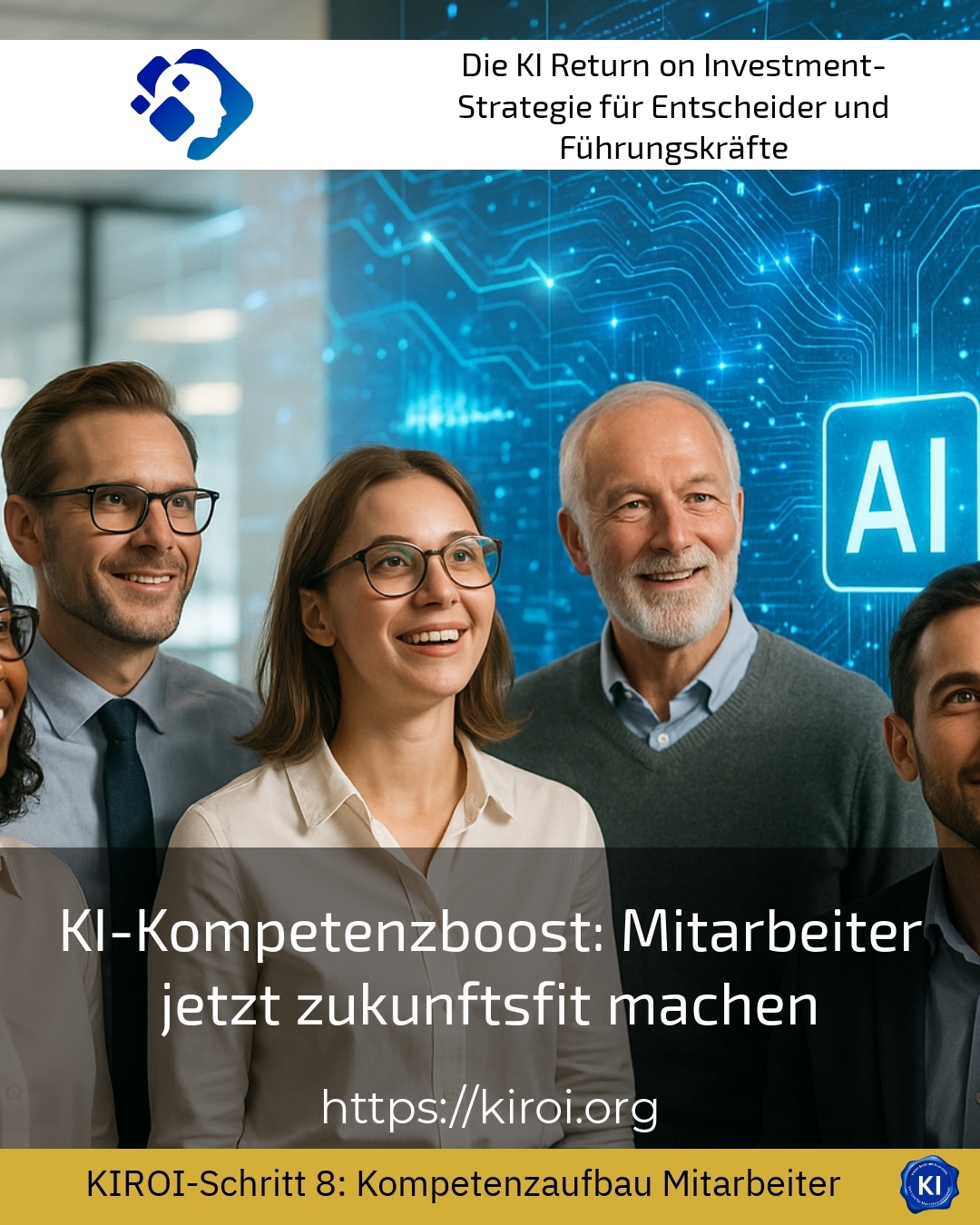
The digital transformation is fundamentally changing workplaces. Many companies face a crucial challenge. They must prepare their workforce for new technologies. The AI skills boost: Make employees future-ready now This is at the heart of strategic considerations. Those who do not act today risk losing out tomorrow. Intelligent systems are increasingly taking over routine tasks in offices and production halls. At the same time, completely new job profiles and fields of activity are emerging. The good news is: With the right support, this transformation can be achieved sustainably and with a focus on people.
Why the AI skills boost is becoming indispensable now
The world of work is undergoing a profound upheaval. Automated processes are noticeably changing almost every industry. Companies frequently report uncertainties within their teams. Employees are wondering what role they will play in the future. These concerns are understandable and deserve serious attention. Transruptions coaching can provide valuable impetus and orientation here. It professionally supports individuals and organisations through complex change processes.
In the financial sector, banks are already using intelligent algorithms for credit decisions. Insurance companies rely on automated claims processing and risk analyses. Asset managers work with robo-advisors that optimise portfolios. These developments require new skills from employees on the ground. Clerks need to understand how machine-based decisions are made. They require competencies for reviewing and correcting automated processes.
In healthcare, intelligent systems significantly support diagnosis. Radiologists work alongside image recognition software that highlights abnormalities. Nurses document more quickly and accurately with the help of voice-controlled assistants. Pharmacies regularly use automated inventory management and medication interaction checks. All these applications require trained personnel with the appropriate understanding.
Best practice with a AIROI customer
A medium-sized mechanical engineering company from Southern Germany approached our team. The management recognised the need for technological development among the workforce early on. Over two hundred employees were to be gradually introduced to new working methods. Transruption coaching initially supported the management level intensively in strategy development. Together, we identified key positions that required special attention. In workshops, department heads independently developed concrete learning paths for their teams. Production employees competently learned to handle predictive maintenance systems. Quality inspectors practically trained the use of image recognition software for error detection. Within eighteen months, the acceptance of new technologies increased measurably. The error rate significantly decreased by twenty-three percent due to improved human-machine collaboration. Employees happily reported increased job satisfaction and less routine workload. The company successfully opened up two new business areas thanks to improved skills.
AI Competency Boost: Develop employees with strategy
Successful competence development requires a well-thought-out framework as its foundation. Experience shows that random training measures rarely lead to lasting results. Instead, a systematic approach with clear milestones is consistently recommended. The AIROI model offers a proven structure for organisations of all sizes.
The retail sector, in particular, clearly demonstrates which skills are in demand. Sales assistants are increasingly using tablets with product recommendation systems actively. They must logically understand why the system suggests certain items. Store managers work routinely with automated inventory analyses and reordering systems. Buyers interpret forecasts on demand development and make decisions responsibly. Visual merchandisers creatively rely on data-driven insights for product presentation. These diverse use cases require different qualification approaches accordingly.
The logistics sector is also undergoing massive changes driven by intelligent systems. Dispatchers work with route optimisation algorithms that significantly improve delivery times [1]. Warehouse staff interact with autonomous transport systems and order-picking robots on a daily basis. Fleet managers regularly analyse telematics data for fleet optimisation and cost control. Training these employees requires practical approaches with a high proportion of hands-on exercises.
Designing learning formats for different target audiences
Not every employee learns effectively in the same way. Some prefer traditional face-to-face training sessions that allow for direct, in-person interaction. Others value flexible online formats that they can complete at their own pace. Blended learning approaches ideally combine both methods into an effective overall package. Microlearning modules provide practical, short learning opportunities that can be incorporated into the daily work routine.
In the media industry, editors are already making extensive use of automated research tools. Graphic designers are collaborating creatively with generative systems to produce designs. Video production teams regularly rely on automatic subtitling and translation services. Marketing professionals closely analyse campaign data using intelligent dashboards. This wide range of applications calls for tailored training programmes to meet these needs.
The energy sector faces particular challenges in qualification. Network technicians must be competent in understanding and controlling smart grid systems. Customer advisors must clearly explain smart meters and variable tariffs. Maintenance teams must efficiently use predictive maintenance applications for wind turbines. Analysts must precisely interpret complex consumption forecasts and feed-in data.
Best practice with a AIROI customer
An international hotel chain with over fifty locations sought support with its digital transformation. The reception teams were to be comprehensively familiarised with new guest management systems. The housekeeping team was already using optimisation software for cleaning processes on a daily, practical basis. However, many employees lacked a complete understanding of the underlying algorithms. Transruptions Coaching developed a multi-stage qualification programme over several months. Managers first received an in-depth strategic introduction to digital business models. This was followed by practice-oriented workshops for individual departments, featuring concrete use cases. Receptionists learned to derive and utilise guest preferences from system suggestions. The kitchen staff understood the logic behind automated food ordering suggestions. After one year, eighty percent of participants reported increased job satisfaction. Guest reviews improved measurably and sustainably through personalised service. Management successfully reduced operating costs while simultaneously increasing service quality.
Overcoming resistance and promoting acceptance
Change processes are often met with reluctance or even resistance, which is understandable. Employees have legitimate concerns about job security and their career prospects. Taking these fears seriously is fundamental to success. Open communication about objectives and expected changes builds trust in the long term.
In the legal sector, law firms are increasingly making systematic use of automated document analysis. Contract assistants can quickly scan through thousands of pages to identify relevant clauses. However, legal staff must review and interpret these results competently. Notaries are embracing modern digital notarisation processes and electronic archives. Legal assistants work with practice management systems that reliably monitor deadlines automatically.
The construction industry is undergoing a digital transformation driven by Building Information Modelling. Architects and engineers are working together collaboratively on three-dimensional building models. Site managers regularly use project management software with integrated forecasting functions. Tradespeople on site receive instructions directly via mobile devices [2]. This interconnectedness requires new skills across all levels of the organisation.
The agricultural sector is also seeing exciting developments in the use of technology. Farmers are making effective use of precision farming with sensor-based management. Drones monitor fields and detect pest infestations or nutrient deficiencies at an early stage. Automated irrigation systems respond intelligently to weather data and soil moisture levels. Agricultural consultants use yield forecasts to provide well-founded recommendations to farms.
AI competence boost: Involving employees as designers.
The most successful transformation projects actively and systematically involve those affected. Employees should not only be trained, but also be able to actively co-create. Their everyday work experiences are immediately valuable for system development. Pilot groups can test new applications and provide constructive feedback.
In the automotive industry, job profiles are changing due to electrification and connectivity. Mechanics are increasingly becoming mechatronics engineers with enhanced diagnostic skills. Production workers are working safely side-by-side with collaborative robots. Quality inspectors are precisely using automated image analysis for surface inspections. Development engineers are virtually simulating vehicle properties cost-effectively before prototypes are built.
The textile and clothing industry makes creative use of smart systems for trend forecasting. Designers experiment with generative tools to create patterns and colour combinations. Buyers analyse sales forecasts to make informed ordering decisions. Sustainability managers make extensive use of life-cycle analyses with automated data collection.
Best practice with a AIROI customer
A hospital with over a thousand employees systematically launched a comprehensive qualification programme. The clinic management recognised the need for technological change in all areas. Nursing staff needed to become proficient in digital documentation and decision support. Doctors, already using diagnostic assistants, required training on critical evaluation. Transruption coaching initially began with a thorough assessment of existing competencies. Building on this, department-specific learning paths with clear objectives were developed. Radiology assistants were taught the functioning of image recognition algorithms in an understandable way. Laboratory personnel received in-depth training on interpreting automated analysis results. Administrative staff grasped the logic behind automated billing checks comprehensibly. A particular focus was placed on sensitive ethical questions regarding algorithm-supported decisions. After two years, employees reported higher job satisfaction and fewer overtime hours. Patient care noticeably improved through more efficient processes and better information flow. The hospital is now considered a pioneer in digital transformation within its region.
Leaders as the key to success
The attitude of managers plays a key role in the success of training initiatives. Managers must actively develop a basic understanding of new technologies themselves. They should lead by example and demonstrate a genuine willingness to learn. At the same time, they must consistently ensure that their teams have the time and space to undertake further training.
In the banking sector, data-driven decision-making is bringing about noticeable changes to management roles. Branch managers analyse customer behaviour patterns and tailor their advisory services accordingly. Managers in the credit department have a sound understanding of algorithm-based risk assessments. HR managers make modern use of analytical tools for staff planning and development.
The pharmaceutical industry is seeing a marked acceleration in research processes thanks to intelligent systems. Scientists are making extensive use of molecular simulations and automated literature reviews [3]. Quality managers are closely monitoring production processes using real-time analysis systems. Sales representatives are making effective use of personalised conversation guides for visits to doctors. These changes require comprehensive leadership skills at all levels.
My AIROI Analysis
Training staff to cope with technological change is not a one-off project. It is an ongoing process that requires constant strategic attention. Companies that invest in skills development today are securing their long-term competitiveness. The AI skills boost: Make employees future-ready now requires a consistent, holistic approach.
Based on my experience with numerous transformation projects, it is possible to identify clear factors for success. First and foremost, a thorough and honest assessment of existing skills is required. Building on this, realistic development goals are established, tailored to different groups of employees. Involving managers as key influencers is essential for sustainable success. Equally important is the creation of a corporate culture that fosters learning.
Professional guidance through transruptions coaching can offer valuable support in this regard. External perspectives help to identify blind spots and point the way to new approaches in a constructive manner. At the same time, experienced coaches bring proven methods from other industries to the table, which is highly beneficial. Experience shows that the combination of specialist expertise and process-oriented support yields the best results. Companies should not go down this path alone, but should seek out competent partners strategically. Investing in employee skills pays off in multiple ways through higher productivity, greater innovation capacity and enhanced employer appeal in the long term.
Further links from the text above:
[1] Bitkom – Digital Transformation in Business
[2] Federal Ministry for Economic Affairs – Digitalisation Strategy
[3] Fraunhofer Society – Research into Artificial Intelligence
For more information and if you have any questions, please contact Contact us or read more blog posts on the topic Artificial intelligence here.








 Deutsch
  English (UK)