
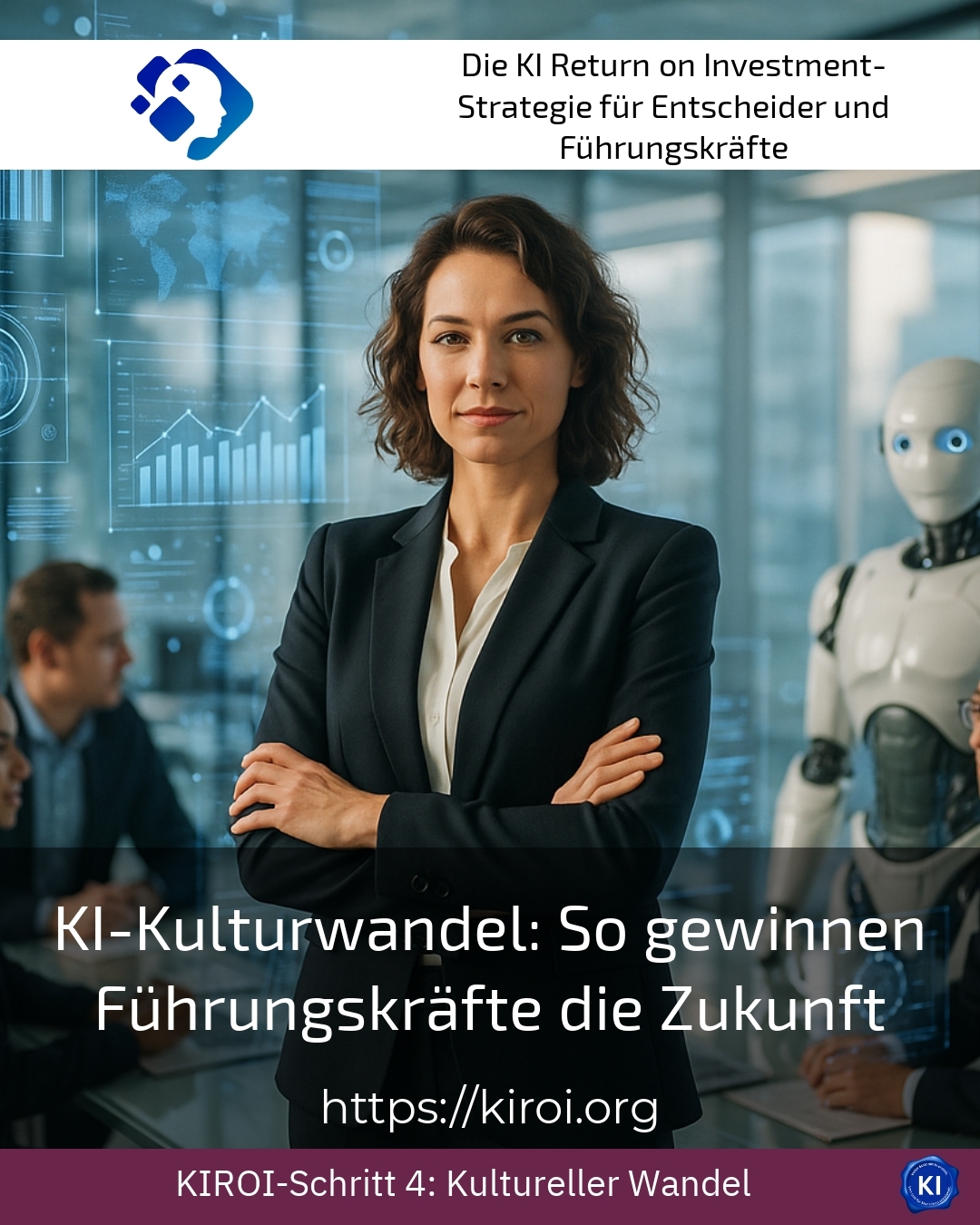
The world of work is changing rapidly and profoundly. Leaders face an unprecedented challenge. The AI cultural change It encompasses all industries and company sizes with unstoppable momentum. Those who don't act today risk being left behind tomorrow. But what does this change mean specifically for people in leadership positions? How can you, as a decision-maker, not only react but actively shape it? These questions are currently preoccupying numerous leaders who are turning to transruption coaching. They are seeking guidance in a time of upheaval. They want to understand how they can successfully lead their teams through this transformation.
Why the AI culture shift requires more than just technology
Many companies make a fundamental mistake when introducing intelligent systems. They focus exclusively on the technical aspects of implementation, completely overlooking the human component of this transformation. For example, a medium-sized logistics company invested considerable sums in automated warehouse management systems. However, employees were not adequately involved or prepared. The result was a significantly lower acceptance rate than originally expected, and productivity gains fell far short of forecasts.
A retail group introduced intelligent inventory management solutions into its branches [1]. Initially, the branch managers perceived these systems as a threat to their autonomy. They feared that their experience and expertise would be devalued. This perception only fundamentally changed after intensive workshops and open dialogues. The managers realised that the new tools could support their work. They suddenly had more time for strategic tasks and customer relationships.
A further example comes from the financial sector. A regional bank implemented chatbots for customer service in standardised areas. Initially, the advisors reacted with scepticism and, in some cases, outright rejection. However, through targeted guidance, they developed a new understanding of their role. They subsequently focused on complex advisory situations and building long-term customer relationships.
Understanding the emotional dimension of the AI culture shift
Leaders often underestimate the emotional reactions of their employees to technological changes. Fear of job loss is just one of many possible reactions. Many people also feel uncertain about their future competencies. They wonder if their current skills will still be relevant. These concerns are valid and deserve serious attention from leadership.
A manufacturing company in the mechanical engineering sector experienced this dynamic very clearly. Experienced skilled workers were critical of the introduction of predictive maintenance systems. They had built up and refined their knowledge of machine conditions over decades. Now, an algorithm was supposed to take over and possibly even improve these diagnoses. Management reacted sensitively to these concerns and developed a mentoring programme. Older employees passed on their experience to the system developers. This resulted in a collaborative and appreciative working relationship between humans and technology.
Best practice with a AIROI customer
An internationally operating company in the renewable energy sector approached transruptions-coaching with a complex challenge. The management had decided to introduce intelligent planning systems for the maintenance of wind turbines. The service technicians responded to this announcement with considerable resistance. They perceived the new systems as a vote of no confidence in their professional competence. Within the scope of guidance through AIROI methods, a comprehensive analysis of the existing corporate culture was initially carried out. This revealed that the employees were generally open to innovation. However, they had so far lacked the opportunity to actively participate in shaping change processes. In several workshop series, the technicians, together with the IT department, developed requirements for the new system. They contributed their practical knowledge and formulated concrete suggestions for improvement. The result significantly exceeded all expectations of the company management. System acceptance was over ninety percent of the workforce. Maintenance efficiency increased by considerable amounts within the first year. Particularly noteworthy was the changed attitude of the employees towards technological innovations in general.
Developing leadership skills for a new era
The AI cultural change requires an expanded competency profile from leaders [2]. Traditional management skills remain important, but are no longer sufficient. Today's leaders must be able to understand and contextualise technological developments. At the same time, they need strong emotional intelligence to support their teams. This combination of technical understanding and human competence is crucial for success.
A telecommunications company developed a special executive development programme to address precisely these challenges. Participants first learned the basic functions of intelligent systems. They then intensively engaged with change management and communication strategies. The third module included practical exercises in moderating difficult team discussions. The executives reported significantly increased confidence in dealing with transformation topics.
A healthcare provider pursued a similar approach with a slightly modified methodology. Here, the focus was particularly on ethical questions when using intelligent diagnostic support. Doctors and nursing staff discussed responsibilities and decision-making processes intensively. This discussion led to clear guidelines for the practical application of the new technologies. The employees felt better prepared and more capable as a result.
Communication as the key to successful AI cultural change
Transparent and continuous communication forms the bedrock of any successful transformation. Leaders must be able to speak openly about the opportunities and risks of change. They should neither make exaggerated promises nor fuel unnecessary fears. A balanced portrayal of the situation builds trust and credibility with employees.
An insurance group established a monthly format for dialogue on technological developments. Management presented current projects and directly answered staff questions. This transparency significantly reduced rumours and speculation and improved the working atmosphere. Employees appreciated the opportunity to voice their concerns openly and be heard.
An automotive supplier opted for a decentralised communication approach for its transformation. Each department was assigned a specially trained transformation ambassador from within its own ranks. These individuals acted as intermediaries between senior management and the local operational teams. They gathered feedback, answered questions, and relayed impulses in both directions. The model proved particularly successful during the practical implementation phase of new systems.
Adapt structures and processes for transformation
Cultural change also requires structural changes within organisations. Rigid hierarchies and lengthy decision-making processes often hinder the necessary adaptability. Agile working methods can be supportive here and increase the speed of innovation. At the same time, existing strengths of the organisation must be preserved and further developed.
A pharmaceutical company completely reorganised its research department according to agile principles. Cross-functional teams now collaborated on specific projects with a high degree of autonomy. The integration of data-driven analysis tools was carried out gradually and on an as-needed basis in everyday work. The researchers themselves decided which tools they wanted to use for their work.
A media company experimented with entirely new organisational structures for its editorial teams. Small, autonomous units independently produced content for specific target groups and channels. Intelligent systems supported research and the optimisation of the reach of published articles. The journalists retained full editorial control over all content decisions.
Best practice with a AIROI customer
A long-established family business in the food industry sought support for a comprehensive transformation process. The third generation of the owner family wanted to position the company for the future and modernise it. However, the established values and the special company culture were to be preserved. Transruptions Coaching supported the management team in developing an individual transformation strategy for this process. First, the indispensable cultural elements of the company were identified and documented together. Quality consciousness, employee orientation, and regional embeddedness were at the top of the list. Subsequently, we analysed which processes could be meaningfully supported by intelligent systems. Production planning and logistics offered significant optimisation potential with relatively low risk. The introduction was carried out in small steps with intensive involvement of the affected employees on site. Continuous reflection of the impact on the company culture during the process was particularly important. Regular feedback rounds enabled quick adjustments in the event of problems or concerns. After eighteen months, the company had significantly increased its efficiency without cutting jobs. Employee satisfaction had even risen because monotonous tasks could be reduced.
Understanding further training as a strategic investment
Continuous learning is becoming a core competency for organisations and individuals alike. Leaders must understand further training as a strategic necessity and promote it accordingly [4]. This goes beyond just technical training for dealing with new systems. Transversal competencies such as critical thinking and creativity are also gaining importance for the future.
A retail group invested heavily in the training of its workforce at all levels. Every employee received a personal learning budget to spend as they wished. The range of options extended from technical certifications to communication training and creative workshops. This investment clearly paid off through increased innovation capability and lower staff turnover.
A consulting firm developed an internal mentoring programme for generational knowledge transfer. Experienced consultants passed on their industry and client knowledge to younger colleagues. In return, the junior staff members practically imparted their know-how in using digital tools. This mutual enrichment strengthened cohesion and the learning culture throughout the entire company.
My AIROI Analysis
The support of numerous transformation projects has central success factors for the AI cultural change revealed. Leaders who successfully manage this change are characterised by certain attitudes and behaviours. They approach changes with openness, while simultaneously maintaining a healthy scepticism towards overblown promises. They take their employees' concerns seriously and create space for open dialogue about them.
The AIROI methodology has proven to be a valuable framework for these complex transformation processes. It combines strategic analysis with practical implementation support at various levels of the organisation. Particularly important is the individual adaptation to the specific situation of each company. Generic solutions work only very limitedly or not at all in this sensitive area.
The coming years will bring further acceleration of technological development and create new challenges. Leaders who invest in their cultural transformation competence today create sustainable competitive advantages for their organisations. They position themselves and their companies as attractive employers for skilled professionals of all generations. The future belongs to those organisations that can successfully bring together people and technology.
Transruptions-Coaching supports leaders and organisations with these very challenges using proven methods. Clients often report initial overwhelm given the complexity of transformation in their area. Structured support restores their confidence and ability to act in this demanding situation. The path to the future does not become easier, but it does become manageable and controllable.
Further links from the text above:
[1] McKinsey: The economic potential of generative AI
[2] World Economic Forum: The Future of Jobs Report
[3] Harvard Business Review: Change Management
[4] Gartner: Future of Work Trends
For more information and if you have any questions, please contact Contact us or read more blog posts on the topic Artificial intelligence here.









 Deutsch
  English (UK)