
Will your company still be competitive in five years if you do not invest in the continuous professional development of your workforce today?
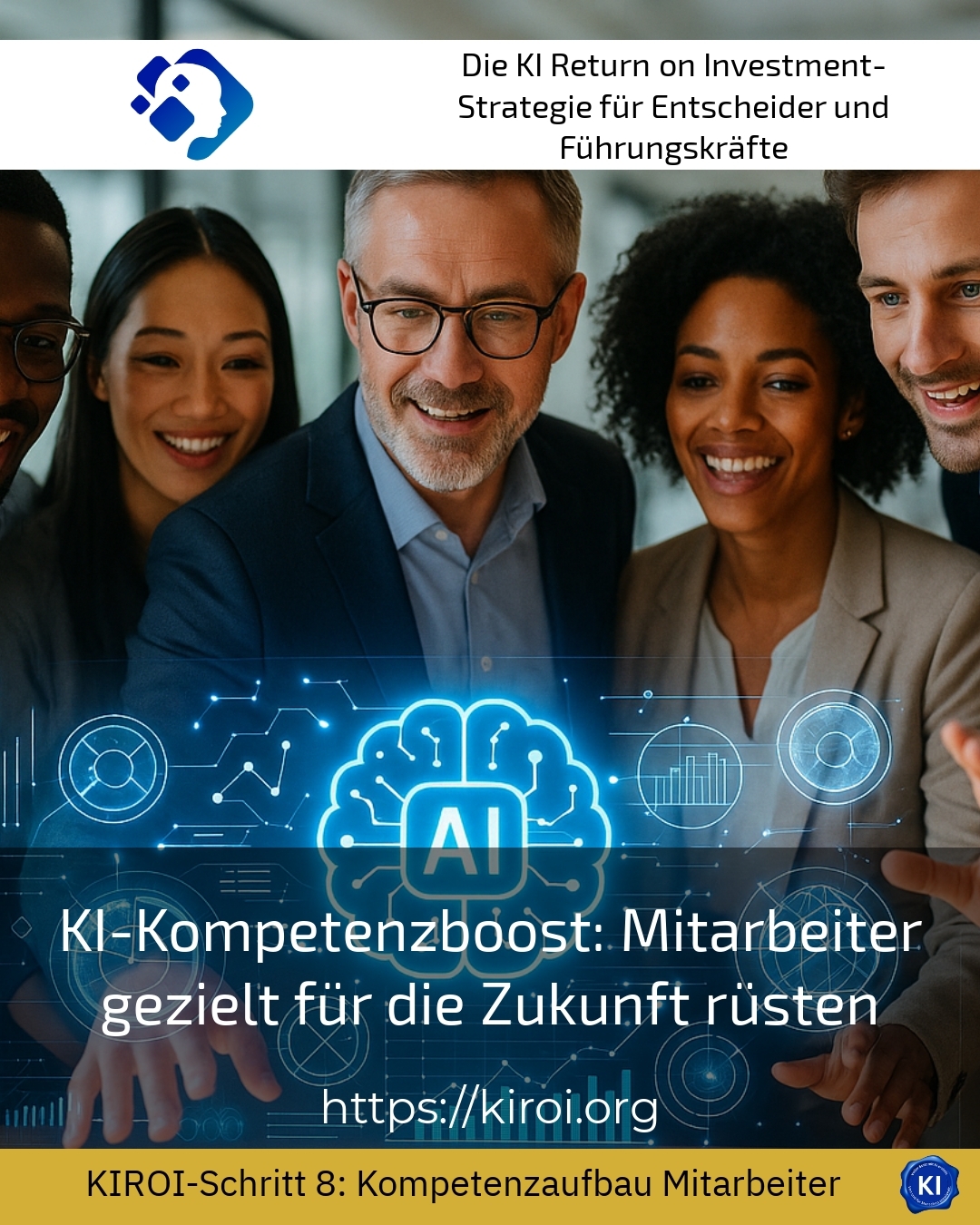
This question is currently occupying leaders in almost all sectors of the economy, because the rapid development of intelligent technologies is changing workflows, business models and customer expectations at a pace that presents many organisations with enormous challenges. The AI Skills Boost for employees is no longer just an optional additional qualification, but is developing into an indispensable foundation for sustainable corporate success. Those who specifically equip their teams for the future not only create technological connectivity, but at the same time strengthen the innovative power and resilience of the entire organisation. In this article, you will learn why systematic skills development in the field of intelligent systems is so crucial, which concrete measures have proven successful in practice and how you can successfully shape the transformation process in your company.
Why the AI skills boost has become indispensable for businesses
The integration of intelligent technologies into operational processes is advancing inexorably and now affects all areas of the business. In customer service, organisations are increasingly using automated dialogue systems that pre-qualify enquiries and handle standard requests independently. Marketing departments rely on data-driven analysis tools to target campaigns more precisely and better understand target audiences. Manufacturing companies are implementing predictive maintenance systems that detect machine failures early and minimise downtime. Human resources departments are experimenting with intelligent applicant management solutions that accelerate the recruitment process. Finance teams work with automated forecasting tools that can predict cash flow trends more accurately. However, all these applications require employees who understand how these systems work, where their limitations lie and how to sensibly integrate them into existing workflows.
Clients frequently report that the introduction of new technologies initially meets with resistance. This resistance often stems not from a fundamental rejection, but from uncertainty and a lack of understanding. If employees cannot comprehend how a system arrives at its results, they develop understandable reservations. This is precisely where transruptions coaching comes in, supporting companies in accompanying their transformation projects. Through targeted knowledge transfer and practical exercises, teams gradually build competence and trust.
Essential skills for the successful AI competence boost
The qualification of employees for working with intelligent systems encompasses several dimensions that interlock and reinforce each other. First, teams need a solid basic understanding of how machine learning works and which data are relevant for various application purposes. This knowledge makes it possible to develop realistic expectations and to critically evaluate the results of intelligent systems. In sales, for example, this means that employees understand why a recommendation system classifies certain leads as particularly promising and which factors play a role in this. In logistics, this understanding helps to evaluate automatically generated route suggestions and adapt them if necessary. In human resources, it enables a well-founded assessment of candidate suggestions from intelligent matching systems.
Furthermore, the ability to communicate effectively with text-generating systems is becoming increasingly important. So-called prompt engineering—the art of formulating requests in such a way that they deliver optimal results—is developing into a sought-after core competency. Corporate communications employees use this skill to create drafts for press releases or social media posts. Product managers use it to generate structured market analyses or competitor comparisons. Development teams accelerate their work through automatically generated code suggestions, which they subsequently check and adapt.
Best practice with a AIROI customer A medium-sized technical services company faced the challenge of qualifying its service technicians to use a new diagnostic assistance system. The system analysed error messages from customer equipment and generated recommended courses of action, but acceptance among the experienced specialists was initially low. Many technicians felt their expertise was not appreciated and feared being replaced by machines. transruptions coaching accompanied the company in developing a multi-stage qualification programme that combined technical training with change management elements. In workshops, the teams worked together to figure out how the system could support their work without replacing their experience. The technicians learned to understand the system as a digital assistant that takes over routine analyses for them and creates more time for complex problem-solving. After six months, the usage rate had increased from an initial under twenty percent to over eighty percent, and the average repair time fell by almost a quarter. The approach of involving experienced technicians as internal multipliers who passed on their newly acquired knowledge to colleagues and thus established a culture of continuous learning proved particularly valuable.
Data literacy as the foundation for sustainable qualification
Intelligent systems are based on data, and the quality of their results depends directly on the quality of this data foundation. Therefore, a solid understanding of data structures, data sources and data quality is one of the most important building blocks of any training programme. Purchasing staff, for example, need to understand which historical order data are relevant for automated demand forecasting and how outliers can distort the result. Controlling teams benefit when they can comprehend the assumptions underlying an automatically generated forecast. Quality managers work more effectively with anomaly detection systems when they understand the underlying statistical principles.
This data literacy can be built up gradually and does not require any in-depth prior mathematical knowledge. Rather, it is about developing an intuitive understanding of relationships and asking the right questions. Why is the system recommending this particular supplier? On what data basis was this forecast created? How up-to-date is the underlying information? Employees who can ask such questions use intelligent tools much more effectively and avoid costly misjudgements.
Strategies for the sustainable implementation of competency programmes
The successful qualification of workforces for working with intelligent technologies requires a systematic approach that goes far beyond individual training measures. Organisations wishing to achieve sustainable success develop comprehensive learning architectures that combine various formats and cater to different learning styles. Face-to-face workshops are ideally suited for introducing new topics and encouraging interaction among participants. E-learning modules enable flexible learning at one's own pace and the deepening of specific content. Practical projects anchor the acquired knowledge in daily work and create immediate practical relevance.
Peer-learning formats, in which employees learn from one another and share their experiences, prove particularly effective. In innovation circles, teams experiment with new tools and document their insights for colleagues. Internal communities of practice provide space for questions, discussions and the exchange of best practices. Mentoring programmes connect tech-savvy employees with colleagues who are still at the beginning of their learning journey. These social learning formats not only accelerate knowledge transfer, but also strengthen cohesion and the culture of innovation within the company.
Leaders as pioneers for the AI skills boost
The attitude of managers towards new technologies significantly shapes how teams react to change and how successful training measures are. Managers who actively learn themselves and make their development visible act as role models and signal that continuous further training is part of everyday company life. In departmental meetings, they share their own learning experiences and encourage team members to ask questions and openly address uncertainties. When planning projects, they allocate sufficient time for familiarisation and experimentation with new tools. In performance reviews, they address development goals in the area of digital competencies and provide support with implementation.
At the same time, leaders must communicate realistic expectations and warn against exaggerated promises. Intelligent systems assist with many tasks, but they replace neither human judgement nor creativity or empathy. This nuanced perspective helps teams to assess the possibilities of new technologies soberly and to fall into neither uncritical enthusiasm nor excessive scepticism.
Best practice with a AIROI customer A financial services provider with several hundred employees wanted to optimise its customer service through the use of intelligent analysis tools. The system was designed to generate individual recommendations for action from customer data and support advisors in preparing for meetings. The management recognised early on that the success of the project would depend significantly on acceptance within the teams. Therefore, parallel to the technical implementation, the company invested in a comprehensive qualification programme accompanied by transruptions coaching. In a first step, all managers went through an intensive training programme that combined technical knowledge with change management skills. These managers subsequently acted as multipliers and coached their teams during the introduction of the new system. The establishment of an internal learning platform where employees could ask questions, share experiences and access training materials proved to be particularly valuable. A gamification approach featuring learning badges and friendly competition between departments further boosted motivation. After nine months, over ninety percent of the advisors had completed the basic training, and customer satisfaction scores increased measurably because meetings were better prepared and conducted more individually.
Overcoming challenges in skills development
The upskilling of workforces to work with intelligent systems rarely proceeds in a linear fashion and brings with it typical challenges for which organisations should be prepared. A frequent hurdle is the heterogeneous baseline within teams, as employees bring very different prior knowledge and learning speeds. While some are already experimenting with text-generating systems in their personal lives, others have never heard of machine learning. This difference requires differentiated learning opportunities that appeal to both beginners and advanced learners without overwhelming or underchallenging anyone.
Another challenge is the time pressure of day-to-day business, which often pushes professional development into the background. If employees feel that training comes at the expense of their actual work, motivation drops and what they have learned is not anchored sustainably. Successful organisations tackle this problem by firmly embedding learning times in the daily working routine and holding managers accountable for protecting these times. Some companies introduce dedicated learning Fridays, on which no meetings take place and time is set aside for further training. Others integrate short learning units into existing routines, for example through ten-minute knowledge impulses at the start of team meetings.
Measurable success through systematic evaluation
The effectiveness of training measures can only be assessed if organisations define appropriate key performance indicators and continuously collect them. This is not just about the number of completed training courses or the satisfaction of the participants, but above all about the actual application of what has been learned in everyday working life. Do employees use the new tools regularly and effectively? Do the quality or speed of certain work processes improve? Do innovative ideas or suggestions for improvement emerge from the teams?
In customer service, for example, it is possible to measure how handling times and first-contact resolution rates develop following the introduction of intelligent assistance systems. In marketing departments, campaign results show whether data-driven decisions lead to better outcomes. In research and development teams, the number of new patent applications or product ideas can serve as an indicator. These metrics should be regularly collected, analysed and discussed with the teams in order to make successes visible and identify potential for improvement.
Future prospects and long-term development pathways
Training for working with intelligent systems is not a one-off project, but a continuous process that spans years and must be constantly adapted to new developments. Technology is evolving rapidly, and what is considered advanced today may already be standard tomorrow. Therefore, forward-looking organisations are establishing structures for lifelong learning that empower employees to develop independently and keep pace with change.
At the same time, combining technical expertise with soft skills is becoming increasingly important. Critical thinking helps to question and contextualise the results of intelligent systems. Communication skills make it possible to explain complex technical concepts in an understandable way and bring colleagues along. Ethical judgement becomes more important the more decisions are delegated to algorithms. Creativity remains an exclusively human strength that can be supported by technology, but not replaced.
Best practice with a AIROI customer A traditional manufacturing company with multiple sites faced the challenge of qualifying its established workforce for digital transformation. Many employees had been with the company for decades and had had little contact with digital technologies. Concerns about being overwhelmed and losing their jobs were palpable, and initial training attempts met with a subdued response. transruptions coaching supported the company in developing a completely new approach that valued the experience of long-standing employees and integrated it as a resource. In so-called tandem teams, experienced production experts worked together with younger, more digitally savvy colleagues on specific optimisation projects. The experienced staff contributed their deep process knowledge, while the younger ones demonstrated technological possibilities. This intergenerational approach proved to be extraordinarily successful because both sides learned from each other and valued one another. After a year, these tandems had developed over thirty improvement suggestions, more than half of which were implemented and brought measurable efficiency gains. Initial scepticism gave way to a spirit of optimism, and the company was able to retain key skilled workers who might otherwise have retired early.
My AIROI Analysis
The systematic upskilling of employees for working with intelligent technologies is one of the most important strategic investments that companies can currently make. In my estimation, many organisations still underestimate the scale and depth of the required changes. It is not enough to offer isolated training courses or to rely on the individual initiative of employees. Rather, what is needed is a holistic approach that combines technical knowledge, methodological competence and cultural change. Examples from various industries impressively demonstrate that success depends significantly on the involvement of those affected. When employees understand why changes are necessary and experience that their expertise is still in demand, their willingness to participate increases substantially. Managers play a key role here as role models and encouragers. They must learn themselves, tolerate uncertainty and communicate authentically. Technological development will continue to gather pace in the coming years, and organisations that lay the foundations for continuous learning today will be significantly better positioned. This is not about jumping on every bandwagon, but rather about making well-founded decisions on which technologies actually add value and how they can be sensibly deployed. Transruptions coaching supports companies precisely in this task and provides impetus for shaping sustainable transformation processes. Anyone who purposefully equips their workforce for the future is not only investing in competitiveness, but also in employer attractiveness and staff retention.
Further links from the text above:
[1] McKinsey Global Institute – The State of AI
[2] World Economic Forum – Future of Jobs Report
[3] Bitkom – Artificial Intelligence in Companies
[4] Harvard Business Review – Artificial Intelligence
[5] Gartner – Artificial Intelligence Insights
For more information and if you have any questions, please contact Contact us or read more blog posts on the topic Artificial intelligence here.








 Deutsch
 English (UK)