
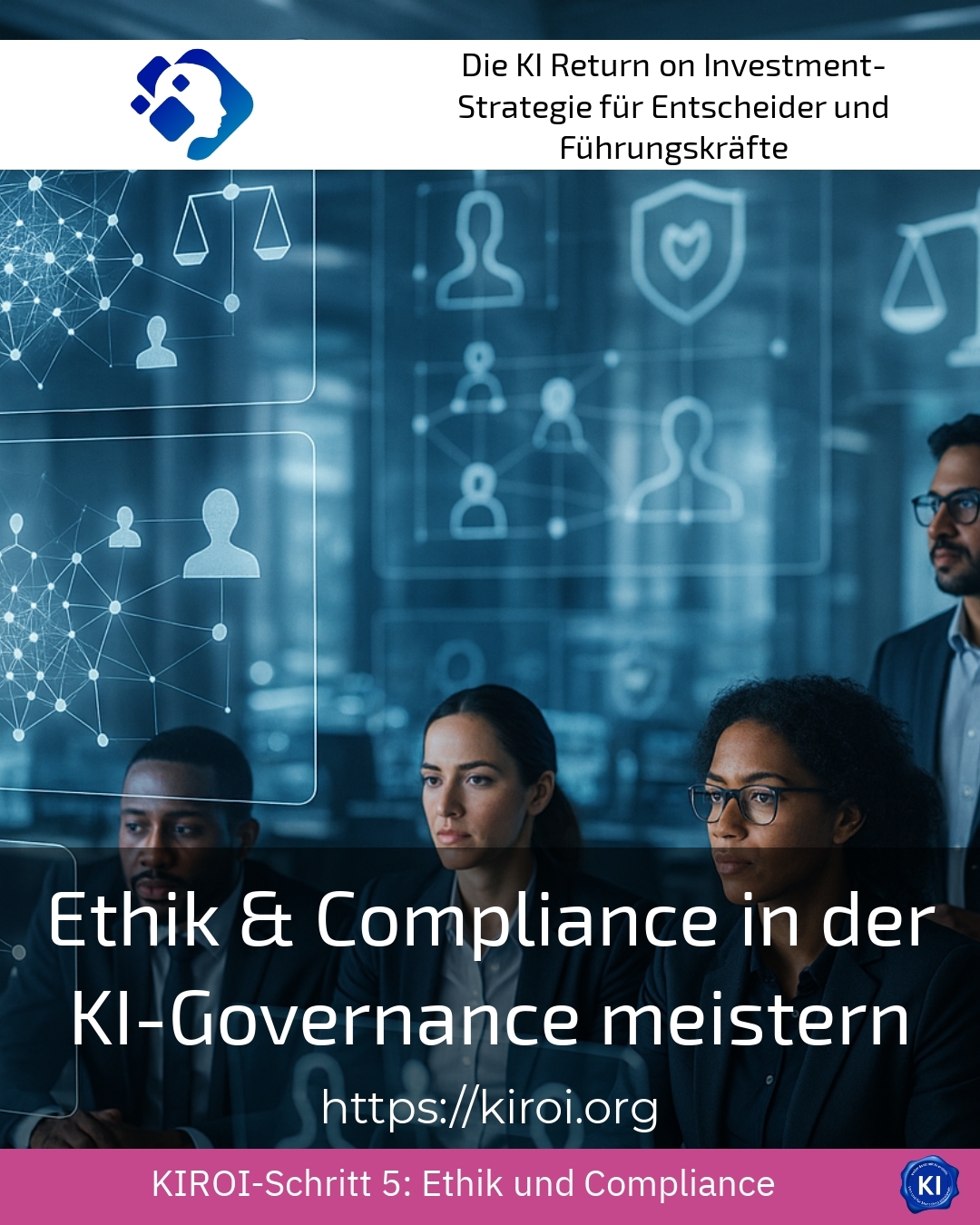
Imagine your algorithmic system making decisions about loans, applications or medical treatments – and no one can explain why. This prospect is currently a concern for numerous executives, supervisory bodies and legal departments worldwide. The art of, Mastering Ethics & Compliance in AI Governance In order to do so, it is developing into an indispensable core competence for modern organisations. Those who underestimate this challenge risk not only hefty fines but also lasting reputational damage that can severely shake the trust of customers, partners and employees. Therefore, a profound look at the strategic, operational and cultural dimensions of this complex topic is worthwhile.
Why Responsible Governance of Intelligent Systems is So Important
The rapid development of intelligent technologies presents companies with entirely new challenges. Automated decision-making processes are now penetrating almost all business areas. In the financial sector, algorithms assess applicants' creditworthiness. In human resources, digital assistants filter application documents. Insurance companies use predictive models for risk assessment. Retail groups rely on dynamic pricing through machine learning. These application scenarios illustrate the enormous scope of automated decisions in the daily lives of millions of people.
Societal responsibility grows proportionally with technological penetration. If an algorithm systematically disadvantages a qualified applicant, far-reaching consequences arise. The individual concerned experiences an unjustified rejection. The company potentially loses valuable talent. Society as a whole suffers from discriminatory structures. Therefore, the careful management of intelligent systems is increasingly gaining strategic importance for sustainably operating organisations.
Stricter regulatory requirements intensify the pressure to act. European legislators have developed comprehensive regulatory frameworks [1]. These mandate transparency, traceability, and human oversight. Companies must carry out risk classifications of their systems. High-risk applications are subject to particularly stringent documentation requirements. Non-compliance can result in significant penalties. Therefore, forward-thinking organisations are investing in robust governance structures at an early stage.
Mastering Ethics & Compliance in AI Governance through Structured Frameworks
Successful management of intelligent systems requires carefully considered organisational structures. Many companies establish dedicated ethics committees or governance boards. These committees pool expertise from various specialist areas. Technical specialists meet with legal experts. Representatives from risk management work with HR specialists. External advisory boards bring societal perspectives. This creates a balanced decision-making framework for complex ethical questions.
Integration into existing compliance structures proves to be particularly effective. Companies can draw on established risk management processes. Existing reporting systems can be extended to include algorithmic risks. Internal audit departments can develop auditing standards for intelligent systems. Data protection officers can expand their range of responsibilities to include algorithmic fairness. This embedding in existing structures significantly accelerates practical implementation.
Clear responsibilities form the foundation of any successful governance. Every algorithmic system requires a defined responsible person. This individual oversees the entire lifecycle of the application. They coordinate development, deployment, and continuous monitoring. In the event of problems, they act as the first point of contact. Regular accountability reports document the system's status. This creates transparency across the entire organisation.
Best practice with a AIROI customer A leading financial services company faced the challenge of centrally governing its numerous algorithmic decision-making systems. The company utilised intelligent technologies in lending, fraud detection, and customer advisory services. Initially, the various departments worked largely in isolation. Through transruptions-coaching, the company developed an integrated governance model. A central ethics board was established, meeting monthly. Representatives from legal, technology, compliance, and customer service discuss current issues there. Each algorithmic system was assigned a Product Owner for ethical aspects. This person coordinates collaboration between technical teams and governance bodies. A standardised risk assessment form was introduced, which must be completed before each deployment. The documentation includes potential discrimination risks, transparency requirements, and monitoring metrics. Regular training sensitises all involved employees to ethical issues. The result of this structured approach sustainably convinced the management. The number of decisions subsequently challenged decreased significantly. The trust of regulatory authorities and customers increased measurably. The organisation today positions itself as a pioneer for responsible technology use in its industry.
Transparency as a cornerstone of trustworthy systems
The explainability of algorithmic decisions is a key factor for success. Affected individuals have a legitimate interest in explanations. Why was a loan application rejected? Why did an applicant not receive an invitation to an interview? For what reasons does the insurance premium vary? These questions deserve well-founded and understandable answers. Companies that practice transparency sustainably strengthen the trust of their stakeholders.
Technical solutions support the explainability of complex models. Interpretable model architectures provide more direct insights into decision-making logic [2]. Post-hoc explanation methods analyse decisions retrospectively. Visualisation tools make abstract relationships tangible. Contrastive explanations show which changes would lead to different outcomes. These technical aids considerably facilitate communication with stakeholders.
The documentation requirements necessitate systematic approaches. Model cards describe a system's capabilities and limitations in a structured way. They document training data, evaluation metrics, and known restrictions. Decision logs record individual processing steps. Version control systems enable the reconstruction of historical states. This comprehensive documentation significantly aids audits and regulatory reviews.
Actively shaping fairness and freedom from discrimination
Algorithmic systems can amplify existing societal inequalities. Historical data often reflects past patterns of discrimination. If a recruitment algorithm learns from such data, it may reproduce biases. Women could be systematically disadvantaged for technical positions. Certain name groups receive poorer ratings. Older applicants are automatically screened out. These risks necessitate active countermeasures through responsible governance.
Defining fairness proves to be a complex task. Various mathematical fairness criteria can contradict each other [3]. Group parity demands equal acceptance rates across different groups. Individual fairness requires similar treatment for similar individuals. Calibrated fairness focuses on the precision of predictions. Companies must consciously decide which criteria to prioritise. These decisions ultimately reflect societal values.
Practical measures effectively reduce discrimination risks. Careful data analyses uncover problematic patterns early on. Bias audits assess the impact on different population groups. Data cleaning techniques can mitigate historical biases. Algorithmic adjustments optimise models for fairness criteria. Human review of critical decisions creates additional safety nets. This results in a multi-layered protection system against unintentional discrimination.
Maintain and use human control meaningfully
The role of human decision-makers remains central, even with advancing automation. Fully autonomous systems carry significant risks. Humans can bring contextual knowledge that algorithms lack. They recognise exceptional situations for which no training data exists. Empathy and moral judgement cannot be fully automated. Therefore, regulatory frameworks explicitly demand human oversight for critical decisions.
Designing meaningful human-machine interaction requires well-thought-out concepts. Pure confirmation rituals without genuine testing opportunities offer no added value. People must be given sufficient time for informed assessments. Relevant information must be presented in an understandable way. Training enables employees to critically question algorithmic recommendations. Organisational incentives must not lead to unreflected adoption of system suggestions.
Different levels of human involvement are suitable for different use cases. For low-risk scenarios, human review can be done on a sample basis. Medium risk levels require regular audits and escalation mechanisms. High-risk applications demand individual human review of every single decision. This differentiation enables resource-efficient governance without compromising on critical decisions.
Best practice with a AIROI customer An insurance company implementing intelligent technologies for claims processing faced significant challenges regarding human oversight. The automated system assessed claims and recommended payout amounts or rejections. Initially, claims handlers confirmed the system's recommendations in over ninety percent of cases without in-depth review. This rate indicated insufficient human control. Support from transruptive coaching helped redesign the process. First, the team analysed the decision-making patterns of the algorithmic system in detail. Critical case scenarios were identified where the system more frequently provided erroneous recommendations. For these scenarios, enhanced review protocols with specific checklists were developed. Claims handlers received extensive training on critically evaluating system suggestions. The user interface was revised to more prominently display relevant contextual information. An incentive system now also rewarded the quality of reviews, not just processing speed. Regular feedback sessions enabled a dialogue about difficult cases between humans and the system. The result showed a significant improvement in decision quality within acceptable processing times. Customer satisfaction demonstrably increased because decisions were now easier to explain. The company successfully demonstrated how human oversight and algorithmic efficiency can work together.
How to Master Ethics & Compliance in AI Governance through Culture Change
Sustainable governance requires more than formal structures and processes. An ethically sensitive corporate culture forms the foundational bedrock. Employees at all levels must understand the importance of responsible technology use. Leaders send important signals through their behaviour. Open discussions about ethical dilemmas promote organisational learning. This creates a culture where ethical concerns are heard and taken seriously.
Training programmes systematically impart necessary skills. Technical staff learn to integrate ethical aspects into their work. Managers develop a sensitivity to the societal impacts of their decisions. Compliance officers deepen their understanding of technical contexts. Practical case studies make abstract principles tangible. Regular refreshers keep awareness vigilant and up-to-date.
Secure reporting channels enable concerns to be articulated. Employees must be able to report ethical breaches without fear of reprisal. Anonymous whistleblowing systems supplement direct communication channels. Clear escalation paths ensure that reported concerns are processed. Regular communication about received reports and their processing strengthens trust. This way, the organisation constructively utilises the ethical judgment of all employees.
Establish continuous monitoring and adjustment
Algorithmic systems continuously change during their deployment. Data drift leads to models losing precision. Shifting societal norms alter fairness requirements. New regulatory stipulations necessitate adjustments. Technological advancements offer improved solutions. Therefore, governance must be understood as a dynamic process, not a one-off project.
Monitoring systems automatically oversee critical key figures. Performance metrics indicate changes in forecast quality. Fairness indicators continuously measure the impact on different groups. Usage patterns provide clues about unintended uses. Thresholds trigger automatic alarms when exceeded. These early warning systems enable timely intervention in case of problems.
Regular review cycles supplement continuous monitoring. Periodic audits comprehensively assess the overall situation. External audits bring independent perspectives. Benchmarking identifies areas for improvement. Lessons learned processes systematically process experiences. These combined approaches ensure the long-term effectiveness of governance structures.
My AIROI Analysis
The challenge, Mastering Ethics & Compliance in AI Governance to be able to will continue to gain in importance in the coming years. Organisations face the challenge of reconciling technological innovation with social responsibility. This balance requires continuous attention and further development. The approaches presented offer a structured framework for this demanding task.
From my consultancy practice, clients frequently report initial overwhelm due to the complexity of the topic. The multitude of regulatory requirements, technical options, and organisational design possibilities initially appears confusing. transruptions-Coaching offers valuable guidance in developing tailor-made solutions. The gradual building of competencies and structures reduces complexity to manageable work packages. I consider the integration into existing governance systems to be important, rather than the creation of isolated parallel structures.
The cultural dimension deserves special attention. Even sophisticated processes and structures remain ineffective without the corresponding conviction of the people involved. Leaders play a key role in establishing ethical guardrails. Their example has a lasting impact on the culture of the entire organisation. At the same time, all employees must be empowered to consider ethical aspects in their daily work. Only then can a truly responsible organisation emerge.
Investing in robust governance structures pays off manifold in the long term. Regulatory risks are effectively minimised. The trust of customers and partners grows. Employees identify more strongly with an ethically acting organisation. Innovations can be implemented faster and more safely because risks are recognised early on. These diverse advantages far outweigh the effort required.
Further links from the text above:
[1] EU AI Act – European Commission
[2] Interpretable Machine Learning – Christoph Molnar
[3] Fairness and Machine Learning – Barocas, Hardt, Narayanan
For more information and if you have any questions, please contact Contact us or read more blog posts on the topic Artificial intelligence here.









 Deutsch
  English (UK)