
Will today’s leaders be able to master the challenges of tomorrow, or are we facing a fundamental paradigm shift in the way we have to develop and nurture talent?
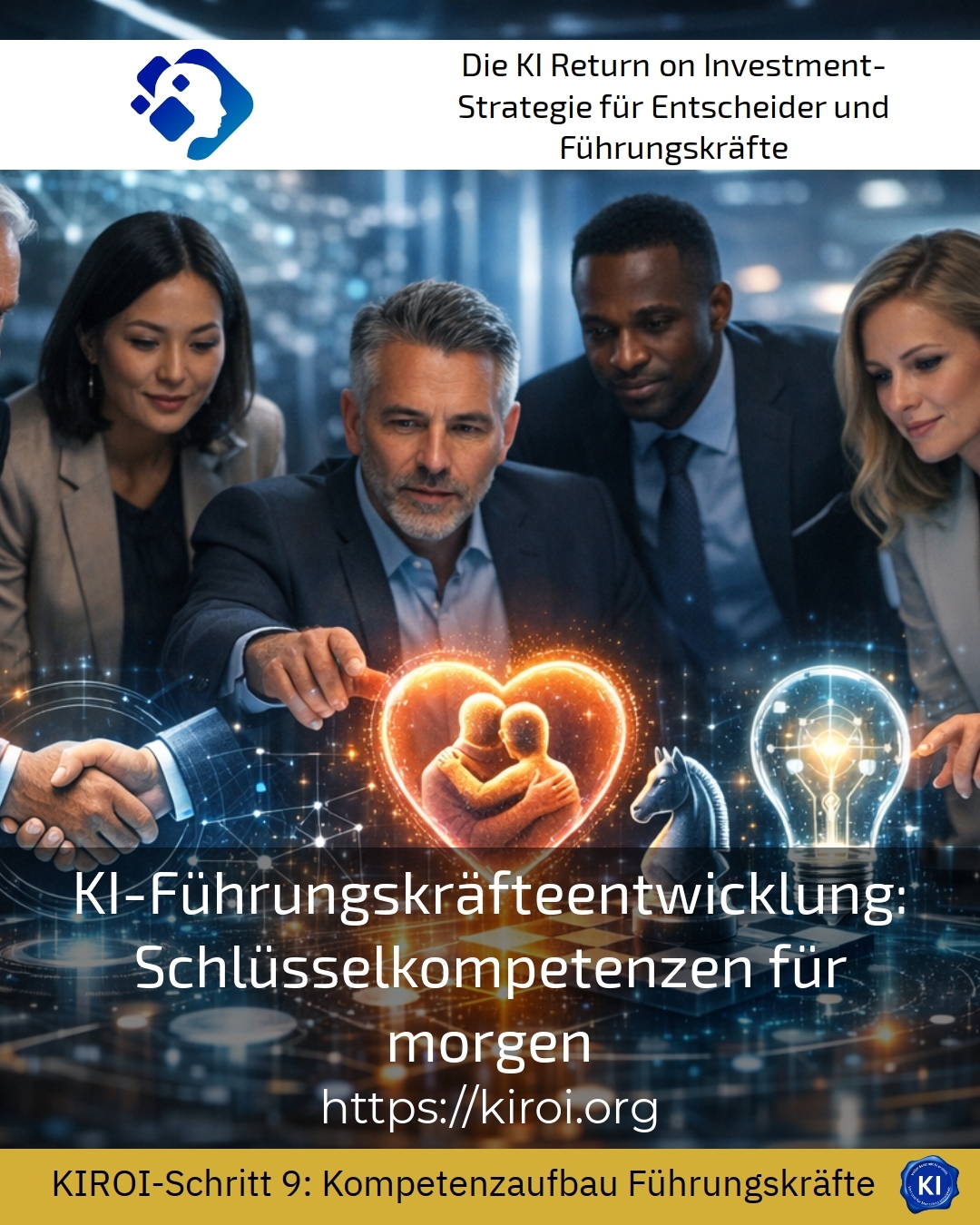
The working world is undergoing profound change. Technological innovations are transforming established business models at an astonishing pace. The AI Leadership Development It is increasingly becoming a focus for forward-thinking companies. Many organizations recognize that traditional development programs are no longer sufficient. Executives need completely new competencies today. They must learn to work with intelligent systems. At the same time, they must specifically utilize their human strengths. This transformation requires courageous decisions and innovative approaches [1].
Understand the new reality of AI leadership development
In numerous industries, the fundamental changes in the requirements for leadership are already evident today. In retail, for example, large chains are increasingly relying on automated warehouse systems and predictive inventory management solutions. Store managers no longer primarily need to control operational processes, but rather act as intermediaries between technology and people. They accompany their teams through the change and create trust in new working methods. Similarly, in healthcare, clinic managers must learn to meaningfully integrate diagnostic support systems into existing workflows. In the financial sector, on the other hand, algorithmic decision-making is fundamentally transforming the role of investment advisors. They are becoming interpreters of complex data analyses and emotional anchors for anxious customers [2].
These examples highlight a key aspect of modern leadership development. Technical understanding alone is not enough. Leaders must be able to combine emotional intelligence with analytical thinking. They need the ability to communicate complex technological relationships in a comprehensible way. At the same time, they must motivate employees and take fears seriously. Finding this balance presents significant challenges for many organizations.
Best practice with a AIROI customer
A medium-sized logistics company faced the challenge of preparing its entire leadership team for the implementation of an intelligent route planning system. The management team recognized early on that technical training alone would not be enough to create the necessary acceptance. Together with transruptions coaching, they developed a comprehensive accompaniment program that was carried out over several months. The leadership team first learned to reflect on and articulate their own reservations before they could act as multipliers in their teams. The approach of jointly simulating scenarios in which the system provided recommendations that contradicted the intuitive judgment of experienced dispatchers proved particularly valuable. The leadership team thus developed a nuanced understanding of the strengths and limitations of the technology. They learned when they could trust the system and when human expertise should prevail. Upon completion of the project, the participants reported a significantly increased level of confidence in handling data-driven decision-making processes. The implementation of the new system therefore proceeded much more smoothly than in comparable projects in the industry.
Develop key competencies for leadership of tomorrow
The question of relevant competencies concerns both human resources managers and board members. Clients often report a lack of certainty about which skills they should prioritize. In the manufacturing industry, for example, plant managers increasingly need to understand connected manufacturing processes. They must be able to interpret production data and draw strategic conclusions from it. A car parts supplier recently implemented a system for predictive maintenance of its machines. The relevant management personnel had to learn to properly interpret probabilistic statements and plan resources accordingly [3].
In the service sector, other challenges arise. Call center managers today work with systems that automatically categorize customer requests and generate solution suggestions. They must understand how these systems are trained and what biases may arise. At the same time, they are responsible for ensuring that their employees are not reduced to mere executioners. The trick is to position technology as a support rather than a substitute for human judgment.
A remarkable change is also taking place in the education sector. School principals and university deans are addressing adaptive learning systems that can create individual learning paths for students. They must decide how much autonomy they want to grant such systems. Ethical considerations play a central role in this. AI Leadership Development Therefore, it must also address issues of responsibility and transparency.
Emotional intelligence as an indispensable foundation
The more routine tasks are taken over by systems, the more important genuine human skills become. Empathy, intuition, and the ability to resolve conflicts cannot be automated. For example, managers in the healthcare sector must be able to accompany their teams through challenging situations. A hospital recently introduced a system for patient monitoring that triggers alarms in the event of critical changes. The ward managers had to learn to deal with the increased information density without falling into alarmism. They developed new routines for collective reflection within the team. These processes can be supported by technology, but they can never be replaced.
In sales, a similar pattern emerges. Sales managers are increasingly using systems that calculate purchase probabilities and provide recommendations for customer outreach. However, the most successful among them are able to use this data as a starting point for deeper conversations. They train their teams to look beyond the numbers and recognize individual customer needs. The technology provides the impetus, but relationship building remains a human domain.
Best practice with a AIROI customer
An insurance company wanted to prepare its executives for the implementation of an automated claims processing system that was to take over a significant portion of the existing claims handling process. The department managers faced the task of restructuring their teams while simultaneously building trust in the new technology. As part of the transruptive coaching process, they first developed a clear understanding of their own role in the transformed organization. They developed communication strategies to transparently convey the changes to employees without stoking fears. The joint development of scenarios where human intervention remained indispensable despite automation was particularly helpful. The executives identified complex claims cases where empathy and judgment were essential, such as in cases of grief or contentious liability issues. This work strengthened their self-confidence and enabled them to convey a positive perspective to their teams. The transformation was perceived not as a threat, but as an opportunity for development. Employee satisfaction remained stable, despite the fundamental changes in job profiles.
Cultivate strategic foresight in AI leadership development
Executives must today anticipate developments that seemed unthinkable just a few years ago. In the media sector, for example, automated content generation is fundamentally changing the work of editorial leaders. They must decide which content can be created automatically and where original journalistic work remains indispensable. These considerations require not only technical understanding but also a clear value framework. Responsibility for quality and credibility remains with humans.
Interesting developments are also evident in agriculture. Managers of large agricultural enterprises are using systems that optimize harvest times and precisely control fertilizer use. They must learn to critically question recommendations and incorporate local knowledge. An experienced farmer has known their soil for decades. This knowledge cannot be fully represented in data. The art lies in synthesizing traditional know-how with modern analytical methods.
The tourism sector is undergoing similar transformations. Hotel managers are adopting dynamic pricing systems that analyze demand in real time. At the same time, they must ensure a consistent brand experience. Technology can optimize prices, but it cannot define the atmosphere of a hotel. Leaders in this industry are increasingly developing the ability to combine technological efficiency with human warmth [4].
Establishing continuous learning as a leadership task
The half-life of knowledge dramatically shortens. Therefore, leaders must foster a culture of continuous learning. In the pharmaceutical industry, for example, research leaders must keep pace with ever-evolving analytical methods. They cannot understand all the details, but they must be able to ask the right questions. This skill can be trained and developed.
In the construction industry, digital planning tools are changing the role of construction managers. They work with virtual models that visualize complex dependencies. The ability to interpret these models and match them to the physical reality becomes a core competency. At the same time, they must involve their teams and overcome resistance to new working methods. The AI Leadership Development addresses exactly this interface between technical and human expertise.
A change is also taking place in the public sector. Government officials are increasingly implementing automated application processing procedures. They must balance efficiency gains with accessibility and fairness in this process. Algorithms can reinforce biases if they are not carefully monitored. The responsibility for fair procedures remains with the management team.
My AIROI Analysis
Developing leaders for an increasingly technologically driven work environment presents organizations with complex challenges that go beyond traditional training concepts. In my opinion, the key to success lies in combining technical knowledge with strong human skills, with the latter becoming increasingly important in the future. The examples from various industries show that successful leaders do not have to become technology experts; rather, they should learn to ask the right questions and critically evaluate recommendations.
I find it particularly important to recognize that the emotional support provided to teams during transformation processes becomes a central leadership task. Many leaders underestimate the fears and resistance that technological changes can trigger. A structured coaching approach can provide valuable insights and help leaders redefine their role.
The transruptions coaching methodology has proven to be an effective accompaniment in numerous projects. It helps leaders reflect on their own reservations and deal constructively with uncertainty. This process requires time and commitment, but the investment pays off. Organizations that invest early in the development of their leadership team often report smoother implementations and higher employee satisfaction. The future belongs to those who understand technology as a tool while simultaneously cultivating their human strengths.
Further links from the text above:
[1] McKinsey: AI and the Future of Leadership
[2] Harvard Business Review: Leadership Development
[3] World Economic Forum: Artificial Intelligence Agenda
[4] Gartner: Leadership Development Insights
For more information and if you have any questions, please contact Contact us or read more blog posts on the topic Artificial intelligence here.







 Deutsch
 English (UK)