
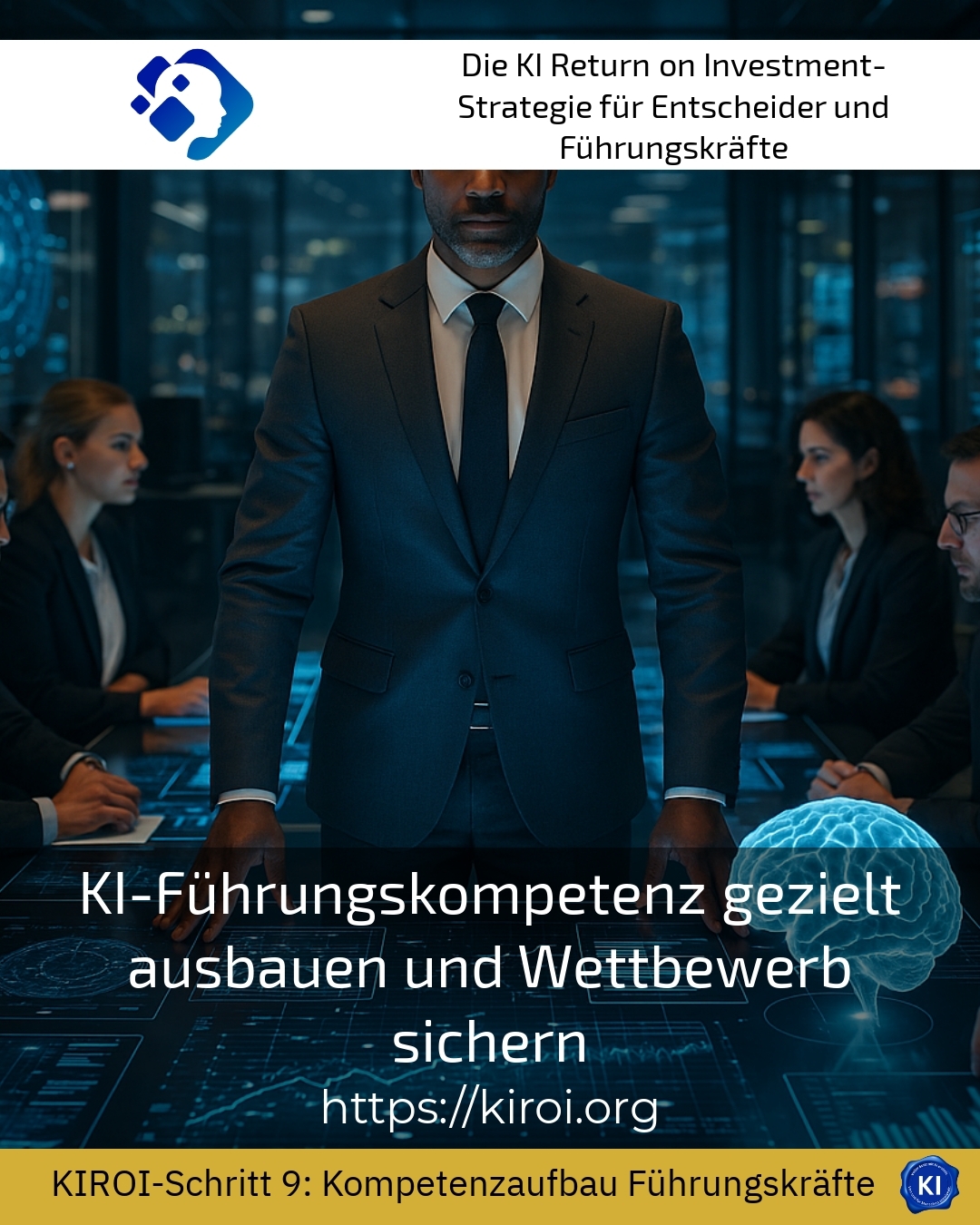
The digital revolution has long begun, and it waits for no one. Companies that hesitate today will have already lost their edge tomorrow. This is no longer just about technology or software. It's about people who can understand and lead this technology. Developing AI leadership skills in a targeted way is therefore no longer an option. It is a strategic necessity for any forward-thinking organisation. Those who wish to secure their competitive edge require leaders with a clear understanding of intelligent systems.
Why traditional leadership models are reaching their limits
The world of work has fundamentally changed. Classic hierarchies no longer function as they used to. Decisions must be made faster than ever before. At the same time, the complexity of available data is increasing exponentially. Leaders face the challenge of understanding and implementing intelligent systems. They must guide teams through unprecedented change processes.
A medium-sized mechanical engineering company from southern Germany recognised this situation early on. The company had excellent engineers and experienced production managers. However, nobody understood how automated analyses could improve quality control. Management sought ways to address this knowledge gap. A car parts supplier in northern Germany faced similar questions. Its managers were familiar with lean management. But predictive maintenance systems were a closed book to them. A textile manufacturer in the Ruhr region had already acquired modern technology. However, the expensive systems gathered dust because no one could use them properly.
Develop AI leadership skills strategically through targeted guidance
Building competence in this area requires more than just training. It needs a holistic transformation of the leadership culture. Transruption coaching supports companies with precisely these kinds of projects. The support begins with an honest assessment. Where do the leaders currently stand in their understanding? What reservations exist? What potential is dormant within the team?
Clients often report similar starting situations. They feel overwhelmed by the pace of technological change. They doubt their own relevance in an automated world. Some are afraid of asking stupid questions. Others fear being overtaken by younger employees. These worries are understandable and widespread. However, they also offer a valuable starting point for development.
Best practice with a AIROI customer
A manufacturing company in the food industry approached us with a specific challenge. Management had recognised that intelligent systems could revolutionise production planning. However, the executives lacked a fundamental understanding of these technologies. As part of the AIROI methodology, we initially supported the senior management team over several months. Together, we developed an understanding of the possibilities and limitations of automated decision support. The executives learned to ask the right questions and formulate realistic expectations. They understood that intelligent systems are tools, not replacements. Following this phase of understanding, the executives began to actively involve their teams in the transformation. They communicated openly about opportunities and potential changes in workflows. The result was significantly higher acceptance during the subsequent implementation. The executives became champions of change rather than hold-ups. This example illustrates the importance of the human element in technological transformations.
The role of emotional intelligence in the age of artificial intelligence
Paradoxically, human qualities are gaining importance precisely now. Empathy, creativity, and ethical judgment cannot be automated. Leaders must cultivate and deploy these skills. They form the foundation for successful human-machine collaboration. At the same time, leaders must be able to understand technical contexts.
A chemical company in the Lower Rhine region impressively illustrates this point. The production manager there initially had significant reservations about automated process control. She feared a loss of control over critical operations. However, she gained an important insight during the coaching process. Her experience and intuition remained indispensable for interpreting system recommendations. A pharmaceutical manufacturer in Bavaria had similar experiences in quality assurance. The laboratory management learned to use algorithmic analyses as support. However, the final evaluation remained a matter of human expertise. An electronics manufacturer in Saxony also benefited from this approach. The managers understood that technology would augment their work, not replace it.
Securing competitiveness through forward-looking skills development
Global competition is continuously intensifying. Companies from Asia and North America are investing heavily in intelligent manufacturing systems. European firms must follow suit to remain relevant. However, technology alone does not create a competitive advantage. The difference lies in the ability to strategically deploy this technology.
A machine tool manufacturer from Baden-Württemberg recognised this dynamic in good time. The company began systematically developing leadership skills early on. Today, the managers can make well-founded decisions about technology investments. They understand the strengths and weaknesses of different systems. A steel producer in Saarland took a similar path. The management level learned to incorporate data-based insights into strategic planning. A plastics processor in North Rhine-Westphalia also benefited from foresight in competence development. The managers can now actively contribute to the digital strategy.
Developing AI leadership competence effectively with the AIROI methodology
The AIROI methodology offers a structured framework for this development [1]. It combines strategic analysis with practical implementation support. Leaders learn step-by-step to understand and utilise intelligent systems. The focus is on applicability within their own company context. Theoretical knowledge is directly translated into practice.
Many clients come with fundamental questions about AI support. They want to understand how to successfully take their first steps and are looking for guidance through the jungle of available technologies. They want to know which investments make sense and which do not. Transruptions coaching provides impetus for these decision-making processes. The support is always tailored individually to the company's situation.
Best practice with a AIROI customer
A family business steeped in tradition within the metal processing sector sought support with its digital transformation. The third generation had taken over leadership and wanted to modernise the company. At the same time, the tried-and-tested company culture was to be preserved. The challenge lay in inspiring long-serving executives to embrace new technologies. Within the AIROI process, we initially developed a shared understanding of the current situation. We identified concrete use cases that would enable quickly visible improvements. The experienced executives contributed their process knowledge to the design of the solutions. This made them feel valued and not overlooked. The younger generation simultaneously learned from the experience of their predecessors. A productive dialogue emerged between tradition and innovation. After a few months, a noticeable change in company culture became apparent. The executives actively discussed opportunities for intelligent process optimisation. They contributed their own ideas and drove projects forward independently. The company has achieved a significantly higher speed of innovation today.
Practical steps for sustainable skills development
The development of leadership skills in the area of intelligent systems follows proven principles. Firstly, foundations must be laid. Leaders need a conceptual understanding of the technology. They don't need to be able to program or develop mathematical models. But they should understand how systems learn and make decisions.
A packaging manufacturer in Hesse started with regular information sessions for executives. External experts explained basic principles in clear language. A furniture producer in Bavaria organised visits to technology providers. The executives saw practical applications and could ask questions. A beverage manufacturer in Rhineland-Palatinate focused on learning-by-doing approaches. The executives experimented with simple analysis tools themselves. All three approaches supported skills development in different ways.
Securing the competition through continuous learning
Competence development is not a one-off project. Technology is advancing at a rapid pace. What is state of the art today may already be outdated tomorrow. Leaders must therefore adopt a mindset of continuous learning. This willingness to learn becomes a competitive advantage in itself.
transruptions-Coaching supports companies in establishing such learning cultures [2]. The support encompasses both individual and organisational development. Leaders learn to reflect on and manage their own learning. They become role models for their teams in terms of willingness to learn. This role model function is crucial for cultural change.
My AIROI Analysis
The analysis of numerous corporate projects reveals a clear pattern. Organisations that invest early in the skills development of their leaders are more successful. They implement new technologies faster and more sustainably. They avoid costly misinvestments in unsuitable systems. And they manage to win over their employees to embrace change.
The biggest challenge often lies in the first step. Many leaders underestimate the effort required for genuine skills development. They attend a two-day seminar and believe they are equipped. However, sustainable skills development takes time and ongoing support. It requires a willingness to question one's own assumptions. It demands openness to new ways of thinking and working.
The AIROI methodology addresses precisely these challenges. It offers a structured framework for long-term development. It combines strategic perspective with practical application. And it places people at the heart of technological transformation. Companies that Developing AI leadership skills in a targeted way Those who set the right course today will win the competition of the future.
Further links from the text above:
[1] AIROI Methodology for Leadership Development
[2] transruptions-Coaching for Digital Transformation
For more information and if you have any questions, please contact Contact us or read more blog posts on the topic Artificial intelligence here.








 Deutsch
  English (UK)