
Will lawyers soon be replaced by intelligent algorithms that can review contracts faster than any human being?
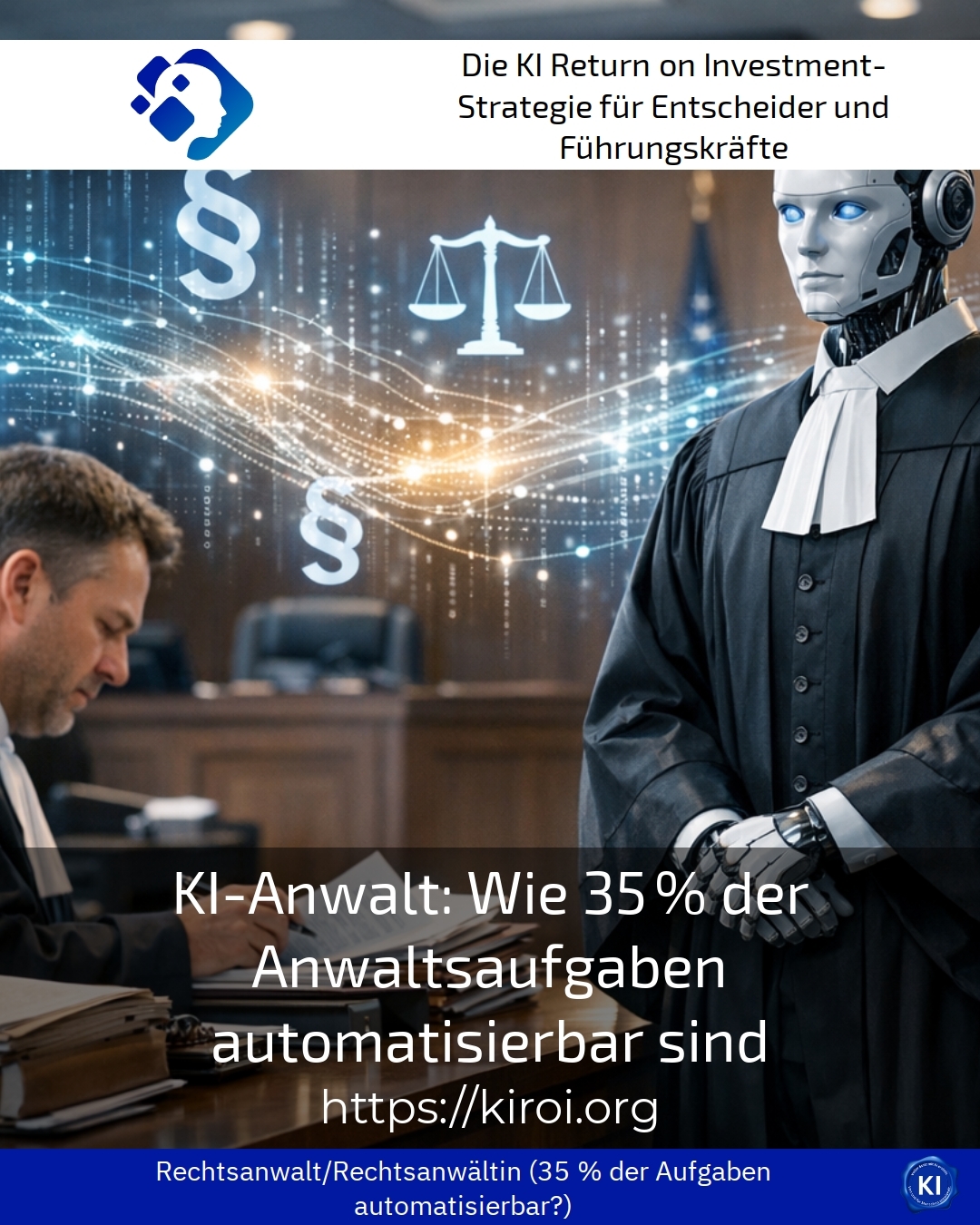
This question concerns not only recent graduates in law firms but also experienced partners in large business associations. The data from the Job Future Observatory of the Institute for Employment Research [1] impressively show that approximately 35 percent of typical legal activities can already be supported by technology today. The AI lawyer This is no longer a science fiction scenario, but a concrete development that is fundamentally changing the legal market. Many clients often report uncertainties when they think about the future of their industry. This is where transruptions coaching as a support for projects around digital transformation comes in.
What tasks can an AI lawyer already perform today?
Legal work involves much more than the classic trial presentation. A significant part consists of repetitive activities. Reviewing contract clauses consumes valuable working time. Researching relevant precedents requires a systematic approach. Checking documents for completeness is part of everyday life. These tasks are particularly well suited for technological support.
In medium-sized law firms, lawyers often spend hours analyzing lease agreements. They look for problematic wording and compare it with current case law. An intelligent system can perform such checks in minutes. It highlights critical passages and suggests alternative wording. The actual legal assessment remains in the hands of the human being. Similarly, the due diligence process in corporate acquisitions involves reviewing thousands of documents. Algorithms filter out relevant information. The strategic placement of the information remains the responsibility of the experienced lawyer.
The potential is also evident in the field of trademark law. Previously, searching for identical or confusing trademarks was time-consuming. Today, systems can quickly search international databases. They generate clear reports on potential conflicts. The lawyer then focuses on advising the client.
Best practice with a AIROI customer
A nationwide-based law firm faced a special challenge in handling complex compliance cases. The partners realized that their employees were spending too much time analyzing documents. As part of the transruptions coaching, we developed a strategy together to gradually integrate intelligent tools. First, we identified the processes with the highest automation potential. The examination of trade register extracts proved to be an ideal starting point. The law firm implemented a system for automatically extracting relevant data. Shareholder structures were now visualized within minutes. The employees could focus on the substantive evaluation. After six months, the partners reported a time savings of approximately 40 percent. Client satisfaction also increased measurably. Today, the law firm also uses similar approaches when drafting contracts. Standard clauses are automatically proposed and adapted. This has even improved the quality of the individual advice.
The human component remains indispensable
Despite all technological advancements, there are areas that require human intuition. Negotiating a complex case requires empathy. Talking with a nervous client requires genuine understanding. Developing creative legal strategies requires experience. These skills cannot be replaced by an algorithm.
In family law, this dimension is particularly evident. A divorce is more than just a legal process. Emotions play a central role in all decisions. The lawyer must be able to read between the lines. He or she must recognize when a client may be acting against their own interests. Such assessments require years of professional experience and genuine insight into people.
The same applies to criminal law. The defense of a defendant requires more than just legal knowledge. The credibility in court often determines the outcome of a case. AI lawyer He can help here, but cannot replace it. For example, he provides relevant judgments on similar matters. The rhetorical presentation before the judges remains the prerogative of the human being.
In corporate law, trust between the parties is often crucial. Complex contract negotiations sometimes take months. Both parties must be willing to compromise. An experienced lawyer recognizes when the right moment for a concession has arrived. This situational analysis exceeds the capabilities of any software.
How the AI lawyer increases efficiency in law firms
The integration of intelligent systems is fundamentally changing the day-to-day work of law firms. Young lawyers spend less time on routine tasks. They can focus earlier on demanding cases. The training sector benefits significantly from this development. At the same time, the costs of standardized services are decreasing. Clients receive faster results at more favorable conditions.
In employment law, many law firms already use automated systems to create termination letters. The software checks formal requirements such as deadlines and responsibilities. It points out possible grounds for invalidity. The lawyer reviews the result and adapts it to the individual case. In this way, legally sound documents are produced in no time at all.
Practical use cases are also emerging daily in construction law. The review of construction contracts requires compliance with numerous standards. Intelligent systems compare draft contracts with current VOB regulations. They identify deviating clauses and assess their risk potential. The construction lawyer can focus on strategic advice.
Best practice with a AIROI customer
A boutique law firm specializing in media law was looking for ways to increase efficiency. The partners felt overwhelmed by the volume of license agreements. In transruptions coaching, we first thoroughly analyzed the existing workflows. We found that reviewing usage rights was particularly time-consuming. Together, we developed a structured approach to process optimization. The law firm implemented a system for automatically identifying scope of rights. It reliably extracts relevant information from complex contract documents. Territorial restrictions and time limits are clearly displayed. Lawyers can now assess more quickly whether a usage project is covered. This value added is especially evident in the case of international productions. Today, the law firm handles significantly more mandates than before. The quality of the advice has even increased. Clients highly value the quick and precise information provided.
Challenges in the implementation of technological solutions
Transforming a traditional law firm is not a straightforward process. Many partners initially have reservations about change. The fear of losing control plays an important role in this. At the same time, they often lack the technical understanding of the possibilities. Experienced advisors can help with this.
In the field of insurance law, for example, there are high data protection requirements. Client information must be treated with special sensitivity. The implementation of new systems must take these requirements into account. Therefore, many law firms hesitate to introduce modern tools. In fact, there are already solutions that meet the highest security standards.
In tax law, typical obstacles to digitalization are also evident. The complexity of German tax law discourages developers. Frequent legislative changes require constant adjustments to systems. Nevertheless, there are already successful examples of automated tax audit systems that reliably and quickly identify errors made by financial authorities.
Succession law places special demands on technological support. Wills often contain ambiguous wording. Interpretation requires legal acumen and knowledge of historical context. Technology can help structure information here. The actual interpretation remains the prerogative of the experienced legal expert.
The future of the AI lawyer in the German legal market
The development is progressing relentlessly. The AI lawyer It is becoming an integral part of modern law firms. The question is no longer whether, but how quickly. Innovative law firms are already positioning themselves as technological pioneers today. They win clients through efficiency advantages and better quality of service.
In banking law, an interesting trend towards specialization is evident. Large institutions are increasingly demanding technology-oriented consultants. They expect digital interfaces for data exchange. Law firms without the corresponding infrastructure are losing important opportunities for mandates. Investment in modern systems becomes a competitive factor.
New requirements are also arising in competition law due to digitalization. Analyzing market data requires powerful tools. Antitrust authorities even use advanced analytical methods in their investigations. Law firms must be able to operate on an equal footing. Technological advantage can decide the outcome of the proceedings.
My AIROI Analysis
The data from the Job Future Index highlight an important insight for the entire legal market. The 35 percent of activities that can be automated are not a threat, but an opportunity. Law firms that embrace this development can significantly increase their value creation. They free their lawyers from time-consuming routine tasks. At the same time, they measurably improve the quality of their services.
My experience from numerous consulting projects reveals a clear pattern. The successful integration of technological tools requires a well-thought-out strategy. It is not enough to simply purchase software and hope for the best. Processes must be analyzed and rethought. Employees must be involved in the change. Only then can sustainable transformation be achieved rather than superficial digitalization.
The AI lawyer It will not replace the human lawyer; rather, it will make him a better advisor. The combination of technological efficiency and human expertise creates real added value. Clients benefit from faster results and deeper analysis. The industry is facing exciting developments. Those who actively shape them will be among the winners. Transruptions coaching accompanies law firms on this journey using proven methods and tried-and-tested approaches.
Further links from the text above:
[1] Job-Futuromat of the Institute for Employment Research
For more information and if you have any questions, please contact Contact us or read more blog posts on the topic Artificial intelligence here.








 Deutsch
 English (UK)