
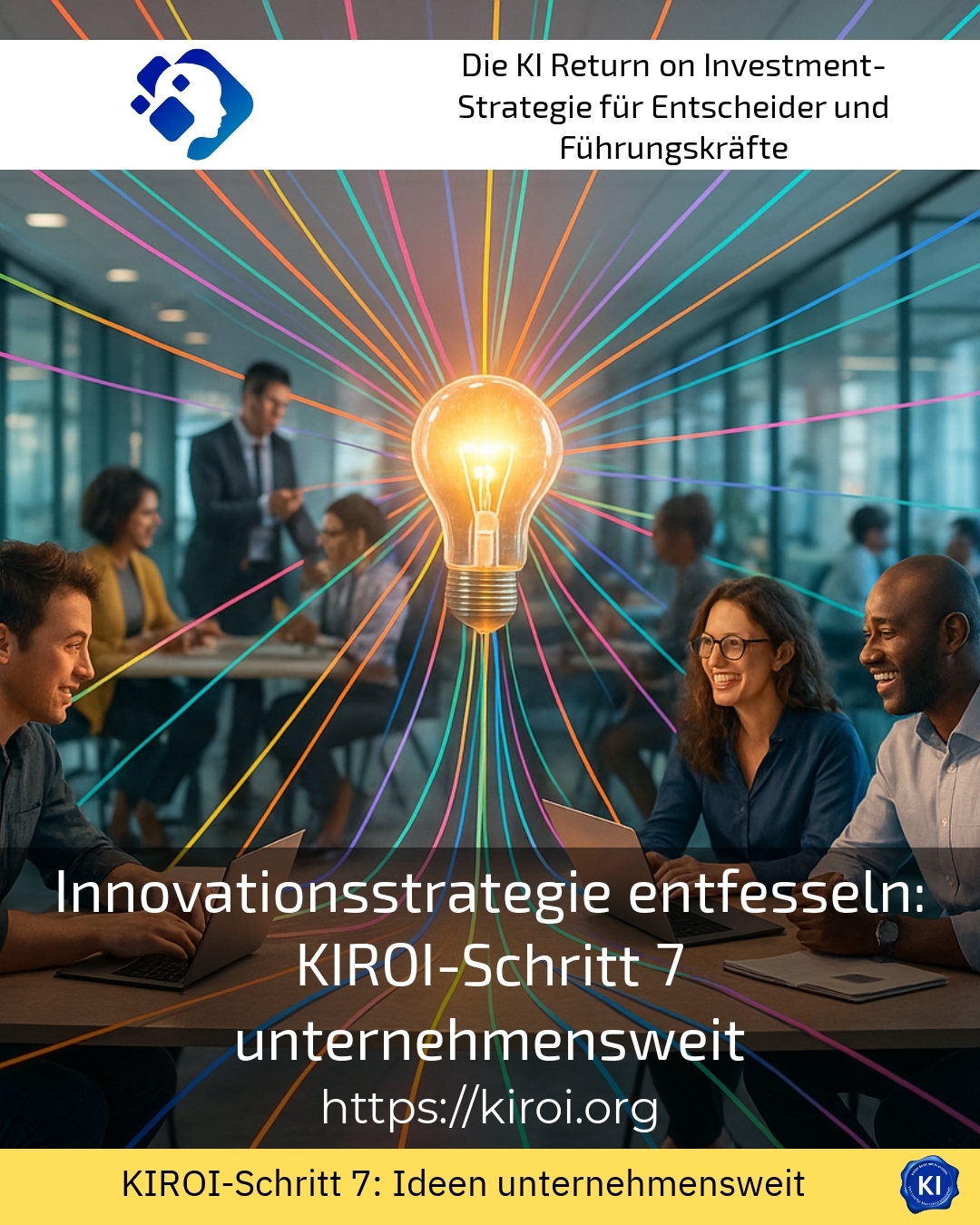
Unleash and embed innovation power across the company
A well-thought-out and implemented innovation strategy drives companies forward. It's not just about developing individual ideas, but about creating a clear structure and culture that supports innovation. It is important to embed the innovation strategy throughout the company so that all departments can actively contribute and participate. In practice, many specialists and managers report questions and requests regarding the handling of new technologies and change processes.
From analysis to implementation: innovation strategy as a companion
Initially, the focus is on a precise analysis of the current situation. Companies examine their market position, competitive landscape, and internal capabilities to derive potential opportunities and risks. Based on this, clear innovation goals are defined that harmonise with the overall corporate strategy. Subsequently, guiding principles are created, which describe the desired direction of innovation in a compass-like manner. The process culminates in the development of a strategy document that serves as a binding roadmap. This accompanies companies through all further steps – from implementation to continuous review and adaptation. Typical questions from the target audience often revolve around the practical integration and sustainable embedding of the innovation strategy within the operation.
Practical examples from various industries
Companies from different sectors frequently report on challenges and successes when implementing innovation strategies across the entire organisation. For example, manufacturers, service providers, and technology firms have learned in projects how important clear communication and transparent processes are.
KIROI BEST PRACTICE at company XYZ (name changed due to NDA contract) As part of the support provided, responsible parties were enabled to communicate the innovation strategy comprehensibly throughout the entire company. Through regular workshops and feedback rounds, a dynamic understanding of innovation emerged, encompassing not only product development but also process improvements. This enabled the company to react more quickly to market changes and build new business areas.
In the healthcare sector too, it is evident that an innovation strategy accompanies change and provides impetus for digital processes and new care models. Companies use this as a basis for planning sustainable investments more precisely and managing risks more effectively.
KIROI BEST PRACTICE at ABC (name changed due to NDA contract) In collaboration with the teams, a multi-year action plan was developed, which included clear responsibilities and milestones. This approach not only enabled innovation to be initiated in the short term, but also systematically embedded it into the company structures. This resulted in new services that directly benefit customers.
It is also regularly evident in industry that innovation strategies steer resource allocation and promote collaboration. A governance structure that enables regular coordination and decision-making processes is crucial here.
KIROI BEST PRACTICE at DEF (name changed due to NDA contract) The support focused on establishing a clear steering structure for innovation projects. Progress was reviewed and strategic adjustments made through regular meetings. This ensured that implementation remained agile and focused, without losing sight of the bigger picture.
The role of KIROI coaching in innovation strategy
KIROI coaching supports companies in not only planning innovation strategies but also in keeping them vibrant. It accompanies projects and provides valuable impetus to identify barriers and use resources effectively. The consultancy is often aimed at leaders and teams who face the challenge of implementing and communicating innovations company-wide. This fosters a practical exchange, which is frequently reported and paves the way for sustainable success.
Another focus is on supporting companies in their individual situations – without promises of efficacy, but with concrete courses of action that promote innovative strength while remaining realistic. The coaching accompanies those responsible, so they can reflect on and flexibly adapt decisions.
Impulses for the Future of Innovation Strategy
Continuously reviewing and adapting the innovation strategy is essential to respond to changing market conditions. Clear key performance indicators (KPIs) and feedback loops are helpful for this. Companies that take this approach report an improved innovation culture and greater engagement from all employees. This leads to the creation of innovative products and services that can meet the demands of the future.
It therefore turns out that the innovation strategy is a living process. It takes effect and helps the company to navigate an increasingly complex future with energy and direction.
My analysis
Introducing a company-wide innovation strategy is not a sprint, but a continuous process. It requires support, adaptability and a clear communication structure. KIROI Coaching offers targeted support and valuable impulses to discover and leverage the organisation's potential.
Further links from the text above:
[1] Innovation strategy: How companies remain future-proof
[2] Innovation Strategy Made Easy – Here's How!
[4] Innovation Management: Processes & Methods
[7] Success Factor 1: The Innovation Strategy: Introduction
For more information and if you have any questions, please contact Contact us on the topic or read more blog posts on the topic Artificial Intelligence Blog here.











 Deutsch
  English (UK)