
Why do so many promising ideas fail before they even have a chance to take off?
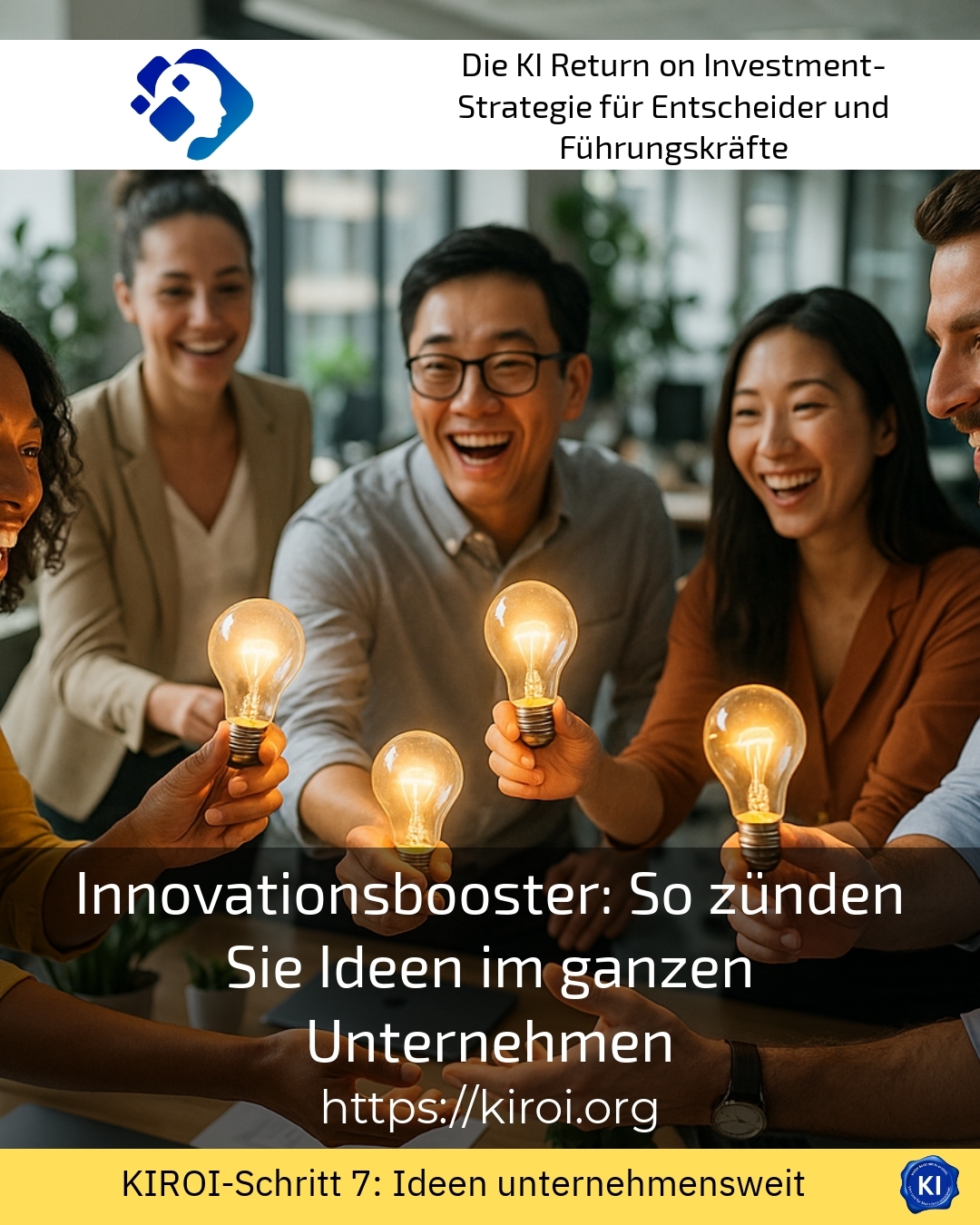
This question concerns executives and entrepreneurs alike. In a world that is changing rapidly, it is no longer enough to develop new ideas occasionally. Instead, organizations need a real Innovation Booster, which unleashes creative energy throughout the company. Clients often report that their best ideas disappear into the drawers. Meetings end without concrete results. Employees feel unappreciated and withdraw. Yet enormous potential lies dormant in every department. The challenge lies in systematically activating this potential [1]. This is where strategic coaching with transruptive coaching offers a solution. This form of support helps to dissolve blockages and create structures.
Understand the hidden barriers to creative development
Before you make a Innovation Booster You must know the obstacles before you can ignite them. In many companies, there is a culture of caution. Employees hesitate to make unconventional suggestions. They fear negative consequences or rejection by superiors. This fear paralyzes the entire organization. Additionally, there is often a lack of a clear process for gathering and developing ideas. Valuable ideas are lost because no one is responsible. Communication between departments is not optimal. Silos prevent the exchange of knowledge and experiences.
For example, a medium-sized manufacturing company realized that improvement proposals regularly fell by the wayside. The human resources department collected ideas, but no one coordinated their implementation. In a financial services company, however, rigid hierarchies blocked any creative impulse. Young talent left the company frustrated. A trading company, on the other hand, struggled with outdated processes that made any change difficult. These examples show how different the barriers can be. Nevertheless, they have one thing in common: they can be overcome [2].
Best practice with a AIROI customer A traditional family business in the manufacturing sector approached us with a specific request. The management had observed a gradual decline in innovation for years. Although highly skilled professionals were employed, new product ideas were hardly being generated. As part of the transruptive coaching, we first analyzed the existing communication channels. It turned out that an invisible wall existed between the development department and production. The developers did not sufficiently understand the practical challenges posed by the machines. The production workers, in turn, had no way to contribute their observations in a structured manner. Together, we established weekly exchange formats and a digital platform for suggestions. Within six months, the number of submitted ideas tripled. Three of them have already led to measurable process improvements with significant cost savings.
Creating structures that act as innovation boosters
Well-thought-out idea management forms the foundation of any innovative organization. This is not about bureaucratic processes, but about living structures. These structures must be designed in a low-key and inviting manner. Every employee should know how and where ideas can be submitted. Feedback must be provided promptly and in a respectful manner. Transparency about what happens with proposals strengthens trust. Companies that adhere to these principles often experience astonishing results.
For example, a logistics company introduced a digital idea portal. Employees could submit suggestions anonymously or with their names. An interdisciplinary panel evaluated the entries on a monthly basis. The implementation took place in small, agile project teams. A insurance company, however, established regular innovation workshops. There, mixed teams from different departments developed solutions together. A technology provider relied on hackathons, where prototypes were created within two days. All three approaches showed measurable success and increased employee satisfaction [3].
Leaders as Catalysts for Creative Energy
Leaders play a crucial role in developing innovation. They shape the culture through their own behavior. When supervisors openly embrace new ideas, employees are more likely to take risks. Criticism should be formulated constructively and solution-oriented. Mistakes should be seen as learning opportunities, not as defects. This attitude requires a change in mindset at all levels of leadership.
In a consulting firm, senior executives established so-called “mistake celebrations.” At these events, teams shared their failed experiments and the insights gained from them. A healthcare provider specifically trained its department managers in appreciative communication. An energy provider implemented 360-degree feedback to make leadership behavior transparent. These measures showed that cultural changes were possible. However, they require time and consistent support.
Creativity techniques as a practical innovation booster in everyday life
In addition to structural measures, concrete methods help to develop new ideas. Design Thinking, for example, consistently puts the user at the center. Teams go through various phases from problem definition to prototyping. The method is particularly suitable for complex challenges with many unknowns. Brainstorming, on the other hand, works best with clearly defined questions. The six Thinking Hats by Edward de Bono encourage different perspectives in discussions.
An automotive supplier used design thinking to develop a new component. The team first surveyed workshop staff about their needs. The findings resulted in several prototypes that were jointly tested. A software provider relied on World Café workshops with customers and employees. A pharmaceutical company combined various techniques in a multi-day innovation camp. The diversity of methods allows for choosing the appropriate tool for each situation [4].
Best practice with a AIROI customer An international trading company sought support in digitizing its stores. The employees on the ground had valuable knowledge about customer needs. However, this knowledge did not feed into the strategic decisions of the headquarters. As part of the transruptive coaching, we developed a concept for regional idea workshops. Store managers moderated these events themselves after a targeted training. The results were compiled and evaluated on a digital platform. A central innovation team reviewed the proposals for feasibility and scalability. Particularly promising ideas received a budget for pilot projects in selected stores. Within a year, three new service concepts were created, which are now offered nationwide. The employees felt effective and valued, which significantly reduced turnover.
Digital tools to connect creative minds
Digitalization opens completely new possibilities for idea management. Collaboration platforms enable real-time, cross-location exchange. Employees can comment on suggestions, evaluate them, and develop them together. Artificial intelligence supports the categorization and prioritization of submitted ideas. Virtual whiteboards facilitate creative sessions even over long distances. However, the technology should always serve human interaction.
A telecommunications provider implemented a corporate-wide innovation platform. There, all 15,000 employees could submit ideas and vote on proposals. A machine manufacturer used virtual reality to evaluate product designs with customers. A financial institution relied on chatbots that automatically answered initial inquiries about submitted ideas. These examples illustrate the breadth of digital possibilities [5].
The role of external support in the transformation process
Clients often report that internal change processes encounter resistance. External support can provide valuable insights. A neutral outsider’s perspective reveals blind spots that are overlooked internally. Coaching approaches help to resolve individual blockages in leadership. Moderated workshops create a protected space for open exchange. Transruptive coaching positions itself as a reliable support for such projects.
A media company sought external support for cultural change. The consultants initially held confidential discussions with employees at all levels. Based on the findings, they developed tailored interventions. A construction company had its executives coached by coaches in implementing new leadership principles. A food producer used external moderation for strategic creative sessions. In all cases, the coaching accelerated the change process significantly.
Ensure the sustainability of the innovation booster effect
Unique initiatives quickly fade away and often leave a sense of disappointment. Sustainable innovation requires continuous care and attention. Regular reviews help measure progress and make adjustments. Successes should be celebrated and communicated visibly. Embedding them in corporate goals and incentive systems strengthens their commitment. In this way, innovation becomes an integral part of the corporate culture.
A chemical company linked innovation goals to the variable compensation of executives. A mobility provider established an annual innovation award with attractive prizes. A textile company published monthly internal success stories of implemented ideas. These measures signaled that creativity and new ideas are truly desired [6].
My AIROI Analysis
In my experience from numerous projects, a clear pattern emerges. Companies that systematically promote innovation develop significantly more dynamically than their competitors. The decisive factor is not the individual method or the digital tool. Rather, it is the interplay of culture, structure, and leadership. Without psychological safety, employees will not dare to propose unconventional ideas. Without clear processes, even the best ideas will be lost in bureaucratic processes. Without committed leadership, the drive for sustainable change is lacking.
The AIROI-methodology offers a proven framework for this holistic transformation. It takes into account both hard factors such as processes and structures as well as soft factors such as communication and trust. The iterative approach is particularly valuable, allowing for continuous learning and adaptation. In my guidance, I repeatedly see how surprised management teams are. The creative potential of their employees often exceeds all expectations. All that is needed is the right framework to unleash this potential. The investment in innovation culture pays off manifold. It not only increases competitiveness but also employee satisfaction and employer attractiveness. In times of a shortage of skilled workers, this is an undeniable advantage.
Further links from the text above:
[1] Harvard Business Review – Innovation Topics
[2] McKinsey – Innovation Insights
[3] IdeaScale – Innovation Management Blog
[4] Design Thinking Organization
[5] Gartner – Innovation Strategy Research
[6] Forbes – Innovation Section
For more information and if you have any questions, please contact Contact us or read more blog posts on the topic Artificial intelligence here.









 Deutsch
  English (UK)