
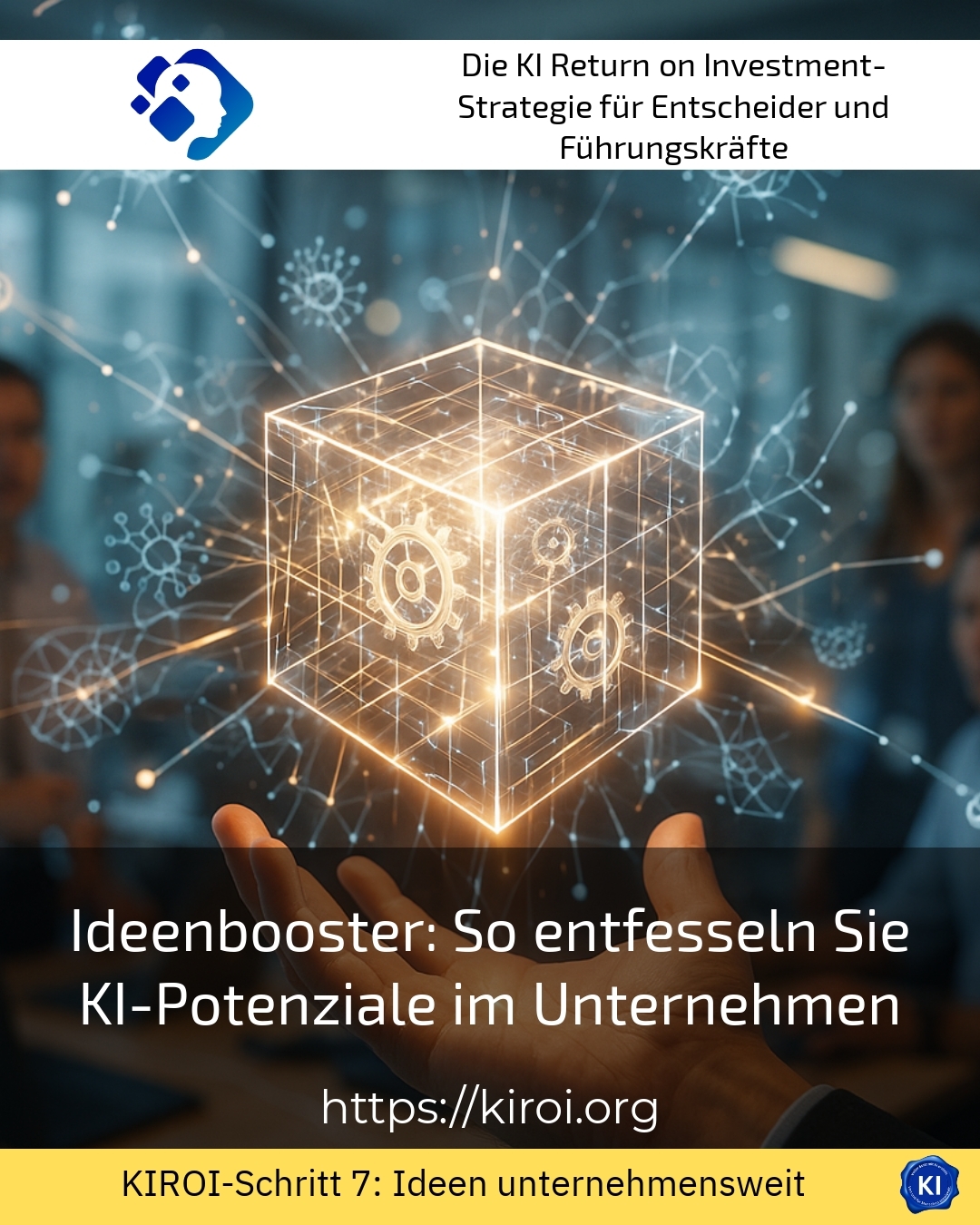
Imagine your company could develop completely new business models within a few weeks that previously seemed unthinkable. The Idea Booster: Unleashing AI Potential in Your Company is no longer a futuristic vision, but a tangible reality for innovative organisations. While some leaders are still hesitating, others are already using intelligent systems to drive creative processes and secure competitive advantages. The exciting question is: How can you also harness this transformative power for your organisation?
Why intelligent technologies are becoming idea boosters
The business world is changing rapidly. Companies are under enormous pressure to innovate. At the same time, there is often a lack of time and resources for creative processes. This is where modern technologies come in, supporting teams in developing new ideas more quickly and efficiently. For example, a logistics company uses algorithmic analyses to optimise delivery routes, while simultaneously identifying new service concepts. A medium-sized mechanical engineering company has recognised through data-based pattern analyses that certain product combinations are particularly in demand among customers. A financial service provider, in turn, uses intelligent assistance systems to analyse customer inquiries and derive innovative product ideas from them.
Clients often report initial scepticism about whether technological support can actually enrich creative processes. However, experiences show a different picture. The systems take over time-consuming research and provide impulses that people might have overlooked on their own. This creates a productive symbiosis between human creativity and technological capability [1].
The idea booster in practice: Concrete fields of application
Particularly impressive results are seen in product development. A car supplier uses intelligent systems to identify market trends early and translate them into product concepts. A household appliance manufacturer automatically analyses customer reviews to identify areas for improvement. A software company, in turn, has technical documentation checked automatically for innovation opportunities. These examples illustrate that the use of intelligent technologies goes far beyond simple automation.
Data-driven analyses in marketing are generating entirely new campaign ideas. Technology recognises connections between customer behaviour and communication strategies. It suggests creative approaches based on sound data analysis, allowing marketing teams to experiment faster and identify successful concepts [2].
Best practice with a AIROI customer
An internationally active company in the renewable energy sector approached us because their innovation cycles had become too long. Executives reported that new product ideas often took years to reach market maturity. Together, within the framework of transruption coaching, we developed a structured approach that utilised intelligent analysis systems. These systems automatically searched scientific publications, patent databases, and market reports for relevant trends. The findings were discussed and further developed in regular innovation workshops with the development teams. Within six months, the company identified three promising new product lines. The innovation process was accelerated by an estimated forty percent. Employees also reported increased motivation because they could concentrate on creative tasks while time-consuming research was automated.
Strategically anchoring the idea booster in the company
The successful integration of intelligent technologies requires more than just technical implementation. Companies need to foster a culture that encourages innovation and welcomes technological support. For instance, a pharmaceutical company has established dedicated innovation teams to drive technology-enabled ideation. An insurance group regularly trains its employees in the use of intelligent assistant systems. A retail company, meanwhile, has developed incentive schemes that reward creative suggestions, regardless of whether they originated with or without technological assistance.
Guidance from experienced partners can make the difference between success and failure. transruptions-Coaching positions itself as reliable support for complex transformation projects. We help companies select the right technologies and integrate them meaningfully into existing processes. The focus is always on people, because technology is only as valuable as the people who use it [3].
Typical challenges and how to overcome them
Many organisations approach us with similar issues. The leadership is enthusiastic about the possibilities of intelligent technologies. Employees, however, feel uncertain or fear for their jobs. Bridging this gap requires sensitive communication and clear perspectives. For example, a construction company communicated transparently that intelligent systems are intended to relieve employees, not replace them. A media company launched pilot projects where volunteer teams could gain initial experience. A healthcare provider, in turn, developed training programmes that reduce anxieties and build competencies.
Technical integration also frequently presents a hurdle. Existing systems are often incompatible with new technologies. Data protection requirements must be taken into account. Security standards must not be neglected. This is where we offer our expertise and help to find practical solutions that meet both technical and organisational requirements.
Best practice with a AIROI customer
A family business with a rich tradition in the food sector faced a particular challenge. The third-generation leader wanted to use intelligent technologies to develop new product ideas. The older family members, however, saw this as a threat to the company's artisanal tradition. In intensive workshops, we jointly developed a vision that united both perspectives. Technology was to be used to analyse traditional recipes and suggest variations that would remain true to the company's roots while also taking modern taste trends into account. The result positively surprised everyone involved. The intelligent systems identified combinations of time-honoured ingredients that no one had previously considered. At the same time, these innovations strengthened the brand's profile as a link between tradition and modernity. The initial sceptics became enthusiastic supporters of the new approach.
The idea booster as a competitive advantage
Companies that strategically leverage intelligent technologies for innovation processes gain sustainable advantages. They react more quickly to market changes. They develop products that are more precisely tailored to customer needs. They use resources more efficiently. A telecommunications provider has halved its product development cycle through technology-supported idea generation. A tourism company develops personalised travel offers based on intelligent analyses. An industrial group uses predictive analytics to identify maintenance needs while simultaneously developing new service models [4].
The speed at which innovations emerge is becoming the decisive competitive factor. Companies can no longer afford to wait months for new ideas. The market is changing too quickly. Customer needs are developing dynamically. Competitors are not sleeping. In this environment, intelligent technologies offer a decisive advantage. They make it possible to generate, evaluate, and implement ideas more quickly.
Practical steps for your launch
Getting started doesn't have to be complicated. Begin with a clearly defined pilot project. Select a team that is open to new approaches. Define measurable objectives and a realistic timeframe. For example, a chemical company started with a small research team that used intelligent literature analysis. A fashion company began with the automated analysis of social media trends. An education provider, on the other hand, initially focused on evaluating course feedback to develop new learning offerings.
It is important to keep expectations realistic. Intelligent technologies are not miracle cures. They support people in creative processes. They do not replace human intuition and experience. The best results are achieved where technological possibilities and human expertise work together. transruptions-coaching will guide you on this path and provide impulses tailored to your specific situation [5].
My AIROI Analysis
The integration of intelligent technologies into innovation processes represents a significant shift for companies across all industries. My analysis indicates that success is fundamentally dependent on three factors: firstly, clear strategic alignment; secondly, the careful involvement of employees; and thirdly, realistic expectations from management. Companies that consider all three factors achieve significantly better results than those that focus solely on technical implementation. Observations from numerous projects also show that a stepwise approach is more successful than large-scale transformation programmes. Pilot projects enable rapid learning and significantly reduce risks. The development of employee satisfaction in successful projects is particularly noteworthy. When people experience that technology supports them rather than replaces them, their motivation increases considerably. Creative energy is unleashed because time-consuming routine tasks are eliminated. This positive dynamic often spreads to other areas of the company. The AIROI methodology offers a structured framework for shaping this transformation successfully. It combines technological expertise with organisational change knowledge and consistently places people at the centre.
Further links from the text above:
[1] McKinsey Digital Insights: The State of AI
[2] Harvard Business Review: Artificial Intelligence
[3] Gartner: Artificial Intelligence Research
[4] Forbes: AI and Innovation
[5] AIROI Blog: Strategies for Digital Transformation
For more information and if you have any questions, please contact Contact us or read more blog posts on the topic Artificial intelligence here.









 Deutsch
  English (UK)