
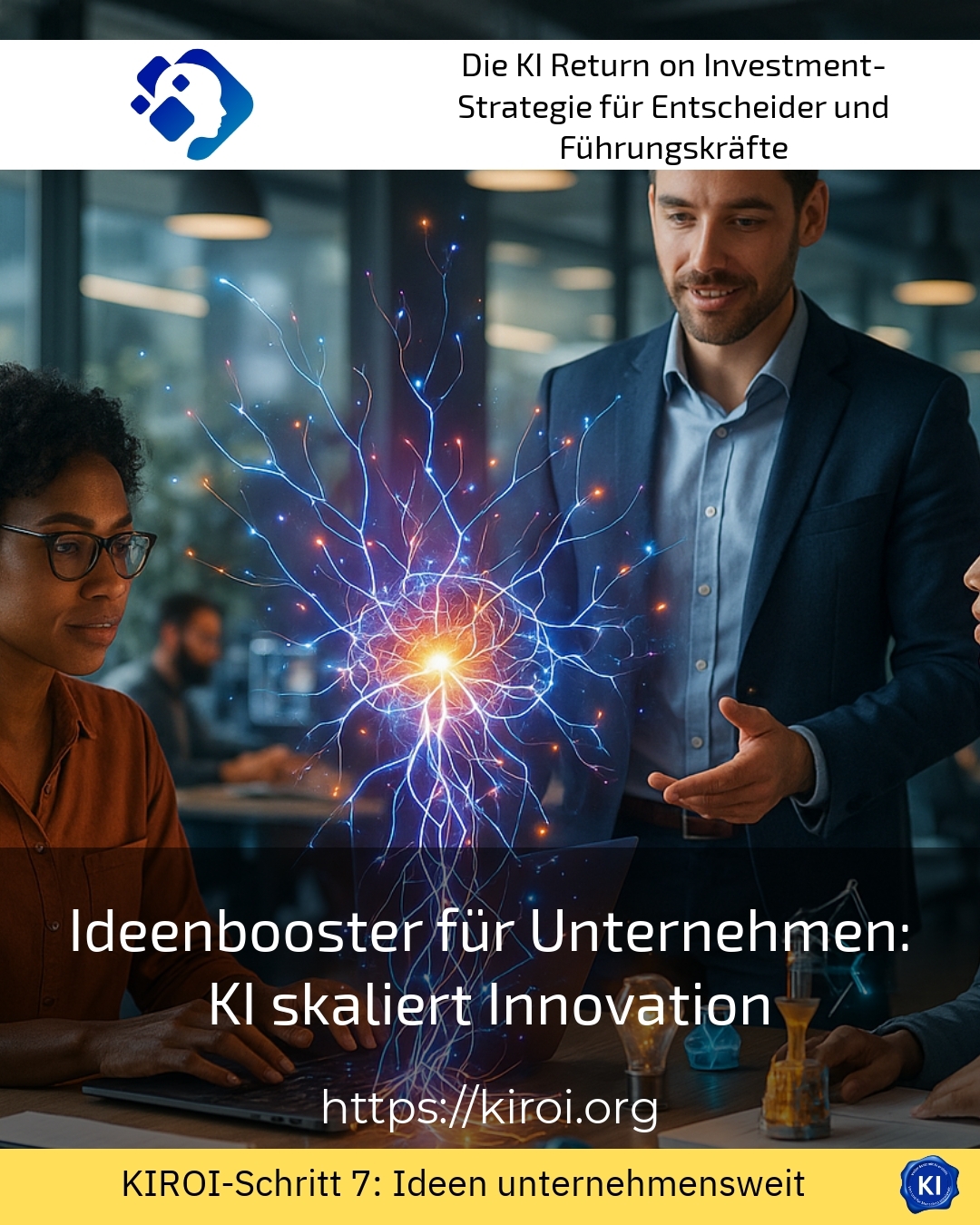
Imagine your employees generating more actionable concepts in a week than they used to in an entire year, all without burnout or creative exhaustion. This business idea booster sounds like something from the future, but intelligent algorithms are already making it possible today. While many organisations are still hesitant, pioneers are already harnessing the power of machine intelligence to radically accelerate their innovation processes and unlock entirely new competitive advantages. The question is no longer whether this technology is relevant, but how quickly you can implement it for your own challenges.
Why traditional innovation processes are reaching their limits
The classic approach to idea generation follows a tried-and-tested pattern. Teams come together, gather suggestions, and then evaluate them. This approach generally works well, but it doesn't scale. If a medium-sized company gathers fifty employees for a brainstorming session, perhaps a hundred ideas might emerge. But how many of these insights truly align with the strategic direction, and how many fail later due to technical hurdles?
Managers often report a frustrating phenomenon. Their best people spend hours in workshops, enthusiastically generating concepts, and in the end, most of it ends up being filed away. The reason for this is not a lack of commitment or creativity. Instead, there is a lack of capacity to thoroughly evaluate each idea, develop it further, and align it with existing projects. This is precisely where the new generation of intelligent systems comes in.
A mechanical engineering company from Southern Germany recognised this problem particularly clearly [1]. The engineers there developed numerous improvement suggestions for their production facilities every year. However, the systematic evaluation of these ideas overwhelmed the existing team. Consequently, valuable approaches remained unused, even though they could have potentially brought significant savings.
How the Idea Booster for Companies Works in Practice
The fundamental mechanics of this technology are based on three pillars. Firstly, algorithms analyse existing data, market trends, and internal processes. Subsequently, they independently generate suggestions that build upon these insights. Finally, they evaluate each idea against predefined criteria such as feasibility, market potential, and strategic fit.
This triad enables something remarkable. A system can play through thousands of variations in minutes. It combines elements that human thinkers would never have considered simultaneously. This creates surprising connections between seemingly unrelated areas, and that is often where the greatest potential for innovation lies.
An example from the food industry clearly illustrates this effect [2]. A manufacturer of ready meals wanted to develop new product lines that combined healthier ingredients with familiar flavour profiles. The intelligent system analysed sales data, nutritional trends, and customer feedback. It subsequently generated over two hundred recipe suggestions, of which eighteen were finally shortlisted.
Best practice with a KIROI customer
A long-established family business in the furniture industry faced a fundamental challenge, as its previous product development methods were no longer providing fresh impetus. Although the design department worked with dedication, the results became increasingly similar, and genuine breakthroughs were scarce. As part of transruption coaching, we guided the team in introducing an intelligent idea generator. The system was initially fed with historical sales data, customer reviews, and international design trends. Within the first four weeks, it generated over three hundred concept sketches for new furniture pieces, characterised by unusual material combinations and innovative functions. Particularly noteworthy was the idea for a modular shelving system that could automatically adapt to changing room situations. The development department took up this suggestion and developed a prototype from it, which attracted considerable attention at the subsequent trade fair. The collaboration between humans and machines worked excellently here, as the designers used the system as a source of inspiration without relinquishing their own creative control. The transruption coaching helped the team find this balance and integrate the new tools meaningfully into existing workflows.
The role of human creativity in the machine-assisted process
A common misconception is that intelligent systems are intended to replace human creativity. The opposite is true. These tools augment human imagination, they do not replace it. Imagine a talented composer who suddenly gains access to an orchestra with unlimited instruments. His music does not become any less personal, but the possibilities expand enormously.
In practice, this supplementation becomes particularly evident in complex challenges. For example, a pharmaceutical company uses algorithmic support to identify new drug combinations [3]. However, the final decision on clinical trials continues to be made by the experienced research team. The machine provides candidates, and humans evaluate them with their expertise and intuition.
The same applies in the automotive industry. Engineers there use generative systems to optimise aerodynamic shapes. The result is body designs that no human designer would have conceived alone. Nevertheless, people make the final design decisions, because aesthetic preferences and brand values cannot be fully quantified.
The idea booster for businesses as a strategic competitive advantage
Organisations that adopt this technology early gain a significant advantage. They can react more quickly to market changes because their innovation cycles are dramatically shortened. While competitors are still analysing, pioneers are already testing initial prototypes. This speed advantage often compensates even for greater resources held by established competitors.
The financial industry demonstrates this effect impressively [4]. Innovative banks are using intelligent systems to conceive new financial products. They analyse customer needs, regulatory requirements, and market opportunities simultaneously. The result is tailor-made offers that significantly surpass traditional institutions in their speed of development.
Comparable patterns are also emerging in the retail sector. A fashion company used algorithm-based trend analyses to adapt collections more quickly to changing customer preferences. Lead times were reduced by several months, and the success rate for new products increased measurably.
Here's how trans-ruption coaching can support implementation: * **Clarifying Vision and Goals:** A trans-ruption coach can help teams and leaders define a clear, compelling vision for the change, ensuring everyone understands the "why" and the desired outcomes. This clarity is crucial for guiding the implementation process. * **Identifying and Overcoming Blockers:** Coaches can facilitate discussions to uncover potential obstacles, resistance, or ingrained habits that might hinder implementation. They then work with the team to develop strategies to address these blockers proactively. * **Developing Actionable Plans:** Beyond just high-level ideas, a coach can guide the creation of practical, step-by-step implementation plans. This includes defining responsibilities, timelines, and key performance indicators (KPIs). * **Fostering Collaboration and Communication:** Trans-ruption often requires significant cross-functional collaboration. A coach can help improve communication channels, encourage open dialogue, and build trust among team members, ensuring everyone is aligned and working together effectively. * **Managing Resistance and Emotional Impact:** Change, especially disruptive change, can evoke strong emotions. A coach can provide a safe space for individuals to voice concerns, process these emotions, and build resilience, ultimately reducing resistance and fostering buy-in. * **Building New Skills and Capabilities:** Implementing a new strategy or process often necessitates new skills. A coach can identify skill gaps and support the development of training programs or provide individual coaching to equip the team with the necessary capabilities. * **Monitoring Progress and Adapting:** Implementation is rarely a linear process. A trans-ruption coach can help establish regular check-ins, monitor progress against defined goals, and facilitate agile adjustments to the plan as circumstances evolve or new information emerges. * **Reinforcing New Behaviours:** For a trans-ruption to be successful long-term, new behaviours and mindsets need to be embedded. A coach can help reinforce these changes through ongoing support, feedback, and celebration of early wins. * **Promoting a Culture of Learning and Innovation:** Trans-ruption implies a move away from the status quo. A coach can encourage a culture where experimentation is valued, failures are seen as learning opportunities, and continuous improvement is the norm, which is vital for successful implementation of transformative initiatives. In essence, trans-ruption coaching acts as a catalyst and a guide, providing structure, support, and a framework to navigate the complexities of implementing significant change and ensuring it leads to the desired disruptive outcomes.
The technical implementation of such systems rarely presents the biggest obstacle. The cultural transformation that accompanies it is far more challenging. Employees need to learn to deal with machine suggestions without feeling patronised. Leaders need new criteria to evaluate hybrid decision-making processes. Transruptions coaching offers valuable support precisely in these areas.
Coaching provides impetus for organisational change. It helps teams to adapt their ways of working and develop new competencies. The focus here is not on technology, but on the individual with their needs and concerns. This creates sustainable change that goes beyond the mere introduction of tools.
An energy provider used this support for an ambitious project [5]. The company wanted to develop new business models for the decentralised energy industry. The technical platform worked quickly, but acceptance within the team was initially low. Integration into everyday working life was only achieved through targeted workshops and individual coaching.
Best practice with a KIROI customer
A medium-sized logistics service provider approached us with a specific request, as the company was looking for new services to differentiate itself from competitors. Previous brainstorming sessions had yielded few usable results, and management was frustrated by the stalled innovation process. As part of the transruption coaching, we first held in-depth discussions with employees from various departments to understand their perspectives and concerns. We then implemented an intelligent system that analysed market data, customer feedback, and industry trends. The system generated numerous suggestions for complementary services, including predictive maintenance offerings for customers' vehicle fleets. Project management was initially sceptical whether this idea fit the core business. Through targeted moderation, we helped the team recognise the strategic potential and develop a realistic implementation plan. The coaching not only addressed the technical side but also dealt with the emotional resistance of individual team members. Today, the company is successfully offering the new service and tapping into an additional market segment that was previously not on its radar.
Practical steps to introduce to your organisation
Getting started with this technology doesn't have to be overwhelming. Begin with a clearly defined pilot project that carries manageable risks. Choose an area where new ideas are regularly needed, but the complexity remains manageable. This way, you'll gain valuable experience without having to overhaul the entire organisation straight away.
A tried and tested approach is to first take stock of existing data. What information is already available that could serve as a basis? Customer feedback, sales figures, support requests, and market analyses often form a rich pool of resources. The better the data foundation, the more relevant the generated suggestions will be.
The chemical industry provides a vivid example of this step-by-step approach [6]. A specialty chemicals manufacturer began by optimising existing formulations before venturing into entirely new products. This approach minimised risks while simultaneously building team confidence. After six months, the employees felt ready for more ambitious projects.
Typical challenges and how the Ideabooster addresses them for businesses
Many organisations struggle with recurring problems in their innovation efforts. Daily business consumes attention, and creative projects fall by the wayside. Siloed thinking prevents the exchange between departments. Risk-averse cultures nip unusual ideas in the bud.
Intelligent systems cannot completely overcome these hurdles, but they do change the dynamic. When suggestions are generated automatically, personal vulnerability for employees decreases. No one has to justify an unconventional idea because it originates from an algorithmic process. This lowers the psychological barrier to genuine innovation.
A construction company reported exactly this effect. The company culture there was traditionally conservative. New suggestions were quickly seen as criticism of the existing situation. After an intelligent system was introduced, the conversation climate changed. Employees suddenly discussed possibilities for improvement more openly because the ideas were no longer attributed to individuals.
My KIROI Analysis
The combination of human creativity and machine scalability marks a turning point in corporate history. Organisations that master this combination will be the innovation leaders of the coming years. This is not about blind faith in technology, but about the clever integration of new tools into existing processes. Examples from a wide variety of industries show that the approach is broadly applicable and delivers measurable results.
However, the human factor remains crucial for success. Even the best technology is of little use if teams do not adopt it or if leaders do not understand the implications. This is precisely why professional support during implementation is so valuable. Transruption coaching addresses the often underestimated cultural and organisational aspects of this transformation.
My analysis clearly shows that the "Idea Booster" for companies is not a temporary fad. Rather, it represents a fundamental expansion of strategic possibilities. Those who hesitate today will struggle tomorrow to catch up with the pioneers. At the same time, no one should act hastily without honestly assessing their own prerequisites. A structured approach with realistic expectations leads to more sustainable results than overly ambitious projects that quickly fail. The future belongs to organisations that learn to understand humans and machines as complementary partners, not as competitors for the same tasks.
Further links from the text above:
[1] VDI Innovation Portal for Engineers
[2] Food Federation of Germany – Innovation
[3] Association of Research-Based Pharmaceutical Companies
[4] BaFin FinTech Supervision
[5] BDEW Digitalisation Energy Industry
[6] VCI Chemical Industry Association – Innovation
For more information and if you have any questions, please contact Contact us or read more blog posts on the topic Artificial intelligence here.











 Deutsch
  English (UK)