
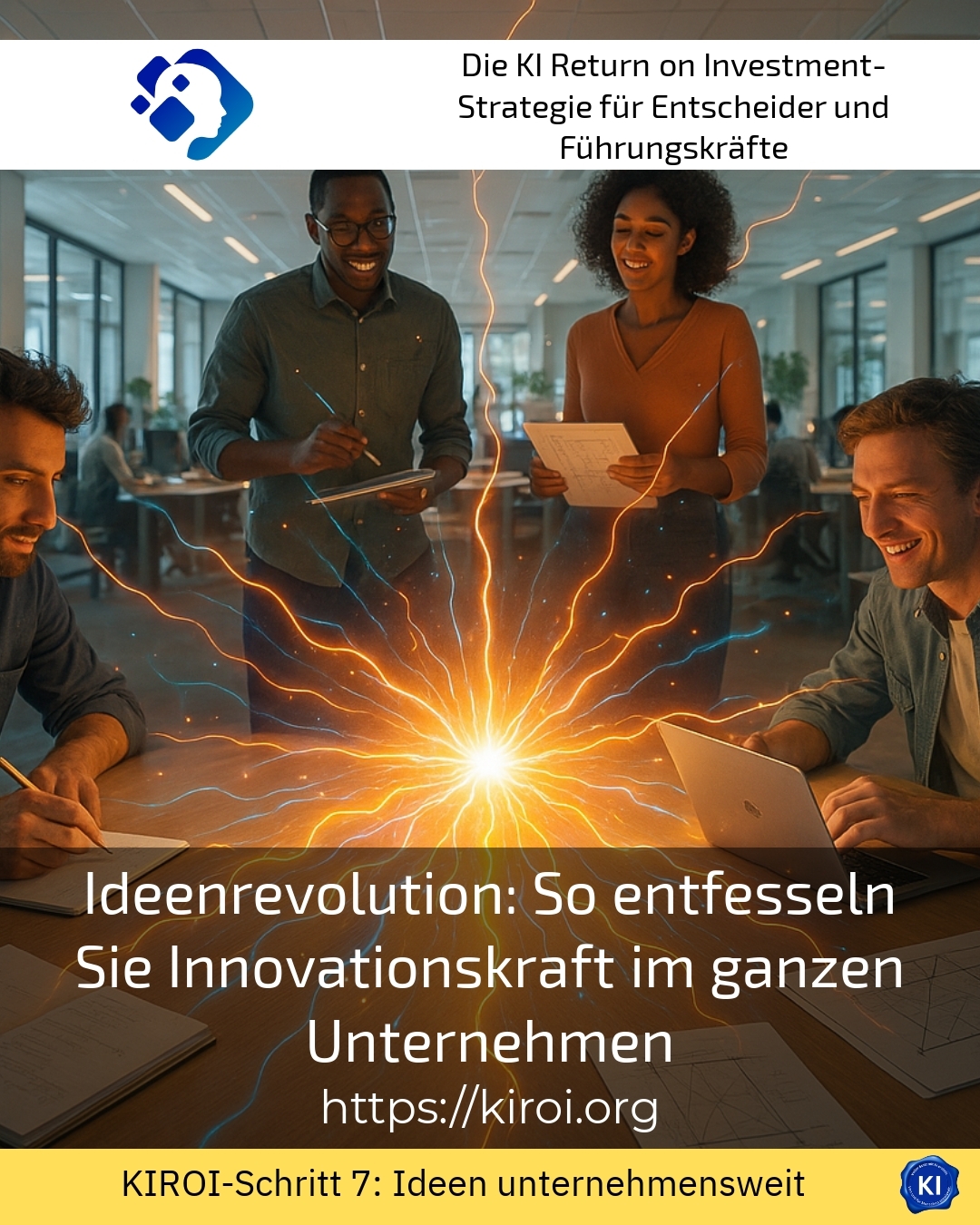
Imagine your company waking up each morning with fresh ideas flowing through all departments, generating completely new business models. This vision is by no means utopian, as it describes precisely that Idea revolution, which advanced organisations are already implementing today. The ability to systematically unlock creative potential determines economic success in a world of constant change. This is no longer just about individual flashes of inspiration in executive suites. Rather, the collective innovative power of all employees is at the centre of modern corporate strategies. Those who unleash this power gain decisive competitive advantages. This article shows you concrete ways to foster a vibrant innovation culture.
Understanding the foundations of a sustainable revolution of ideas
Before companies can unleash their innovative power, they must understand the underlying mechanisms. Creativity rarely arises in a vacuum or through spontaneous inspiration alone. Instead, it requires fertile ground of psychological safety, open communication, and structured processes. Employees must develop the trust that their suggestions will be taken seriously. At the same time, they need clear channels to contribute and develop ideas. Modern research shows that diverse teams are significantly more innovative than homogeneous groups [1]. This insight fundamentally changes how companies should assemble their workgroups.
A medium-sized mechanical engineering firm from Baden-Württemberg has impressively implemented these principles. The company introduced weekly creative circles where production, sales, and development work together on improvements. Within six months, this resulted in three patentable product innovations. A pharmaceutical company from Switzerland went a step further and opened its innovation processes to external partners. This significantly shortened the development time for new active ingredients. A well-known automotive supplier also implemented digital idea platforms, open to all employees. The results far exceeded all expectations of the management.
Best practice with a AIROI customer
An internationally operating technology group approached us because they were generating hardly any market-ready innovations despite high research investments. The analysis revealed that creative impulses regularly got bogged down in bureaucratic approval processes. Employees reported months-long waiting times before suggestions were even evaluated. As part of the transruption coaching support, we jointly developed an agile evaluation system with clear deadlines and responsibilities. Additionally, we established so-called innovation ambassadors in each department, who act as the first point of contact for new ideas. These ambassadors received intensive training in creative methods and feedback techniques. After implementation, the number of submitted improvement suggestions quadrupled. Even more important was the significantly higher implementation rate, which rose from under ten percent to over forty percent. The group subsequently developed two entirely new product lines that now contribute significantly to revenue. Management described the project as a turning point in the corporate culture.
Creating structures that foster creative thinking
Many managers underestimate how strongly organisational structures influence creativity. Rigid hierarchies often stifle innovative thoughts in the bud before they are even articulated. For this reason, progressive companies consciously establish flat communication channels for innovation issues. They clearly separate day-to-day operations from experimental projects. This separation protects creative endeavours from the pressure of short-term results orientation. At the same time, it allows for faster learning from mistakes without serious consequences.
A leading retail group established its own innovation labs for this purpose, which operate outside of regular reporting lines. These labs develop new customer concepts and test them in pilot stores under real-world conditions. In contrast, an insurance company from Munich created virtual innovation spaces for its teams distributed across Germany. Employees can contribute ideas there at any time and develop them further collaboratively, regardless of their location. Also particularly successful was the initiative of a large hotel chain, which actively involved chambermaids and receptionists in product development. These employees often know customer needs better than management itself.
Accelerating the idea revolution with digital tools
Technology plays a crucial role in scaling innovation processes. Modern idea management platforms enable the structured capture and evaluation of suggestions from all areas of the company. Artificial intelligence can assist in bundling similar ideas and identifying promising approaches [2]. Collaboration tools significantly facilitate cross-departmental cooperation on complex innovation projects. This creates synergies that would be unthinkable in traditional structures.
A logistics company implemented an AI-powered platform that automatically categorises and prioritises suggestions for improvement. This reduced the processing time for submitted ideas by seventy percent compared to the previous process. Meanwhile, an international bank is using gamification elements to motivate employees to submit ideas. Points, leaderboards, and virtual awards create a playful competition for the best innovations. An energy provider from Scandinavia is also reporting positive experiences with virtual hackathons. During these intensive creative events, interdisciplinary teams develop market-ready prototypes within a few days.
Leadership culture as a catalyst for the ideas revolution
No technical infrastructure can replace a leadership culture that fosters innovation. Leaders must act as role models and demonstrate a willingness to experiment themselves. They should communicate mistakes as learning opportunities and not brand them as failures. Regular, constructive feedback on submitted ideas shows appreciation for creative commitment. This attitude must permeate all leadership levels and be lived authentically.
The CEO of a chemical conglomerate spends half a day each month in the research department to speak directly with scientists. This practice impressively signals the importance of innovation within the company. A telecommunications provider introduced so-called reverse mentoring programmes, where junior employees train senior management in digital trends. This allows fresh perspectives to be immediately incorporated into strategic decisions. A traditional family-owned mechanical engineering company also fundamentally transformed its leadership culture. The ownership family underwent training and coaching in modern innovation methods from external consultants.
Best practice with a AIROI customer
A medium-sized company in the healthcare sector sought support because innovative projects kept failing. While employees contributed creative suggestions, implementation regularly stalled. As part of the transruption coaching, we first analysed the existing decision-making processes in detail. This revealed that unclear responsibilities were the biggest barrier to innovation. No one truly felt responsible for the further development of promising ideas after submission. We then established a clear ownership model with defined roles and milestones for each innovation project. Additionally, we introduced monthly review meetings to make the progress of all ongoing projects transparent. The management also committed to providing resources for the implementation of promising ideas. This combination of clear structures and visible commitment from leadership transformed the innovation culture sustainably. Today, the company is pursuing multiple disruptive projects in parallel, aiming to open up new markets.
Overcoming resistance and developing perseverance
Every change provokes resistance, and innovation initiatives are no exception to this rule. Employees may fear that their jobs could become obsolete due to new ideas. Leaders worry about a loss of control or their past decisions being called into question. These fears are humanly understandable and must be taken seriously. Transparent communication about goals and procedures gradually reduces reservations.
A financial services provider addressed such concerns through extensive information events for all hierarchical levels. Management made it clear that innovation secures jobs, rather than endangering them. A consumer goods manufacturer went even further and directly involved employees in the economic success of their ideas. This model created strong incentives and transformed sceptical voices into enthusiastic innovators. A construction company from Austria also reported initial resistance to digital innovation tools. Through patient training and visible success stories, scepticism was transformed into enthusiasm.
Ensure measurable successes of the ideas revolution
Innovation requires measurable goals to be sustainable in the long term. Companies should define which key performance indicators they want to use as success indicators [3]. The number of ideas submitted alone is not very meaningful if no implementations result from them. Implementation rates, time-to-market for new products, or the proportion of innovative revenue in the overall result are more relevant. These metrics should be regularly reviewed and transparently communicated.
A software company consistently measures how many customer requests translate into actual product improvements. This metric has become part of the performance objectives for all managers. In contrast, a food group tracks the proportion of new products in total revenue as a key innovation metric. This company aims for at least twenty per cent of revenue to come from products that are less than three years old. A medical device manufacturer also uses ambitious innovation goals as a strategic compass for all decisions.
My AIROI Analysis
The systematic unleashing of innovative capacity requires a holistic approach that goes far beyond sporadic creative workshops. Our experience shows that sustainable Idea revolution depends on four pillars: psychological safety, clear structures, technological support, and a consistently innovation-promoting leadership culture. Companies that only address individual elements rarely achieve the desired results. Only the interplay of all factors unleashes the full transformative effect on innovation capability.
The role of leaders as role models and enablers of creative processes is particularly significant. They must actively create scope for manoeuvre while simultaneously communicating clear expectations. The balance between creative chaos and structured implementation is decisive for the long-term success of all innovation efforts. In doing so, companies must not underestimate how long cultural changes actually take. Quick wins are possible and important for motivation, but profound transformation requires patience and perseverance. We regularly observe that clients want to fall back into old patterns after initial euphoria. Here, continuous support through external transruption coaching can provide valuable impulses and keep the course.
The documented examples impressively demonstrate the potential of structured innovation approaches. From technology-driven solutions to cultural shifts and organisational adjustments, a broad spectrum of effective measures exists. The right mix depends heavily on the individual context of each company. A careful analysis of existing strengths and development areas therefore forms the indispensable starting point for any successful Idea revolution.
Further links from the text above:
[1] Harvard Business Review – Innovation Research
[2] McKinsey – Insights on Innovation
[3] BCG – Innovation Strategy and Delivery
For more information and if you have any questions, please contact Contact us or read more blog posts on the topic Artificial intelligence here.








 Deutsch
  English (UK)