
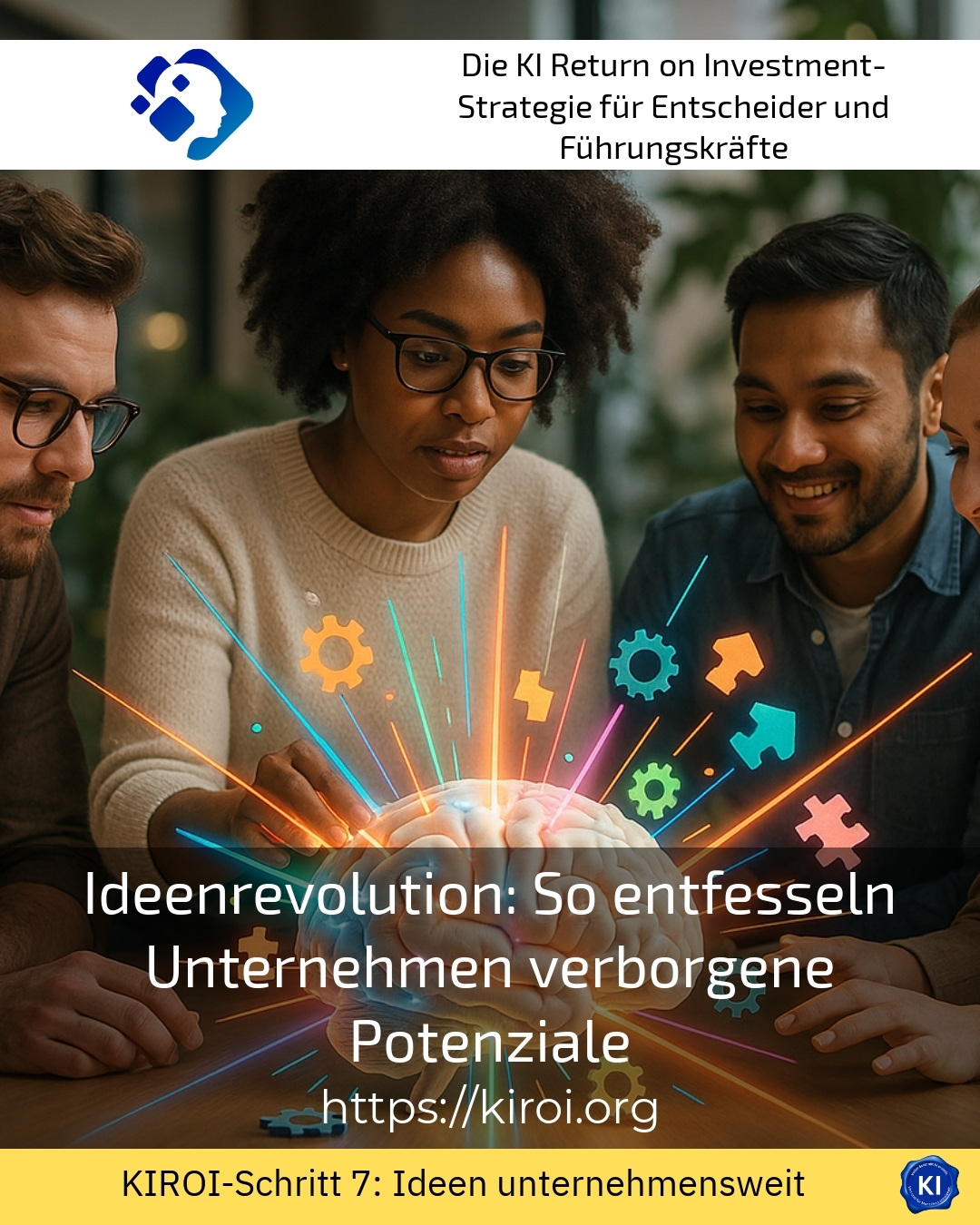
Imagine your organisation is sitting on a hidden treasure. Brilliant ideas are generated daily in meetings, corridor conversations and digital channels, but they go unheard. The Idea revolution It begins exactly where companies stop listening solely to leadership. It starts in the minds of those people who work on the front lines every day and know problems firsthand. But how can these dormant resources be systematically activated? How do organisations manage to establish a culture in which creative impulses don't seep away but find fertile ground? This contribution takes you on a journey through proven methods and surprising insights.
Why traditional structures block creative potential
Hierarchical organisational structures served their purpose for decades, providing order, clear responsibilities, and efficient decision-making processes. However, at the same time, these structures created invisible barriers. Employees at lower levels often hesitated to communicate their thoughts upwards, many fearing negative consequences or simply not being taken seriously. Consequently, valuable insights remained unused and disappeared into the insignificance of everyday life. Leaders frequently report a feeling of isolation when it comes to innovative impulses [1].
This phenomenon is particularly evident in the automotive industry. Factory workers often know production problems better than management. Nevertheless, their suggestions rarely reach decision-making levels. The situation is similar in retail, where sales staff receive customer feedback daily. However, this knowledge mostly remains unstructured and is not systematically evaluated. We also observe comparable patterns in the healthcare sector. Nurses and therapists develop creative solutions for recurring challenges in their daily work. Without suitable channels, however, these insights regularly get lost.
AIROI's transruption coaching supports organisations in identifying and resolving precisely these blockages. It is about creating psychological safety and redesigning communication channels. Experience shows that even small changes in corporate culture can have significant effects. Employees begin to share their thoughts more openly when they feel they are valued.
The revolution of ideas as a cultural transformation process
A true transformation never begins with technology alone. Instead, it is rooted in profound cultural change. Organisations must learn to view mistakes as learning opportunities, rather than failures. This attitude requires courage from all involved, especially from leadership. When boards and management themselves demonstrate vulnerability, space is created for authentic exchange [2].
In the technology sector, some pioneers have already embraced these principles. Software companies are establishing so-called hackathons, where teams are allowed to develop unconventional solutions. Financial service providers are experimenting with internal innovation labs, creating protected spaces for creative thinking. Even traditional industrial companies are beginning to break down their rigid structures. Mechanical engineers are setting up cross-functional teams that can develop new concepts away from day-to-day business.
Best practice with a AIROI customer
A medium-sized company in the logistics sector faced the challenge that innovative ideas regularly came to nothing. Management had already launched several initiatives to promote the creativity of the workforce. Unfortunately, these programmes were not as successful as hoped, and frustration grew on all sides. As part of the transruption coaching, we first analysed the existing communication structures and identified several bottlenecks. It became clear that suggestions were collected but not systematically evaluated. Employees rarely received feedback on what happened to their submissions. Together, we developed a transparent evaluation system with clearly defined feedback loops. In addition, we established monthly innovation circles where employees from different departments came together. Within six months, the number of submitted suggestions for improvement tripled. Even more significant, however, was the increased quality of the ideas and the noticeably improved atmosphere in the company. Employees reported a new sense of appreciation and belonging.
Methods for systematic idea generation
The Idea revolution requires concrete tools and processes to have a sustainable impact. Design Thinking has established itself as an effective approach because it consistently puts people at the centre. Teams go through structured phases from understanding to developing to testing. This methodology promotes empathetic thinking and leads to solutions that actually address needs [3].
In the pharmaceutical industry, research teams are increasingly using collaborative platforms for knowledge sharing. Scientists from different disciplines share their findings and jointly develop new hypotheses. Insurance companies are experimenting with gamification elements to increase participation in idea programmes. Playful incentives motivate employees to contribute and develop their ideas. The construction industry is also increasingly discovering the value of systematic creativity processes. Architecture firms and construction companies are holding interdisciplinary workshops to solve complex planning challenges.
Transruption coaching supports organisations in selecting and implementing suitable methods. The focus is not on the method itself, but on its precise application in the respective context. What works in a start-up can fail in a traditional company. That's why we guide projects individually and continuously adapt approaches. Clients often report surprising insights during the process.
Digital tools as catalysts for the revolutionisation of ideas
Modern technologies open up entirely new possibilities for managing innovation impulses. Collaboration platforms make it possible to collect and further develop ideas across locations and time zones. Artificial intelligence can help to recognise patterns in large quantities of data and identify promising approaches. However, these tools never replace the human factor, but rather supplement it meaningfully [4].
Telecommunications companies are already using intelligent systems to automatically evaluate customer feedback. Algorithms distill recurring themes and potential for improvement from millions of inquiries. Energy providers use predictive analytics to forecast maintenance needs and act proactively. These data-driven approaches provide valuable impetus for continuous optimisation. In the education sector, universities are experimenting with virtual brainstorming rooms where students and lecturers conduct research together.
Nevertheless, we warn against viewing technology as a panacea. The best platform is of little use if the corporate culture does not foster creative thinking. That's why transruption coaching always combines technical solutions with cultural interventions. We support teams in using digital tools effectively and realising their full potential. Integration into existing workflows requires particular attention.
Best practice with a AIROI customer
An international trading company wanted to better utilise the creative potential of its globally distributed workforce. Previous attempts with classic idea competitions had only met with moderate success and ultimately left a great deal of frustration. Together, we developed a strategy that combined digital tools with personal interactions. First, we introduced a low-threshold platform where employees could share ideas at any time. An intelligent matching system linked similar ideas and brought together people with shared interests. In parallel, we established regional innovation ambassadors who acted as contact persons and multipliers. These ambassadors received special training as part of transruption coaching and learned to moderate creative processes. The results exceeded all expectations of the management and the project team. Within a year, several marketable product ideas emerged from the workforce. Two of these concepts are now in the pilot phase and are showing promising results. Particularly noteworthy is the increased identification of employees with the company and its goals.
Leaders as enablers of creative development
The role of leadership is changing in the context of Idea revolution Fundamentally, traditional superiors gave instructions and monitored their implementation. Modern leaders, on the other hand, see themselves as coaches and enablers. They create frameworks in which creativity can flourish and remove obstacles [5].
We can observe this shift particularly clearly in the media industry. Editorial leaders are becoming moderators who bring together diverse perspectives. Advertising agencies are experimenting with flat hierarchies and rotating leadership roles. In the hospitality industry, hotel managers are developing participatory approaches to shape the guest experience. They actively involve their teams in decision-making processes and benefit from their practical knowledge. Public administration is also beginning to test new leadership concepts and involve employees more.
Transruption coaching is therefore often specifically aimed at leaders and their development. We support them in reflecting on old patterns and establishing new behaviours. This process requires time, patience, and a willingness for honest self-reflection. Many participants report a sense of liberation when they learn to let go of control. The results often speak for themselves: more engaged teams and better business results.
Overcoming resistance and shaping sustainable change
Every change provokes resistance, and the Idea revolution is no exception. People fear the loss of status, influence, or established ways of working. These fears are legitimate and deserve respect and careful attention. Successful transformation projects take concerns seriously and address them proactively through dialogue.
In the aviation industry, it is clear how important safety culture and innovation culture must work together. Airlines and airports are developing new procedures under the strictest regulations and highest quality requirements. The banking sector is grappling with the tension between regulatory requirements and the pressure to innovate. Compliance and creativity often appear to be opposites, but they can be reconciled. In mechanical engineering, we frequently encounter the attitude that tried-and-tested processes should not be changed.
Transruptions-Coaching offers impulses to constructively address and resolve these resistances. We work with methods that turn those affected into participants and enable genuine co-determination. The focus is on small, iterative steps rather than revolutionary upheavals. This builds trust, and people experience positive change. These successes motivate further steps on the transformation journey.
My AIROI Analysis
The systematic unlocking of hidden potential represents one of the greatest opportunities for modern organisations. Companies that can tap into the collective intelligence of their workforce gain crucial competitive advantages. This development is not limited to individual industries, but permeates all economic sectors. Similar patterns and challenges are evident from manufacturing and services to the public sector.
The analysis clearly shows that successful transformations always rest on several pillars. Technology alone is not enough if the cultural prerequisites are missing. Conversely, cultural initiatives fizzle out if no suitable tools are available. The interplay of people, processes, and technology determines success or failure. Leaders play a key role as role models and pioneers.
From my experience at AIROI, I can confirm that sustainable change takes time. Quick wins are possible and important for motivating everyone involved. However, the profound transformation of a company culture takes place over months and years. Patience, perseverance, and consistent action are indispensable prerequisites for lasting success. Organisations that embark on this path report increased employee satisfaction, higher innovation capacity, and improved economic results. The investment in unlocking human creativity therefore pays off multiple times over and creates value for all stakeholders.
Further links from the text above:
[1] Harvard Business Review – Innovation Topics
[2] McKinsey – Featured Insights on Innovation
[3] IDEO Design Thinking Resources
[4] Gartner – Innovation and Technology Insights
[5] MIT Sloan Management Review – Leadership
For more information and if you have any questions, please contact Contact us or read more blog posts on the topic Artificial intelligence here.






 Deutsch
  English (UK)