
Why do over 70 per cent of all promising innovation projects already fail in the scaling phase, even though the original idea seemed brilliant?
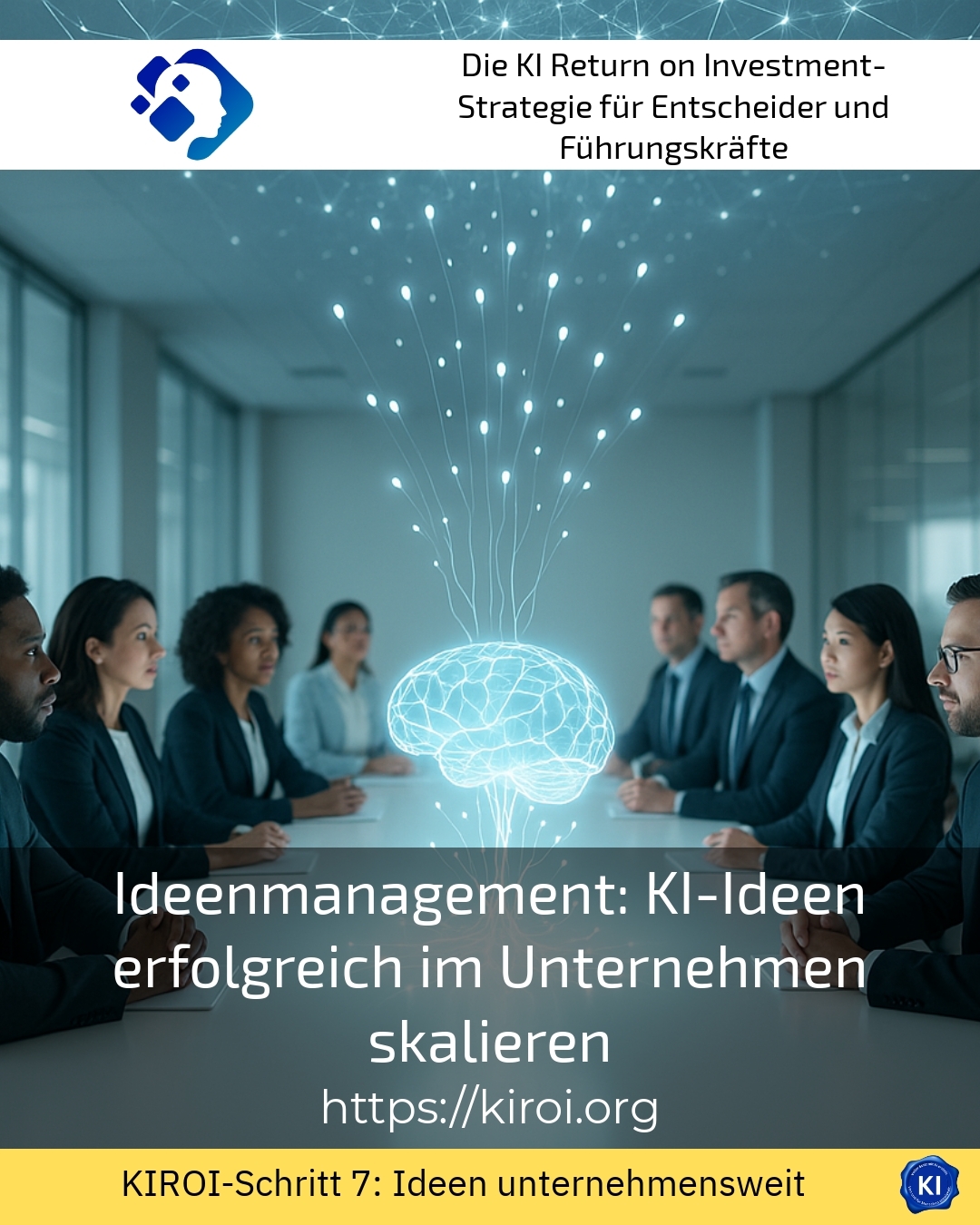
This question occupies leaders and innovation managers alike. The systematic Idea management: successfully scaling AI ideas in the company thereby developing into a decisive competitive factor. Companies are faced with the challenge not only of developing creative concepts, but also of integrating them sustainably into existing structures. The journey from the initial idea to company-wide implementation is like a marathon. In this regard, transruptions coaching supports organisations as a reliable companion in complex transformation projects.
The fundamentals of successful innovation in modern organisations
Modern companies are increasingly recognising the need for structured innovation processes. These processes require clear frameworks and defined responsibilities. Employees need the freedom for creative thinking and experimental working. At the same time, economic aspects must be taken into account. The balance between creativity and cost-effectiveness presents many organisations with major challenges.
Clients frequently report initial euphoria with new projects. However, this enthusiasm quickly gives way to disillusionment. Technical hurdles, organisational resistance and a lack of resources slow down progress. Yet the problem rarely lies in the quality of the original concepts. Rather, there is a lack of systematic approaches for further development and scaling.
A well-thought-out framework forms the basis for sustainable innovation success. This framework defines clear process steps from idea generation to implementation. It takes into account varying degrees of maturity and development phases of individual concepts. In addition, it creates transparency regarding available resources and potential bottlenecks. As a result, decision-makers are able to make informed priorisations.
Idea management: successfully scaling AI ideas in the company through systematic processes
The systematic scaling of innovative concepts requires a structured, multi-stage process. First, new approaches go through a validation phase. In this phase, technical feasibility and economic potential are examined. This is followed by piloting in a protected environment. These pilot projects provide valuable insights for subsequent expansion.
Successful organisations establish clear criteria for the transition between phases. These criteria comprise quantitative metrics and qualitative assessments alike. This creates objective decision-making bases for further investments. At the same time, companies thereby avoid premature scaling of immature concepts. The process protects against costly misjudgements.
Best practice with a AIROI customer
A medium-sized manufacturing enterprise faced the challenge of rolling out innovative automation concepts company-wide. Initially, the innovation team had developed a promising prototype. This showed impressive results in the test environment and won over the management board. However, initial attempts at expansion failed due to organisational resistance and technical incompatibilities. As part of transruption coaching, we jointly developed a structured scaling concept. This concept took into account varying site conditions and local circumstances. We defined clear milestones and established a monitoring system for continuous progress tracking. Of particular importance was the early involvement of the workforce at the various locations. Through regular information events and training programmes, we significantly reduced reservations. After twelve months, the company successfully implemented the new approach at seven locations. The productivity gains clearly exceeded the original expectations.
Success factors in translating concepts into practice
The successful transfer of innovative concepts into corporate practice depends on several factors. Firstly, projects require a clear sponsor at management level [1]. This sponsor secures necessary resources and clears obstacles out of the way. Secondly, affected employees must be involved at an early stage. Their expertise and practical experience significantly enrich the concept development.
Thirdly, successful scaling requires tailored communication strategies for different target audiences. Technical details are primarily of interest to domain experts and implementation managers. Executives focus more on strategic implications and economic impacts. Employees in operational areas want to understand how their daily work will change.
Allowing for different learning speeds and willingness to change proves to be the fourth success factor. Some employees are open to new ways of working and technological innovations. Others require more time and intensive support during the transition. A differentiated approach increases acceptance and accelerates the adoption of new processes.
Organisational framework conditions for sustainable innovation success
Sustainable innovation success requires supportive organisational frameworks. These frameworks equally encompass structural, cultural, and procedural aspects. At the structural level, companies need dedicated resources for innovation activities. These can be independent innovation departments or decentralised structures.
Corporate culture plays an equally decisive role in the capacity for innovation. Organisations with a pronounced willingness to experiment and a constructive approach to mistakes develop more successful concepts. Employees have the confidence to put forward unconventional proposals and question existing practices. This psychological safety forms the foundation for creative work.
Procedural aspects concern the integration of innovation activities into existing workflows. Successful companies create clear interfaces between innovation teams and line functions. They define handover points and responsibilities for different project phases. As a result, the transition from development to regular operations is smoother.
Best practice with a AIROI customer
A service company with several thousand employees wanted to fundamentally transform its innovation culture. Previous attempts to establish systematic innovation processes had failed. Employees perceived innovation initiatives as an additional burden with no discernible benefit. As part of transruption coaching, we first analysed the existing cultural barriers and organisational obstacles. We identified missing incentive structures as a major impediment to innovation engagement. Together, we developed a multidimensional incentive system that combined intrinsic and extrinsic motivators. In addition, we established a transparent evaluation system for submitted proposals and concepts. Employees received regular feedback on the status of their submissions and the reasons for decisions. This transparency significantly increased trust in the process. Within eighteen months, the number of high-quality innovation proposals tripled. Several of these proposals were successfully implemented and contributed measurably to the company's success.
Idea management: successfully scaling AI ideas in the company with appropriate governance structures
Effective governance structures form the backbone of successful innovation programmes. These structures define decision-making powers and escalation pathways for various situations. They determine who decides on resource allocations and project continuations. Clear governance prevents delays caused by unclear responsibilities.
A proven element is regular review meetings with defined groups of participants [2]. In these meetings, progress is assessed and next steps are determined. The frequency depends on the dynamics of the respective projects. Fast-moving initiatives require more frequent coordination than long-term programmes.
Portfolio management approaches support the overarching control of various innovation projects. Through systematic categorisation and prioritisation, companies optimise their resource allocation. They balance short-term quick wins with long-term transformative initiatives. This balance ensures both immediate successes and future-oriented developments.
Technological infrastructure as an enabler for innovation
Technological infrastructure plays a key role in scaling innovative concepts. Modern platforms enable the capture, evaluation and further development of proposals. They create transparency regarding the status of individual initiatives and support collaborative working. At the same time, they provide data for informed management decisions.
Cloud-based solutions offer particular advantages for geographically distributed organisations. Employees at different locations can collaborate seamlessly and share knowledge. The scalability of these solutions adapts flexibly to changing requirements. In addition, complex maintenance and updating processes for internal IT departments are eliminated.
Analytical functions significantly enhance the utility of modern innovation platforms. They identify patterns in submitted proposals and uncover connections between different initiatives [3]. This creates synergies that would have remained undetected if viewed in isolation. Data-driven decision-making sustainably improves the quality of the innovation portfolio.
Integration into existing system landscapes
The integration of new innovation tools into existing system landscapes presents many companies with challenges. Interfaces to ERP systems, project management tools and communication platforms must be designed. This integration requires careful planning and close coordination between IT and business departments.
Proven integration approaches rely on standardised interfaces and modern API architectures. These enable flexible connections between different systems without complex custom developments. At the same time, the individual components remain interchangeable and can be replaced if required.
Data security deserves special attention during system integration. Innovative concepts and strategic planning rank among a company's most valuable information. Appropriate access controls and encryption measures protect this sensitive data from unauthorised access.
Best practice with a AIROI customer
An internationally active manufacturing company was looking for ways to digitalise its innovation management. The previous paper-based processes were slow, lacking in transparency and prone to error. Valuable suggestions regularly fell by the wayside due to unclear responsibilities and long processing times. In the transruptions coaching, we first developed a comprehensive requirements analysis for a suitable platform solution. In doing so, we took into account the specific needs of various user groups and locations. The selected solution was introduced step by step, beginning with a pilot area in the home country. Accompanying training courses and support structures ensured user acceptance from the outset. Following the successful pilot phase, we rolled out the solution to further countries and business divisions. Local adaptations accommodated cultural differences and regulatory frameworks in different regions. The platform now processes several hundred innovation proposals from all areas of the company every year. The average processing time was reduced by more than sixty per cent compared to the previous state.
Competence development and change management
Successful scaling of innovative concepts requires targeted competence development at various levels. Leaders need skills to steer innovation projects amidst uncertainty. Project teams require methodological competencies for agile working and iterative development. Employees in operational areas must be able to learn and apply new ways of working.
Formal training programmes form an important building block in skills development. They impart fundamental concepts and methods in a structured format. Complementary informal learning formats, such as mentoring and peer learning, support knowledge transfer. These formats facilitate the exchange of practical experience and best practices.
Change management accompanies the organisational changes during scaling [4]. It proactively addresses resistance and concerns among affected employees. Through transparent communication and opportunities for participation, acceptance of innovations increases. Transruption coaching provides valuable impulses for shaping effective change processes.
My AIROI Analysis
The successful scaling of innovative concepts in companies remains one of the most demanding management tasks of our time. My experience from numerous consultancy projects shows recurring patterns of successful transformations. First, many organizations underestimate the effort required for systematic Idea management: successfully scaling AI ideas in the company. They expect quick results without appropriate investment in structures, processes and competencies.
Successful companies are characterised by staying power and realistic expectations. They understand scaling as a continuous process, not a one-off project. They learn from setbacks and iteratively adapt their approaches. This ability to learn is what distinguishes long-term successful organisations from short-term-oriented competitors.
The importance of human factors cannot be overstated. Technological solutions and structured processes merely create the framework. The decisive factor is committed employees who breathe life into innovations and drive them forward. Fostering this commitment deserves the highest attention at all management levels.
Finally, I recommend that companies critically reflect on their innovation efforts on a regular basis. External perspectives can help to identify operational blind spots. transruptions coaching supports organisations in this reflection as a neutral companion. Together, levers for sustainable improvements can be identified and activated.
Further links from the text above:
[1] Harvard Business Review – Innovation Management
[2] McKinsey – The Eight Essentials of Innovation
[3] Gartner – Innovation Strategy Research
[4] Prosci – Change Management Fundamentals
For more information and if you have any questions, please contact Contact us or read more blog posts on the topic Artificial intelligence here.







 Deutsch
 English (UK)