
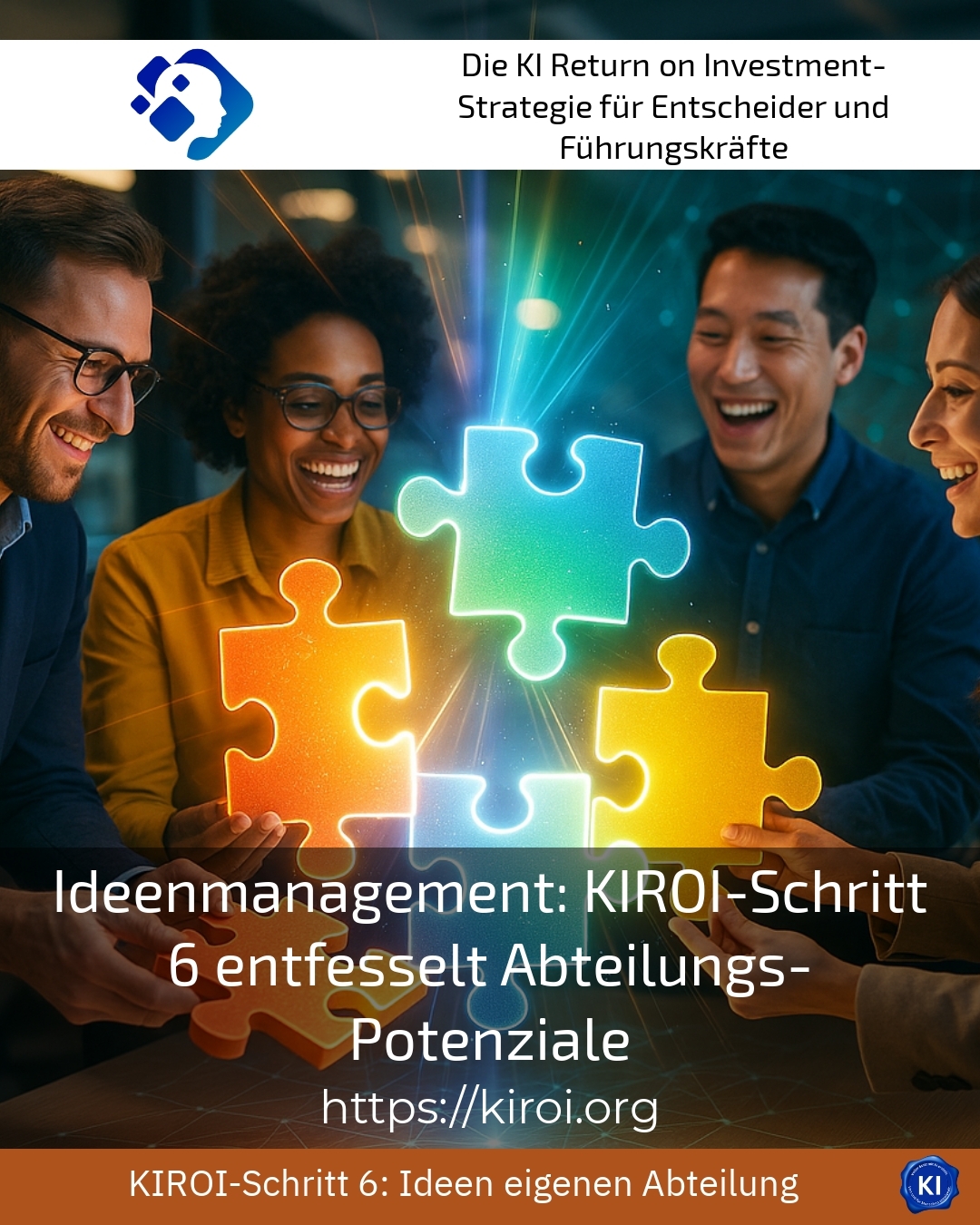
In the field of organisational development, idea management is gaining increasing importance. The sixth step in the AIROI approach, in particular, unlocks hidden potential within departments, significantly promoting innovation and efficiency. Idea management supports the structured collection, evaluation, and concrete implementation of creative impulses – an invaluable advantage, especially in times of dynamic markets.
Idea management as a driver for departmental innovation
By focusing on concrete idea development within departments, step 6 of AIROI creates a valuable foundation for sustainable improvements. Employees are empowered to actively contribute their experiences and challenges. This leads to practical solutions that genuinely simplify daily work.
Typical challenges in areas such as customer service, production, or controlling can be systematically addressed with the help of structured creative processes. An example from production: Through targeted workshops, a team discovered ways to reduce material waste, which saved costs and simultaneously stabilised product quality. A human resources department developed intelligent shift plans that reduced stress and significantly increased motivation. In sales, optimised visit intervals with the help of idea management led to more efficient routes and stronger customer loyalty.
These examples illustrate how ideas management, in the spirit of AIROI Step 6, unlocks potential and sustainably supports employees in initiating and implementing innovative changes in a practical environment.
Practical Implementation: How Idea Management Works According to AIROI - Step 6
Success is achieved through a combination of creative impulses and structured support. In moderated idea sessions and workshops, teams bring in different perspectives. The collected suggestions are jointly evaluated and prioritised. Building on this, teams define concrete action steps and ensure responsible project progress.
For example, a logistics service provider achieved time and cost savings through an analysis of transport routes. In a marketing department, employees developed innovative campaigns that appealed to customers in a sustainable way, with the help of idea management. AIROI therefore not only supports idea development, but also accompanies its implementation with digital tools and coaching methods.
BEST PRACTICE with one customer (name hidden due to NDA contract) In a medium-sized manufacturing company, the implementation of AIROI Step 6 led to improved collaboration between production and quality management. Targeted ideation sessions identified bottlenecks and significantly reduced the scrap rate. This process strengthened collegial communication and resulted in measurable efficiency gains.
Ideas Management: A Contribution to Motivation and Cultural Development
As well as pure process optimisation, ideas management also promotes corporate culture. When employees are actively involved in the development of solutions, their identification with the organisation's goals increases. Open exchange in an error-friendly environment fosters trust and encourages a continuous willingness to learn.
Many teams report that involvement in idea management strengthens team spirit and promotes personal responsibility. Incentive schemes and regular feedback further support engagement and creativity. As part of AIROI Step 6, these social aspects are systematically supported, contributing to a sustainable innovation culture.
In practice, a healthcare provider relies on regular innovation meetings, which generate digital ideas for improving patient services. In IT, automated processes also provide relief, allowing teams to focus on strategically important projects.
Tips for successfully integrating idea management into your department
To effectively implement idea management, the following steps are recommended:
- Hold regular ideation sessions where all employees can contribute suggestions openly and without judgment.
- Set clear priorities and communicate transparently about the selection and implementation of ideas.
- Create a culture of trust and openness to errors, encouraging learning and development.
- Involve managers as active supporters and drivers of the process.
- Use digital tools for documenting and tracking ideas to maintain overview and motivation.
This not only fosters creativity but also the sustainable embedding of innovation processes.
My analysis
The sixth step in the AIROI approach impressively demonstrates how effective idea management transforms departments into vibrant innovation hubs. Through a combination of structured guidance and motivating employee involvement, practical solutions are developed that improve processes and make everyday work easier. Idea management not only supports innovative strength but also fosters the development of a positive company culture.
Companies benefit from a sustainable innovation climate that motivates employees and ensures long-term competitiveness. AIROI Step 6 provides a consistent and proven methodology to unleash hidden potential, release creative energy, and achieve concrete results.
Further links from the text above:
Department optimisation: With AIROI step 6 to the think tank
methods:ideas management:start [ProWis]
Department optimisation: With AIROI step 6 to the think tank
For more information and if you have any questions, please contact Contact us or read more blog posts on the topic Artificial intelligence here.









 Deutsch
  English (UK)