
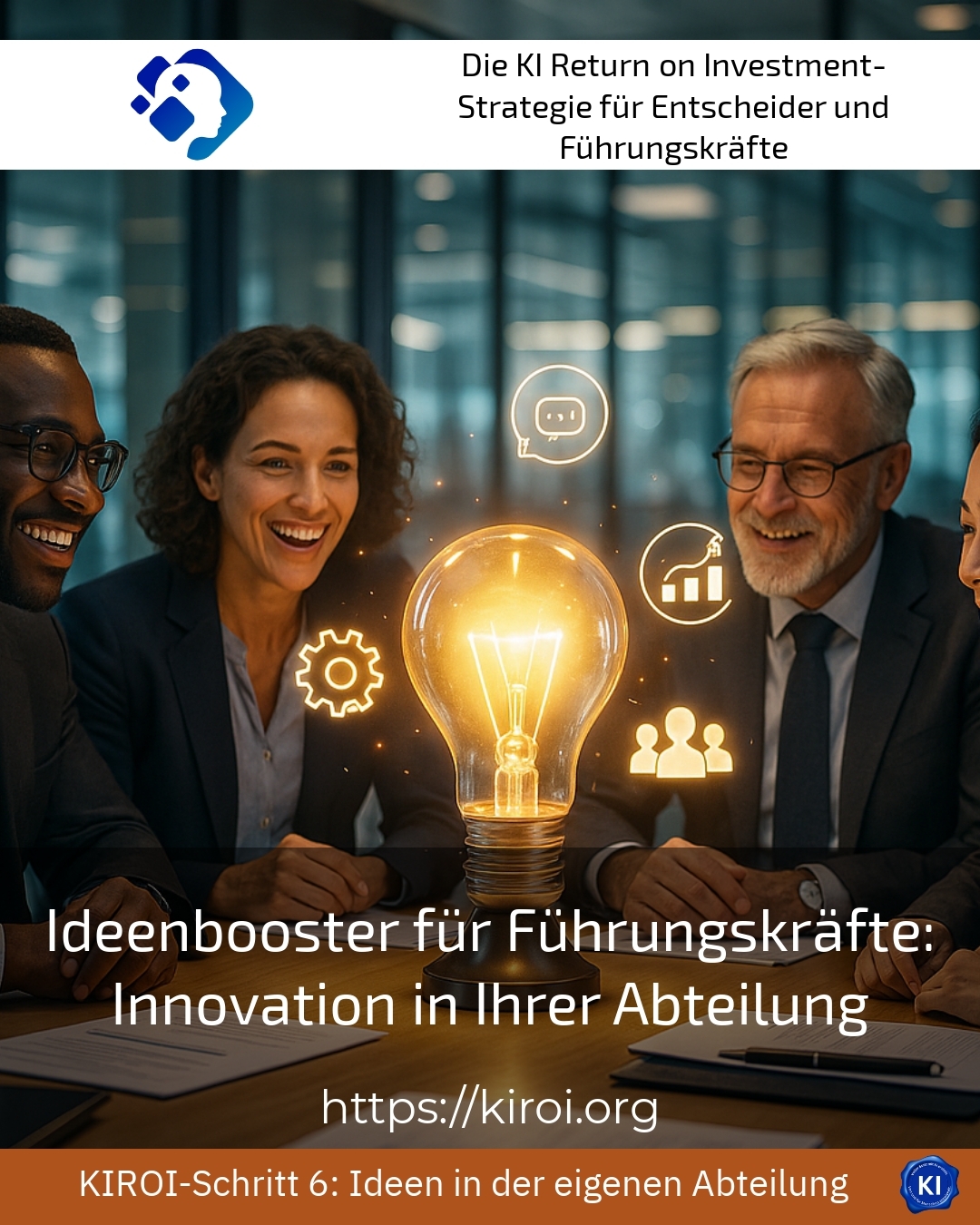
Imagine your department suddenly develops groundbreaking solutions. Employees approach you with fresh perspectives. Competitors wonder where this dynamism originates. This is precisely where the Ideas Booster for Leaders comes in. In an era of constant change, decision-makers need effective tools. These tools ignite creative potential throughout the team. Many leaders report stagnant processes. They experience frustration among dedicated team members. The desire for renewal is strong. However, the path to achieving it often appears nebulous. This article presents concrete approaches and tried-and-tested methods. It provides impetus for sustainable change within your organisation.
Why classic approaches often fail
Traditional management methods are increasingly reaching their limits. They were designed for stable markets and predictable developments. However, today's reality looks different. Markets are changing at a rapid pace. Technological leaps surprise even experienced industry experts. Therefore, old recipes no longer work reliably. An automotive supplier painfully recognised this problem. Its proven optimisation processes were no longer effective. Electric mobility changed all the rules of the game virtually overnight. A mechanical engineering company experienced something similar with the digitalisation of its products. Suddenly, software expertise became more important than mechanical precision. A medium-sized pharmaceutical group also reported comparable experiences. Regulatory changes required completely new approaches to product development.
The causes for the failure of classic methods are multifaceted. Often, the necessary flexibility is lacking in established structures. Hierarchical decision-making paths significantly slow down important adjustments. Furthermore, ingrained ways of thinking block fresh perspectives. Employees do not dare to submit unconventional suggestions. The fear of rejection or criticism is widespread. Additionally, there is often a lack of suitable spaces for creative work. Meeting rooms with rigid table arrangements do not encourage free thought. Time pressure also has a counterproductive effect on idea generation processes.
The idea booster for leaders as a catalyst
An effective idea booster for leaders fundamentally changes the game. It creates new frameworks for creative thinking. This is not about one-off workshops or sporadic brainstorming sessions. Rather, it leads to a lasting culture of openness and a willingness to experiment. This culture gradually permeates all levels of the organisation. A technology company in the renewable energy sector demonstrated this impressively. It introduced weekly idea sessions without hierarchical barriers. Every employee was allowed to submit suggestions. The results positively surprised even sceptical leaders. A logistics company took a similar route with a digital focus. It implemented a platform for anonymous idea submission. Participation rose significantly within a few months. A financial service provider also used this approach successfully. It combined physical creative spaces with virtual collaboration tools.
Best practice with a AIROI customer
A medium-sized manufacturing company approached our transruption coaching team. The management reported a lack of product innovation despite high investment in research and development. Employees appeared demotivated and contributed very few of their own ideas. Together, we analysed the existing structures and identified several blockages. Communication channels between departments were organised too rigidly. Tolerance for error practically did not exist in the company culture. We intensively supported the management team over a period of six months. In doing so, we gradually introduced new formats for idea exchange throughout the company. We introduced so-called innovation circles, which worked collaboratively across departments and met regularly. Furthermore, we trained the managers in a appreciative feedback culture for their daily work. The results became clearly measurable after approximately four months. The number of submitted improvement suggestions tripled compared to the same period the previous year. Three of these suggestions led to patentable product developments for the company. Employee satisfaction rose by a considerable fourteen percentage points, according to an internal survey.
Practical tools for everyday life
Effective tools must integrate seamlessly into everyday leadership. They should not represent an additional burden. Instead, they should meaningfully complement and enrich existing processes. The method of structured perspective-taking offers great potential here. Managers consciously put themselves in other roles. They think from the viewpoint of customers or even competitors. A retail company regularly practised this with its leadership team. Managers spent one day per month on the shop floor. They experienced the customer perspective firsthand and directly. A telecommunications provider used another effective approach. It had managers regularly discuss ideas with start-up founders. These encounters brought fresh impetus to established ways of thinking. An insurance group experimented successfully with reverse mentoring. Younger employees coached experienced managers on digital topics.
Cultural prerequisites for sustainable success
The best idea booster for executives is ineffective if the right framework conditions are missing. The corporate culture must actively promote openness and a willingness to experiment. This begins with the attitude of the top leadership itself. Management boards and managing directors must demonstrate and embody curiosity. They must communicate and accept mistakes as learning opportunities. For this reason, a chemical company regularly established a so-called Failure Forum. Here, executives shared failed projects and the insights gained from them. Initially, there was great reluctance among the participants of these events. But over time, a culture of open exchange developed. A media company went a step further in this development. It introduced and awarded an innovation prize for failed experiments. The message was clearly formulated and understood. Those who do not take risks will not be rewarded here. A consumer goods group firmly integrated innovation metrics into executive performance appraisals.
Psychological safety plays a central role in all endeavours. Employees must dare to express unfinished thoughts. They need the certainty that criticism is constructive. Leaders actively create this safety through their own behaviour. They listen attentively and regularly ask open-ended questions. They consistently avoid hasty judgments or dismissive reactions. A construction company specifically trained its management team in these competencies. The investment paid off significantly through increased employee participation. An IT service provider reported similarly positive experiences with comparable measures.
Designing spaces and structures with purpose
Physical and organisational structures have a significant and measurable impact on creative thinking. Rigid office layouts inhibit spontaneous exchange between employees. Conversely, flexible work areas promote chance encounters and conversations. An architecture firm consciously redesigned its premises based on these findings. It created areas for focused work and open zones. This mix enabled different working modes depending on requirements. A software company successfully experimented with regularly changing seating arrangements. Teams were reshuffled every two weeks, forming new constellations. This measure effectively broke down established communication patterns. A consulting firm set up a so-called innovation room for everyone. Different rules applied here permanently than in the rest of the office area. Mobile phones were forbidden, and creative materials were readily available for anyone.
Best practice with a AIROI customer
A service company in the healthcare sector sought comprehensive support for a transformation project. The management felt overwhelmed by the diverse changes in the market environment. Digitalisation and regulatory adjustments simultaneously demanded their full attention daily. As part of our transruption coaching support, we developed a specifically tailored approach. We regularly combined individual coaching sessions with group formats for the entire management team. We placed particular emphasis on developing individual creativity routines for each person. Each manager gradually identified their personal blockages and resources. We worked intensively on concrete techniques for overcoming mental barriers. Furthermore, we established a cross-departmental innovation network for exchange. Monthly meetings with rotating moderators kept the momentum going and lively. After one year, an evaluation showed impressive results across all key performance indicators. The company had successfully launched three new service offerings on the market. Management staff turnover decreased significantly by more than twenty percent. Employee surveys showed a measurable increase in willingness to innovate at all hierarchical levels.
Using digital support effectively
Technological tools can effectively support and accelerate idea generation processes. However, they never fully replace the human factor. Intelligent platforms enable the efficient collection and evaluation of ideas. An energy supplier used such a solution with great success on a sustainable basis. Employees could easily submit and rate each other's suggestions. The best ideas automatically received more attention within the system. A retail company successfully relied on collaboration tools for distributed teams. These enabled creative work regardless of global locations. An industrial company experimented innovatively with simulation software for product development. Managers were able to test ideas virtually and iterate quickly. These early feedback loops significantly and measurably accelerated development cycles [1].
Artificial intelligence offers additional opportunities for leaders today. It can recognise and visualise patterns in large datasets. These insights frequently provide impetus for new business ideas. A financial company regularly used AI-powered trend analyses for strategic planning. The technology identified emerging customer needs early and reliably. A logistics group successfully employed algorithmic optimisation for process innovations. The combination of human creativity and machine analysis proved fruitful.
My AIROI Analysis
Supporting leaders on their journey to greater innovative strength requires patience and expertise. From my experience with numerous organisations of varying sizes and sectors, I recognise recurring patterns. The idea booster for leaders only unfolds its effect with consistent application over time. One-off impulses regularly fizzle out without sustainable integration into everyday leadership. Successful organisations understand fostering creativity as a continuous process of development. They invest in the competence development of their leaders long-term and sustainably. External support and reflection play an important role for everyone in this. Leaders regularly need spaces for honest exchange outside of day-to-day business.
I observe the greatest successes in organisations with clear commitment from the top level. When boards and managing directors embody curiosity and a joy for experimentation, others follow. The corporate culture then changes gradually and sustainably over time. Resistance doesn't disappear overnight, but it lessens. Employees increasingly dare to express unconventional thoughts openly. This psychological safety is the fertile ground for genuine innovation. Technological tools meaningfully support this process when used correctly. However, they cannot compensate for a lack of cultural prerequisites on their own. Therefore, I always recommend a holistic approach for such projects. This comprehensively considers people, structures, and technologies equally [2].
Further links from the text above:
[1] Harvard Business Review – Innovation Topics
[2] McKinsey – Insights on Innovation
For more information and if you have any questions, please contact Contact us or read more blog posts on the topic Artificial intelligence here.








 Deutsch
  English (UK)